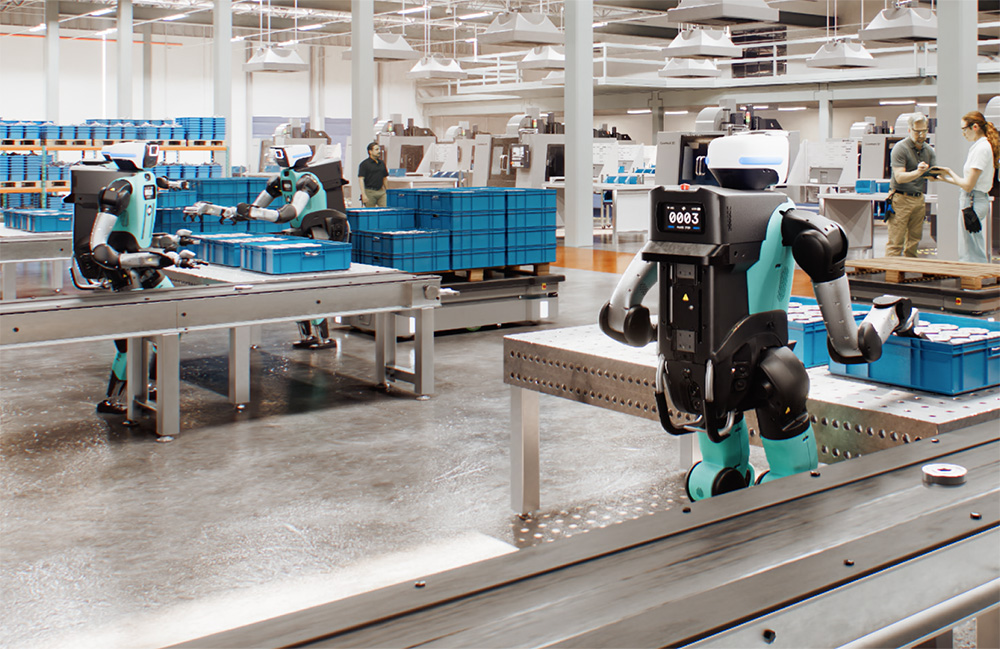
Agility Robotics begins public-market test
Agility Robotics began trading on the Nasdaq on November 5 under the ticker AGLT, giving public-market investors a direct way to bet on a company focused on legged humanoid robots. The company said it was the first pure-play legged humanoid robotics company to go public.
The debut came through a SPAC transaction whose initial reference price was $10 per share. Agility opened at $11.26, traded as low as $8.40 and as high as $12.15 during a volatile session, then closed at $11.49. That closing price was about 2% above its opening level.
The first-day result did not amount to a dramatic endorsement from the market, but it was comparatively resilient in a difficult trading environment. The Nasdaq fell 5.52% on the day, with notable losses concentrated among technology and AI-related companies. Against that backdrop, ending modestly above its opening price was a more favorable outcome than the broad market performance alone might suggest.
A debut shaped by a wider AI selloff
Agility’s first session unfolded as major technology names came under pressure. Nvidia finished down 9.26% from its opening price, AMD fell 17.26%, Qualcomm declined 9.49%, and Microsoft was down 3.58%. Rockwell Automation, a company associated with industrial automation, dropped 14.15%.
Other major U.S. benchmarks also lost ground. The S&P 500 fell 4.36% and the Dow Jones Industrial Average dropped 3.44%. The reported market weakness followed midterm-election-driven swings and was linked in part to investor uncertainty over future data-center buildouts after Democrats took control of the Senate and House.
That context matters for a newly listed robotics company. Public investors were not assessing Agility in isolation; they were doing so while reassessing a broader group of businesses tied to automation, AI infrastructure and future technology spending. A first trading day can be influenced as much by that backdrop as by views on a company’s particular products or commercial execution.
How robotics peers traded
Several other publicly traded robotics companies closed lower on the same day. Serve Robotics, which operates sidewalk delivery robots, fell 12.45%. Intuitive Surgical, a surgical robotics company, declined 2.82%. Warehouse-automation provider Symbotic lost 2.47%, while PROCEPT BioRobotics, which makes robotic aquablation therapy systems, was down 6.42%.
Those companies serve different markets and use different business models, so their share-price movements are not direct measures of Agility’s prospects. Still, the comparison illustrates the market environment surrounding the debut: robotics broadly was not insulated from the technology selloff.
Agility also enters public markets at a time when investors have few listed companies dedicated specifically to humanoid robots. Unitree, another humanoid-robot developer, trades on the Shanghai Stock Exchange’s STAR Market rather than on Nasdaq. According to the report, Unitree debuted at 150.80 yuan, or $22.55, reached a first-day high of 1,100 yuan, or $164.46, and later traded almost 53% below that high. China has also reportedly tightened initial-public-offering requirements for humanoid-robot startups.
What investors are buying into
Agility’s principal humanoid platform is Digit. The company says its Digit 5 humanoids can lift up to 50 pounds. The company’s public listing places a more explicit financial spotlight on the challenge facing the sector: turning technically ambitious mobile robots into a repeatable commercial business.
Humanoid robots are frequently presented as adaptable tools for workspaces designed around people. For investors, however, the key questions will be practical ones: whether the systems can operate reliably, where customers deploy them, how quickly deployments can scale, and what the economics look like over time. The stock market’s assessment will develop through the company’s performance after the first-day headlines fade.
Agility’s close at $11.49 offered an early, limited data point rather than a decisive verdict. It showed that the company could finish its first public session above its opening price even as technology stocks fell sharply. It also underscored how exposed newly public robotics companies can be to wider swings in sentiment around AI, industrial automation and capital investment.

The significance of the listing
The Nasdaq debut is significant because it broadens the scrutiny on a still-young humanoid robotics market. Private fundraising, demonstrations and partnerships can signal interest, but a public listing adds daily pricing, disclosure expectations and ongoing comparison with other technology and automation businesses.
For Agility, the next measure will not be whether one trading session was up or down. It will be whether the company can show progress in bringing Digit into sustained real-world use while navigating an unsettled market for AI-linked and automation stocks. Its first day suggested that investors are willing to engage with that proposition, even if they remain cautious about the sector around it.
This article is based on reporting by The Robot Report. Read the original article.
Originally published on therobotreport.com