SoftBank adds a research institute to its robotics portfolio
SoftBank has completed its acquisition of the Robotics and AI Institute (RAI) from Hyundai Motor Group, according to reporting by The Robot Report. The financial terms were not disclosed. The transaction brings a research organization founded by Boston Dynamics founder Marc Raibert into SoftBank’s expanding collection of robotics investments and acquisitions.
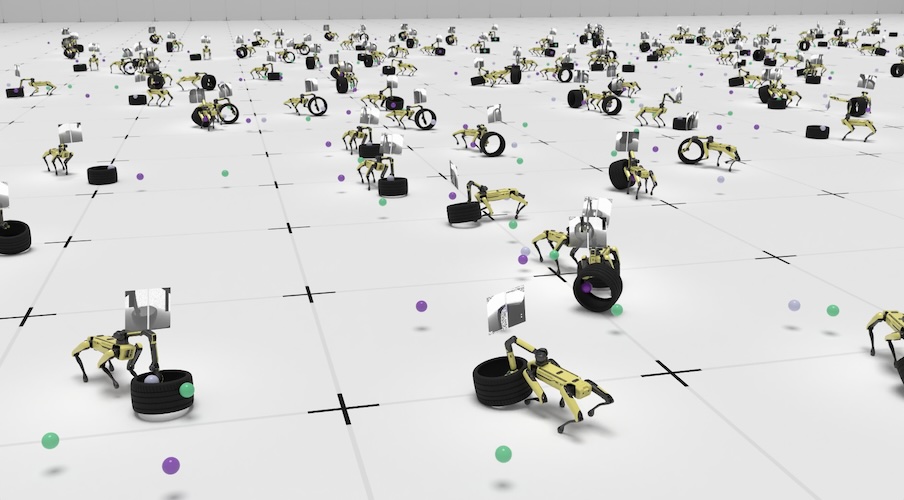
RAI was founded in 2022 with more than $400 million in initial funding from Hyundai. Based in Cambridge, Massachusetts, with an office in Zurich, Switzerland, the institute works on foundational robotics problems spanning mobility, manipulation, perception and intelligence. Those fields sit at the center of the industry’s push to make robots more capable outside tightly controlled settings.
The acquisition is also a notable reunion. SoftBank bought Boston Dynamics from Alphabet in 2017, then sold a controlling stake to Hyundai in 2021 in a transaction that valued Boston Dynamics at $1.1 billion. Hyundai has since acquired SoftBank’s remaining 9.65% stake, leaving Hyundai Motor Group and its executive chairman with full ownership of Boston Dynamics.
Why the deal matters
Rather than acquiring a single commercial robot product, SoftBank is acquiring an organization aimed at advancing the underlying capabilities that could support many kinds of machines. Mobility, perception, manipulation and robot intelligence are interdependent problems: a robot needs to understand its environment, plan an action, move safely and physically complete the task. Progress in one area can be useful across industrial, logistics and service applications.
RAI’s current hiring points to the breadth of that work. The institute has 24 open roles, including internships, across Cambridge and Zurich. The openings cover robot learning, manipulation, simulation, navigation and hardware engineering. That mix suggests the institute is maintaining a combined software-and-hardware research agenda rather than concentrating on a single autonomous platform.
For SoftBank, the organization could become a source of research capabilities that complement companies elsewhere in its robotics portfolio. The firm has acquired or invested in companies including 1X Technologies, Agile Robots, AutoStore, BALYO, Berkshire Grey, Brain Corp, Skild AI and Symbotic. Those businesses operate across different parts of the robotics market, from warehouse automation to artificial intelligence and general-purpose robotics.
An uncertain operating model
Important questions remain about how the institute will operate under its new owner. It is not yet clear whether SoftBank will alter RAI’s research priorities or allow it to continue independently. The degree of collaboration with other SoftBank-backed robotics companies is also unknown.
There are plausible technical connections. Research into learning, simulation and manipulation could be relevant to companies building robot software, automated industrial systems or machines designed for less structured environments. But an acquisition does not by itself establish shared product road maps, data pipelines or engineering teams. Those decisions will determine whether the institute functions principally as an independent research center or as a more integrated technology resource.
The move arrives while another major SoftBank robotics transaction faces uncertainty. SoftBank’s planned $5.375 billion acquisition of ABB Robotics has been put in doubt after Chinese regulators blocked the acquisition of ABB’s robotics business in China, according to The Robot Report. That context makes the completed RAI deal particularly significant: it is a concrete expansion of SoftBank’s robotics footprint even as the larger ABB transaction remains unsettled.
A strategic shift toward robotics capability
SoftBank’s earlier ownership of Boston Dynamics was tied to one of the best-known names in advanced mobile robotics. Its acquisition of RAI is different in emphasis. RAI was established by Raibert after Boston Dynamics and focuses on research problems that may feed future systems rather than on a legacy product line alone.
That distinction matters in a sector where commercialization depends on more than impressive demonstrations. Robots must learn robustly, operate in changing environments, manipulate varied objects and meet practical constraints around reliability and cost. Institutes that work across those layers can be strategically valuable to investors and operating companies seeking to shorten the path from research result to deployable machine.
For now, the disclosed facts are limited: SoftBank has completed the acquisition, the price is undisclosed, and RAI continues to recruit across core robotics disciplines. The next evidence of the deal’s impact will be whether the institute’s research direction changes and whether its work begins to appear in products or partnerships across SoftBank’s broader portfolio.
This article is based on reporting by The Robot Report. Read the original article.

Originally published on therobotreport.com