MassRobotics is developing a marine robotics facility on Boston Harbor intended to give startups a more direct route from prototype to real-world water testing. The organization plans to locate the facility at the historic Boston Fish Pier, through a partnership with the Massachusetts Port Authority, or Massport.
Construction is underway. MassRobotics expects the site to open in early 2028, with programming beginning during 2027. The project is aimed at companies working on marine technology and the broader blue economy, particularly teams that need access to a harbor environment while they design and refine robotic systems.
From workshop to water
The central idea is a short development loop. Startups will be able to work in the MassRobotics machine shop and then move a prototype to the pier for testing in the harbor on the same day. For young companies, that proximity could reduce the time, cost and logistical friction involved in assessing whether an underwater vehicle, sensor or related system works outside a lab.
Marine robotics teams often face a basic but consequential constraint: access to water. Testing can require rented boat time, borrowed tank space or travel to remote locations. Those steps can slow iteration, add expense and make it harder for early-stage companies to test frequently.
The Fish Pier facility is designed to remove some of those obstacles. Planned equipment includes a water tank, a float alongside the pier for direct water testing, and lifting and launch equipment for getting vehicles in and out of Boston Harbor.
A specialized facility for a growing field
The new site adds marine testing infrastructure to MassRobotics’ existing support for resident startups. The organization currently supports more than 100 resident startups from around the world. The Fish Pier project is intended to broaden that support for firms developing technologies for work in, on and under water.
The organization says the location offers an unusual combination of shop access and harbor access. That matters for robots that must operate in changing conditions, interact with vessels or infrastructure, or collect data in marine environments. A team can learn far more from repeated field tests than from a design cycle conducted entirely away from the water.
Tom Ryden, MassRobotics’ executive director, said marine startups have identified test locations as one of their biggest hurdles. He described the facility as a way for founders to build in the shop in the morning and test in the harbor by afternoon.
Testing infrastructure can shape innovation
Marine robots cover a broad range of possible applications, including underwater inspection, cleaning, sensing and vehicle operations. But the challenge is not only building a robot; it is repeatedly validating the system in conditions that resemble its intended operating environment.
A water tank can support controlled work and early checks. A harbor-side float and launch equipment can help teams progress toward direct water trials. Putting those assets close to fabrication space may enable faster feedback between mechanical design, software changes and the behavior of a vehicle in water.
That feedback loop is particularly valuable for early-stage ventures that are still discovering where a concept fails, how a system handles physical conditions and what must change before wider deployment. The Fish Pier facility is therefore as much about access to iterative testing as it is about providing a physical home for startups.
One startup’s perspective
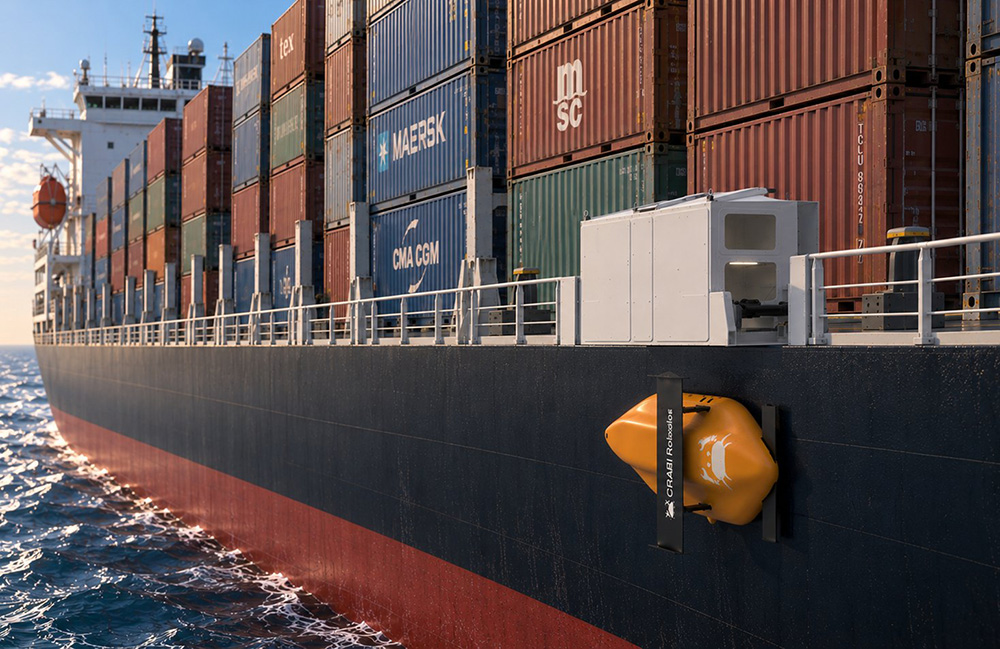
MassRobotics highlighted CRABI Robotics as an example of a company that could benefit from the facility. The startup develops an underwater hull-cleaning robot and began as a three-person company focused on making oceans cleaner.
CRABI Robotics chief executive Levi Gershon said that getting to the water is one of the hardest parts for ocean startups. He said a facility located on the harbor, close to where teams build their products, could help future marine companies move faster.
The planned hub does not eliminate every challenge associated with maritime technology. Companies still need to develop reliable systems and demonstrate that they can operate effectively in their intended settings. But a site that combines workspace, a tank, launch equipment and immediate harbor access can make the earliest stages of that process less cumbersome.
What comes next
MassRobotics has set a multi-year timetable: programming is planned to begin in 2027, followed by an early-2028 opening for the facility itself. In the meantime, construction is proceeding under the partnership with Massport.
The project reflects a practical view of innovation infrastructure. For marine robotics, the ability to reach real water can be as important as access to machining tools, workspace or mentors. By placing testing capacity at Boston Fish Pier, MassRobotics is seeking to make Boston Harbor part of the daily development environment for marine-technology founders.
If the facility operates as planned, startups will have a place to build, launch and test systems without separating those steps by long trips or lengthy scheduling cycles. For a field where frequent testing can determine how quickly an idea becomes a working product, that proximity could become the hub’s defining advantage.
This article is based on reporting by The Robot Report. Read the original article.
Originally published on therobotreport.com