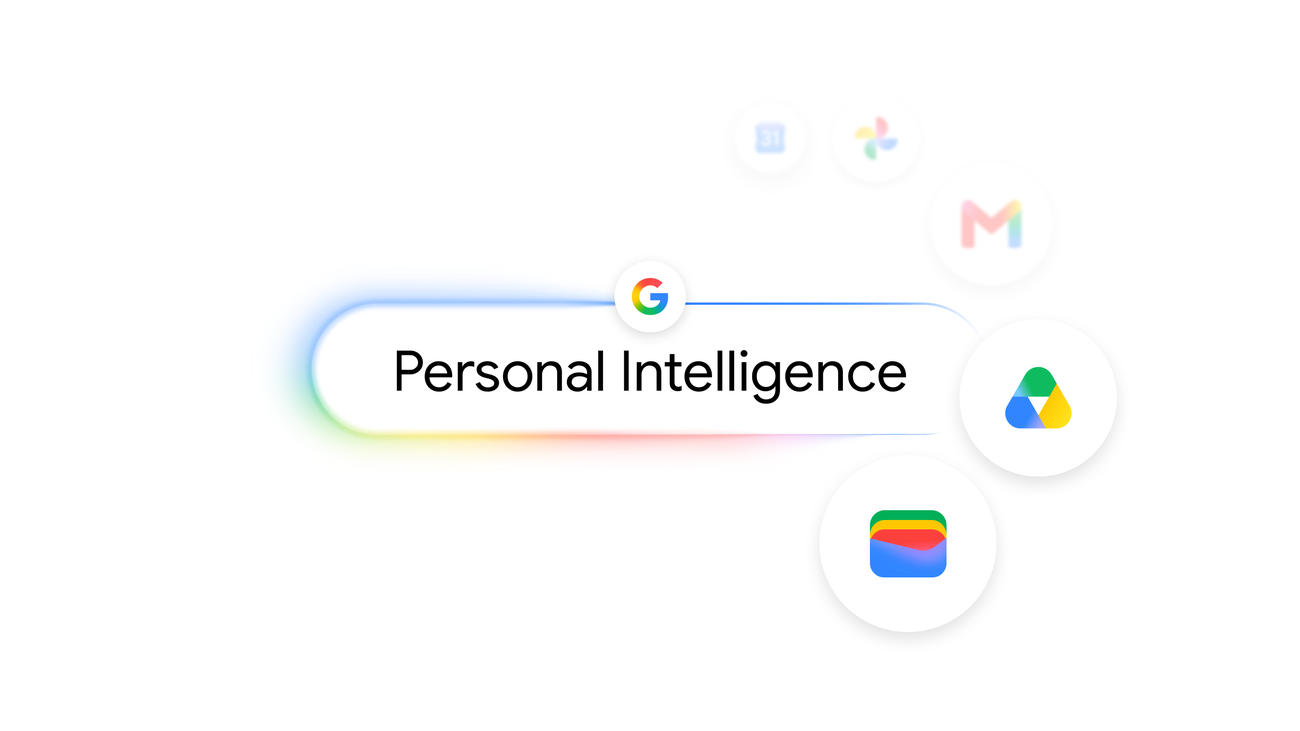
Google is expanding the information users can choose to connect to its Personal Intelligence feature in AI Mode. The company says Google Wallet support is beginning to roll out, while support for Google Drive and the Gemini app is planned for the coming weeks.
The update is intended to make Google Search responses more personally relevant by allowing Search to use context from selected connected apps. According to Google, users can opt in to the connections and manage them through Search Personalization settings.
Search moves toward connected personal context
Google describes the change as an effort to combine the broader information available through Search with details that are uniquely relevant to an individual user. The practical effect is that AI Mode can draw on information from connected services when answering requests, rather than requiring a person to restate all relevant context in each search thread.
Wallet is the first newly announced connection to begin rolling out. Google says a person who opts in can use financial data to identify spending habits and optimize credit-card rewards. The company also gives financial-goal tracking as an example of the type of assistance the added context can support.
Drive support is expected to follow. Google says connecting documents can enable personalized plans based on information distributed across a user’s files. It also points to project organization as a use case, suggesting the feature is meant to help Search bring together information that might otherwise remain separated across individual documents and searches.
Support for the Gemini app is also planned in the coming weeks. Google says the broader set of connections can help users maintain context across search threads and continue research tasks without repeating themselves.

Opt-in connections are central to the feature
Google frames the new capability as optional. Users choose whether to connect apps to Personal Intelligence, and the company says they can adjust their preferences in Search Personalization settings. That distinction is central to the rollout because the connected sources may include sensitive categories of information, including spending-related Wallet data and personal documents in Drive.
The announcement emphasizes user control over which apps are connected. For people who do not opt in, the described app connections are not presented as part of the experience. For those who do, the value proposition is a more tailored response that can incorporate information from their own documents, spending habits and recent activity.
The feature therefore represents a shift in the type of context a search system can use when a user authorizes it. Traditional search queries generally begin with the terms a person enters. Google’s Personal Intelligence approach adds the possibility of using information from selected services to make the answer more specific to that person’s circumstances.
Examples range from spending to planning
Google’s examples illustrate several kinds of tasks. A user could ask for help identifying spending habits or optimizing card rewards using connected Wallet information. A person could seek a plan informed by files in Drive. They could also use connected information to organize a project or pick up research without recreating prior context.
These are not separate standalone features in the announcement. They are examples of what Google says a more connected AI Mode can support. Their common element is that the response depends on data that is not contained in the immediate search query.
That design has a clear trade-off. More connected context can make a response more relevant to the individual asking. It also means the usefulness of the feature depends on the apps a person elects to connect and the settings they maintain. Google’s stated control mechanism is the ability to opt in and manage those connections in personalization settings.
A broader role for AI Mode
The update also signals how Google sees AI Mode evolving. Rather than treating it only as a place to retrieve information from the web, the company is positioning it as a tool that can work across a user’s chosen personal sources. Wallet, Drive and the Gemini app represent different forms of context: spending information, documents and prior AI interactions.
Google says this context can make it easier to manage finances, organize projects and maintain continuity across searches. The company’s announcement does not claim that the system will make decisions for users. Instead, it presents the connected services as inputs that can help provide more relevant responses and personalized plans.
For now, the rollout is staggered. Wallet is starting to roll out, while Drive and Gemini app support is expected in the following weeks. Users who want to use the feature must opt in to connect the relevant apps, and Google says those choices remain adjustable in Search Personalization settings.
The significance of the change lies in the expanding boundary of a search answer. With permission, the answer can now be informed not only by a query and the web, but also by selected information from a user’s financial activity, documents and AI-related context. How useful that feels will depend on the tasks being performed and on the level of access each user is comfortable authorizing.
This article is based on reporting by Google AI Blog. Read the original article.
Originally published on blog.google