Microsoft AI has rolled out a new real-time transcription engine together with a pair of text-to-speech models, a package built for the developers who assemble conversational voice agents. The release, reported by The Decoder on October 2, 2026, adds streaming speech recognition and multilingual synthesis to the company's MAI model line, giving builders a near-complete listening-and-speaking stack from a single vendor.
Latency becomes the dividing line
The headline model, MAI-Transcribe-2-Streaming, is designed to convert speech into text as it happens rather than after a phrase is complete. Microsoft says it produces its first partial output in a little over 100 milliseconds, a figure that matters more than raw accuracy for anyone building a voice interface.
The company also claims the model tops the accuracy rankings tracked by Artificial Analysis, a third-party evaluation site. If that holds up under independent scrutiny, it would give Microsoft a rare combination of speed and precision — two properties that are usually in tension when a speech recognizer has to commit to an interpretation before a speaker has finished a thought.
Why mid-sentence responses change the interaction
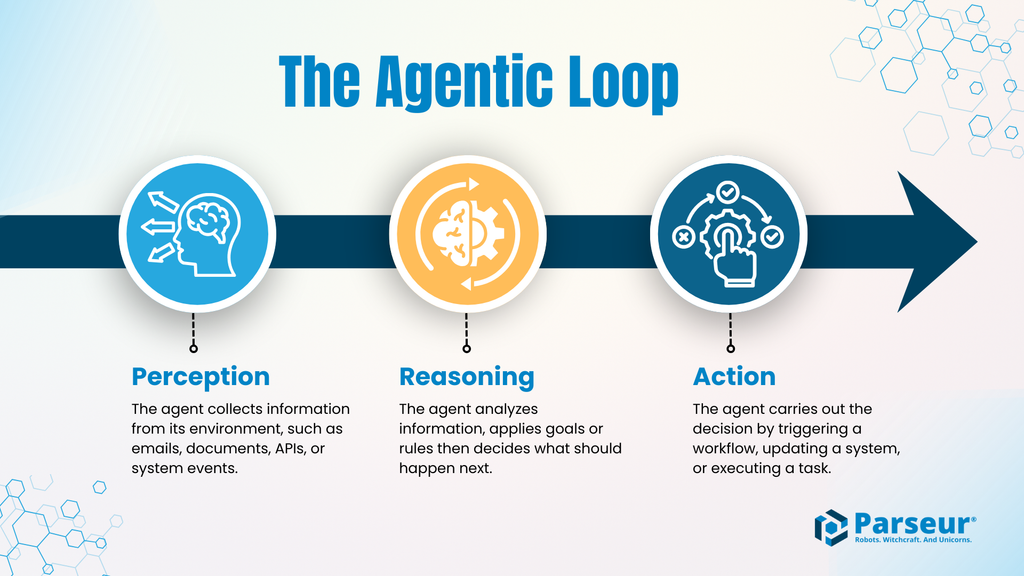
Vocabulary coverage spans 60 languages. But the more consequential design choice is the streaming architecture itself: because partial results arrive almost immediately, an agent can begin formulating a reply while the user is still talking. That is the difference between a system that feels like a walkie-talkie and one that behaves like a person who anticipates where a sentence is heading.
Through the end of the year, Microsoft is pricing the service at an introductory $0.54 for each hour of audio processed. For high-volume call centers or always-on assistants, that rate is the number that will determine whether the speed advantage translates into actual deployments.
A single voice across 23 languages
On the synthesis side, MAI-Voice-2.1 is built to speak 23 languages while retaining the same vocal identity, adopting a native accent in each one. Rather than swapping in a different-sounding speaker for every locale, the model aims to preserve a consistent persona — an attribute that brands and product teams tend to care about when an assistant becomes a recognizable part of a service.
A second variant, MAI-Voice-2.1-Flash, trades some of that richness for speed. Microsoft reports latency of 150 milliseconds and a price of $15 per million characters, down from $22 for the standard model.
The pricing math for voice agents
Cost structure is often what decides which model a startup builds on, and Microsoft has given developers a clear ladder:
- Transcription: $0.54 per hour of audio at the introductory rate, valid through the end of the year.
- Synthesis (standard): MAI-Voice-2.1, carrying the full multilingual voice behavior.
- Synthesis (fast): MAI-Voice-2.1-Flash at 150 milliseconds of latency and $15 per million characters, versus $22 for the standard tier.
Those figures put the company in direct competition with a crowded field of speech vendors, where per-character and per-minute rates are scrutinized as closely as benchmark scores.

Cloning voices — with safeguards attached
Both voice models can reproduce a speaker's voice from only a few seconds of reference audio. That capability is powerful for accessibility tools, localization, and personalized assistants, and equally powerful as a vector for impersonation. Microsoft says built-in safeguards are intended to prevent misuse, though the mechanics of those guardrails have not been spelled out publicly.
Where developers can get the models
The models are available through Microsoft Foundry and the MAI Playground, among other distribution channels. The two voice models also appear on OpenRouter, which gives developers a way to route requests alongside competing models without committing to a single provider.

The uncanny valley, measured
Microsoft ran a test in which roughly 4,000 participants listened to the synthesized voices. About half of them believed they were hearing an actual person. That result cuts both ways: it suggests the models have crossed a meaningful realism threshold, and it hints at how much ground remains before listeners reliably accept synthetic speech as human.
For product designers, the takeaway is that the remaining skepticism is not evenly distributed. Listeners fooled in a short trial may still react differently when a cloned voice asks for account details or delivery instructions, contexts where expectations about authenticity run higher.
What remains unverified
Several of the marquee claims in the announcement come from Microsoft itself. Independent evaluation of the transcription accuracy ranking, the latency figures under real network conditions, and the robustness of the cloning safeguards all remain open questions:
- The Artificial Analysis accuracy ranking is asserted by Microsoft and not yet confirmed by outside testing.
- Latency numbers describe model behavior and may not reflect end-to-end performance in production.
- The safeguards against voice-cloning abuse are described only in general terms.
Developers evaluating the stack will want to test it against their own audio — accented speech, noisy environments, overlapping speakers — before treating the published numbers as a baseline.
Why it matters
Voice agents have been bottlenecked less by language understanding than by the mechanics of turn-taking. A system that waits for silence cannot feel conversational. By pushing partial transcription below the threshold of human reflex and pairing it with synthesis that runs in a fraction of a second, Microsoft is betting that the next wave of assistants will be judged on rhythm as much as on intelligence. Whether the pricing and the safeguards hold up under real-world load is the test that comes next.
This article is based on reporting by The Decoder. Read the original article.
Originally published on the-decoder.com