A long-delayed surgical platform reaches a major milestone
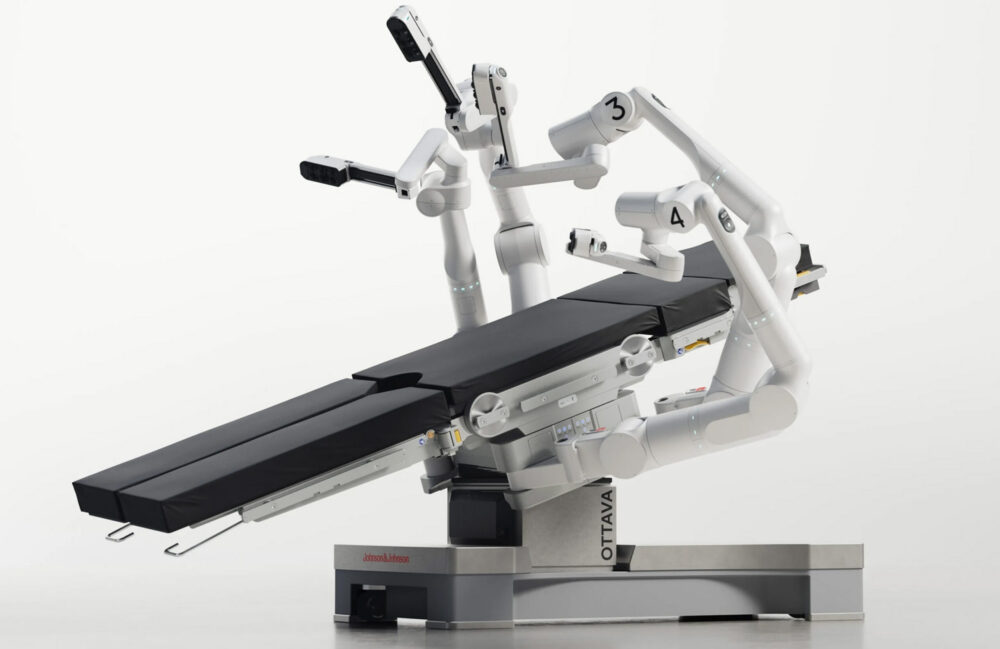
Johnson & Johnson MedTech has formally unveiled its Ottava surgical robot after receiving FDA de novo authorization, giving the company a regulatory milestone and a clearer entry point into one of medtech’s most contested segments. The system is notable not just because it is finally public after a long buildup, but because of the way it is designed: Ottava integrates four robotic arms directly into the operating table instead of relying on the more familiar boom-and-cart arrangement used in many robotic operating rooms.
That architecture is the core of J&J’s pitch. The company says the table-integrated layout reduces the space required in the operating room by 30% to 50% compared with conventional boom-and-cart systems. In practical terms, that is less about visual novelty than workflow. Surgical robotics has often promised precision and consistency, but hospitals also have to live with crowded rooms, equipment positioning constraints, turnover times, and the practical burden of fitting sophisticated systems into varied clinical environments. Ottava is being positioned as a response to those operational frictions as much as a surgical tool.
For J&J, the authorization is also strategically important. Robotic surgery has become a defining category in advanced medical devices, where platform decisions can shape long-term hospital purchasing, training, and ecosystem lock-in. A system that claims to reduce footprint while automating parts of setup and breakdown is a direct attempt to compete on usability and room efficiency rather than on branding alone.
What makes Ottava different
The most distinctive feature of Ottava is its physical integration with the table. The robot’s four arms emerge from beneath the operating surface and can be tucked away when not in use. According to J&J, software, motors, and sensors coordinate arm movement into predefined procedural positions at the push of a button. That approach is meant to minimize the need for repeated manual setup while opening more surrounding space for staff.
That matters because robotic systems do not operate in isolation. They share the room with anesthesiology teams, nurses, visualization equipment, instrument tables, and imaging workflows. A smaller or cleaner operating footprint can affect how easily a room can be configured and reconfigured through the day. If the company’s space-saving claim holds up in real deployments, the advantage could resonate with hospitals that want robotic capability without redesigning every room around it.
J&J also tied Ottava’s launch to a series of instrument-level improvements. One of the examples it highlighted is a two-in-one needle driver that gives surgeons separate “cut only” and “suture only” modes. The company linked that design to survey data showing that 83% of surgeons reported at least one inadvertent suture cut per month during robotic procedures. The proposed fix is not cosmetic; it targets a specific failure mode in robotic suturing by separating actions that can otherwise be too easily conflated.
Another example is a redesigned monopolar scissor instrument. J&J cited survey findings that 98% of surgeons reported dull or poorly cutting monopolar scissors, with 30% saying they encountered the issue all or most of the time. In response, the company said it developed a patented scissor design intended to maintain blade alignment for more consistent cutting, including during smaller and more delicate dissection movements.
Workflow, ergonomics, and the platform play
The surgeon interface is another part of the strategy. Ottava’s console is designed to let surgeons sit upright while maintaining access to the full workspace. J&J says the setup is intended to support a more natural posture, reduce eye and neck strain, and preserve precise control over movement. Surgeons can also save personalized settings that load when they sign in, which points to a familiar trend in high-end medical systems: personalization as a way to reduce setup time and standardize preferred working conditions.
These details may sound incremental, but that is how platform categories often evolve. Once basic robotic assistance becomes established, competition shifts toward the accumulation of practical improvements: easier setup, better ergonomics, more reliable instruments, reduced clutter, and tighter digital integration. Hospitals buy systems, but they also buy service models, staff habits, and procedural consistency.
Ottava is connected to J&J’s Polyphonic digital ecosystem, the same broader digital environment referenced with the company’s Monarch robotics-assisted bronchoscopy platform. That suggests J&J is not presenting Ottava as a standalone machine, but as part of a connected surgical technology stack. The long-term value of that approach will depend on how well the ecosystem integrates data, procedure support, and workflow management across products.
At the same time, FDA de novo authorization gives Ottava a formal regulatory foundation, but not instant market dominance. The harder phase begins after launch, when hospitals evaluate installation requirements, instrument performance, training burden, and real-world throughput against incumbent systems and existing operating practices.
Why the launch matters now
The launch lands at a moment when surgical robotics is under pressure to prove broader value beyond headline innovation. Hospitals are dealing with capital constraints, staffing challenges, and constant demands to improve room utilization. A robot that promises not only surgical capability but a smaller footprint and more automated setup enters that environment with a more operations-centered argument than many early-generation systems did.
That does not mean the claims are fully validated by launch materials alone. The available information here comes from the company’s announcement and product description, not from independent comparative trials or post-deployment utilization studies. But the contours of J&J’s strategy are clear. Ottava is being framed as a system that tries to remove friction in the operating room while refining commonly used robotic instruments around specific surgeon complaints.
If that combination translates into easier adoption and reliable procedural performance, Ottava could become a serious player in soft-tissue robotics. If not, it will join the long list of technically ambitious medical platforms that struggled to convert engineering elegance into clinical routine.
For now, the significance is straightforward: J&J has moved Ottava from anticipation to authorized product, and it is doing so with a differentiated design thesis. In a market where layout, efficiency, and surgeon experience increasingly matter alongside precision, that may be the right battleground.
This article is based on reporting by The Robot Report. Read the original article.
Originally published on therobotreport.com