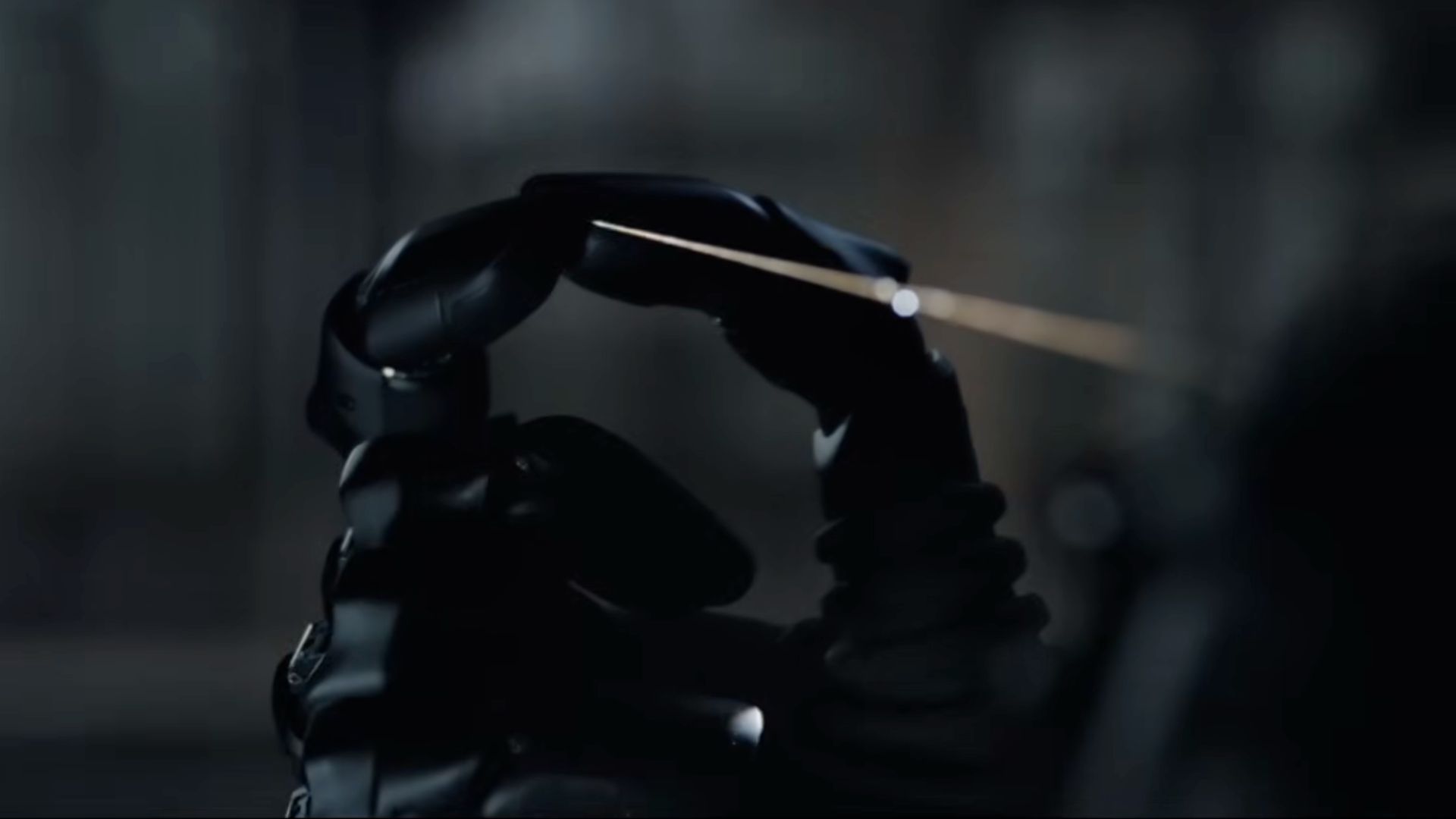
A Robot Hand Takes On Silk Embroidery
Chinese robotics startup AGILINK has demonstrated a robot hand performing basic embroidery techniques with silk, according to a video highlighted by Interesting Engineering. The demonstration is notable not because embroidery is a new craft, but because it places a robotic system in direct contact with one of the most delicate and unforgiving materials around. The title of the report describes the hand as mastering delicate silk embroidery with precise finger control, a phrase that points to the core technical challenge: making a machine move its fingers with enough care to handle thread, needle, and fabric without tearing or tangling them.
The URL for the report references Suzhou embroidery, a term tied to a traditional embroidery style. That association matters. A robot that can perform even basic embroidery techniques is being measured against a human craft tradition where small errors are visible and often irreversible. The video format also matters: it suggests a visual demonstration rather than a purely technical paper, allowing viewers to see the hand in action.
Why Embroidery Is a Difficult Test for Robotic Hands
Embroidery is a useful stress test for dexterous manipulation because it combines several hard problems at once. The robot must hold or guide a needle. It must manage a length of thread that can twist, slip, or catch. It must interact with a fabric surface that can move, stretch, or deform. And it must do all of this at a scale where a few millimeters can decide whether a stitch lands correctly or becomes a snag.
For a robot hand, the difficulty is not only grip strength. It is the ability to modulate force. Too much pressure can crush or pull the silk. Too little can let the needle slip. The fingers must also coordinate with one another, because a needle is not a simple object to grasp. It has a sharp point, a thin shaft, and an eye for thread. Each part demands a different kind of contact. The demonstration described here focuses on basic embroidery techniques, which suggests the system is not yet attempting the full complexity of a finished embroidered artwork. But even basic stitching requires a level of finger control that many robotic hands struggle to achieve.

What the Demonstration Shows—and What It Leaves Open
Based on the available description, the key facts are straightforward. AGILINK is a Chinese robotics startup. Its robot hand performed basic embroidery techniques using silk. The demonstration was captured in a video. The report emphasizes precise finger control. Those facts are enough to establish the milestone, but they do not answer every question a robotics watcher might ask.
For example, the available information does not specify whether the hand was teleoperated by a human, guided by a pre-programmed script, or controlled by an AI policy that learned from demonstrations. It does not say how many fingers the hand has, what sensors it uses, or whether it can feel the thread tension. It does not describe the complexity of the embroidered pattern, the speed of the stitching, or the success rate across multiple attempts. It also does not clarify whether the silk was held taut by a frame or whether the hand had to manage the fabric as well as the needle. These gaps are not criticisms of the demonstration. They simply mark the difference between a compelling video and a fully specified engineering result.
Precise Finger Control Is the Real Headline
The phrase precise finger control deserves attention. In robotics, hands are often evaluated on their ability to grasp and move objects. Picking up a block is one level of skill. Rotating a small object within the fingers is another. Using a tool to manipulate a flexible material is a higher level still. Embroidery sits near the upper end of that spectrum because the robot cannot rely on rigid geometry alone. Silk does not behave like a metal part. It can fold, drift, and snag. A hand that can work with silk is a hand that can adapt.

That adaptability is what makes the demonstration relevant beyond textiles. The same control principles apply to tasks such as handling wires, assembling small electronics, preparing medical sutures, or working with soft materials in a laboratory. A robot that can stitch may one day assist with procedures or processes that require delicate touch. The embroidery video is not proof that all those applications are ready. It is a sign that the underlying manipulation problem is being taken seriously.

AI and the Path to More Human-Like Dexterity
The category around this demonstration is AI and robotics, which reflects a broader trend. Modern robot hands are increasingly paired with learning systems that help them generalize from limited examples. Instead of programming every motion by hand, researchers can train policies that respond to visual and tactile feedback. If AGILINK’s hand is using such an approach, the embroidery demonstration could be a way to show that the system can handle variation, not just repeat a fixed motion.
However, the available details do not confirm how much AI is involved. The title and excerpt point to a robot hand and precise control, not to a specific learning method. That ambiguity is common in early demonstrations. Companies often release a video to show capability before publishing technical details. The video becomes a signal: the hand can do this. The follow-up questions are about reliability, repeatability, and whether the capability can be scaled.
A Traditional Craft Meets Modern Robotics
Suzhou embroidery is a craft that rewards patience, precision, and a steady hand. Pairing it with a robotic system creates a striking image. On one side is a tradition built on human skill and years of practice. On the other is a startup testing whether motors, sensors, and algorithms can approximate a small part of that skill. The contrast is part of why the demonstration attracts attention.
It also raises cultural questions. If robots can perform basic embroidery, does that threaten artisans or support them? The answer may depend on how the technology is used. A robot that handles repetitive preparatory steps could free human embroiderers to focus on creative and complex work. A robot that attempts to mass-produce imitation embroidery could create new pressures. The video alone does not settle those debates, but it puts them on the table.
Open Questions for AGILINK and the Field
- Was the embroidery performed autonomously, or was a human controlling the hand remotely?
- How many fingers does the hand have, and what kind of joints or actuators does it use?
- What sensors allow it to detect thread tension, needle position, or fabric movement?
- How long did the stitching take, and how often did the hand succeed without errors?
- Can the system handle different fabrics, thread thicknesses, or embroidery patterns?
- Is the goal a commercial product, a research platform, or a demonstration of general dexterity?
The Bottom Line
AGILINK’s robot hand has been shown performing basic silk embroidery, a task that demands precise finger control and careful interaction with a delicate material. The demonstration is a meaningful visual milestone for dexterous robotics, even though many technical details remain undisclosed. It suggests that robotic hands are moving beyond simple picking and placing toward tool use and soft-material manipulation. Whether this particular hand can repeat the feat reliably, scale to complex patterns, or find a practical application will depend on information not yet available. For now, the image of a robot hand working with silk is enough to show that the boundary between human craft and machine dexterity is being tested.
This article is based on reporting by Interesting Engineering. Read the original article.
Originally published on interestingengineering.com