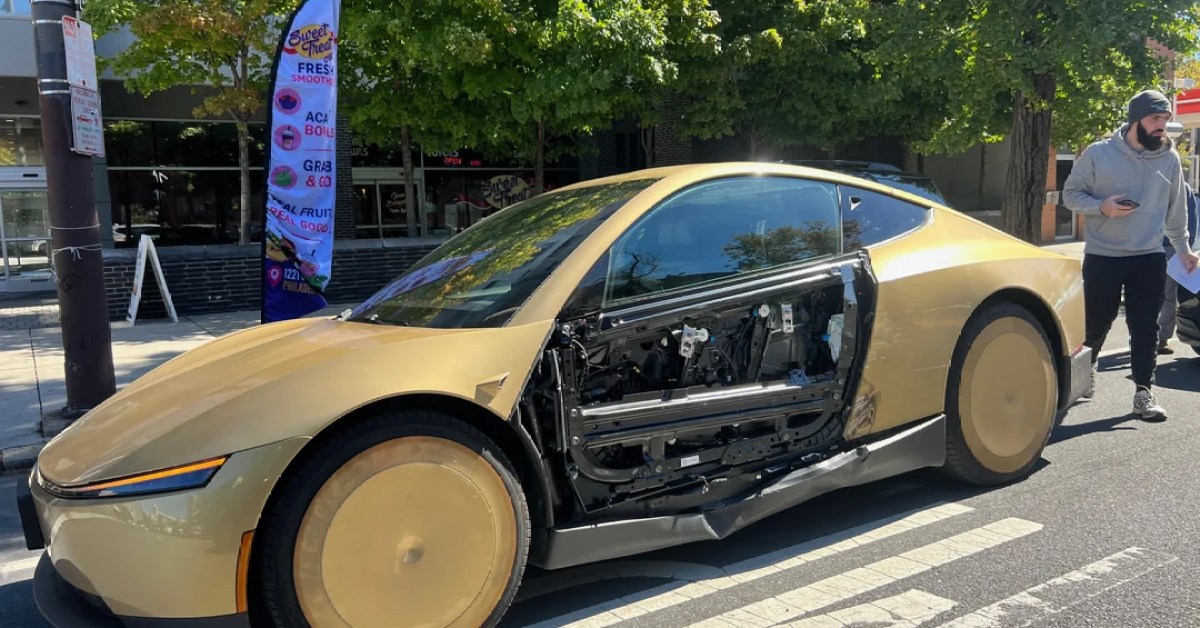
Tesla's futuristic Cybercab, a vehicle designed specifically for autonomous ride-hailing, may be more versatile than originally assumed. A newly surfaced detail suggests that the vehicle includes a hidden virtual joystick, enabling manual operation when needed. This seemingly minor addition raises significant questions about the design philosophy behind Tesla's robotaxi program and the future of user control in autonomous vehicles.
A Robotaxi With a Manual Fallback
The Cybercab was famously introduced as a purpose-built autonomous shuttle, with no steering wheel or pedals. Its interior is designed around passengers rather than drivers. So what does it mean for the vehicle to have a joystick? The discovery points to the possibility that even highly autonomous systems need to offer a direct method of human intervention under certain circumstances.
What Exactly Is a Virtual Joystick?
Unlike a physical control, a virtual joystick would be rendered on a screen interface, likely one of the touchscreens installed in the vehicle. It could be used by an operator or an engineer to steer the car during development, launch, or in situations where the autonomy stack fails. The word "hidden" suggests the interface is kept out of the passenger's normal view, possibly activated through a service menu or a special sequence.
The use of a virtual joystick rather than a traditional steering wheel aligns with the minimalist ethos of the Cybercab. It preserves the clean dashboard and maximizes interior space while still offering a control pathway for trained personnel to take over.
Why Would an Autonomous Vehicle Need Manual Control?
At first glance, adding a joystick could seem contradictory. If the vehicle is supposed to drive itself, why allow a human to take command? There are several practical reasons why manufacturers include such overrides in development vehicles.
- Testing and validation: Engineers need to complete specific maneuvers during early prototyping that aren't yet automated.
- Remote assistance: If the vehicle encounters an edge case it cannot handle, a remote operator might guide it to safety.
- Regulatory compliance: Some jurisdictions require that an autonomous vehicle can be brought to a manual mode by a certified person.
- Geofenced low-speed operations: In private depots or after an accident, a human may need to reposition the vehicle without fully engaging the autonomy stack.
Having a joystick built into the software platform gives Tesla a low-cost, integrated way to support these scenarios without re-engineering the entire cockpit.
Design Philosophy and User Control
For years, Tesla has pushed toward eliminating the traditional driving interface. The Model S and Model X have moveable steering yokes, and the Cybertruck uses a yoke-style wheel. The Cybercab goes further by removing any conventional controls. This bold decision has been championed as a necessary step toward spacious interiors and lower manufacturing costs.
The presence of a hidden joystick doesn't negate that vision. Instead, it reflects the need for a fail-safe mechanism that doesn't compromise the passenger-first design.
Could Passengers Ever Use the Joystick?
It's unlikely that everyday riders would have access. For safety, this manual control would probably be confined to Tesla staff, security personnel, or technicians. However, this raises interesting questions about who is allowed to interfere and under what conditions. What if a passenger needs to take control in an emergency? In conventional cars, the driver is trained. In a robotaxi, passengers are not. Allowing untrained passengers to operate a vehicle through a virtual joystick might create more hazards than it solves.
This is probably why the interaction is marked as hidden. It is not intended to be a consumer feature, but rather an engineering tool or a remote-control interface.
Safety and Security Considerations
Any manual override system introduces security concerns. A virtual joystick, hidden or not, could become another attack vector for malicious actors. If accessed through a diagnostic mode, it would need to be protected against unauthorized use. Tesla would have to encrypt and gate the activation process through credentials and possibly a physical key.
On the other hand, manual control could significantly improve safety in uncommon situations. For example, if an incident occurs and the vehicle is in an intersection, a remote operator could use the joystick to pull the car to the curb. This provides a level of flexibility that full autonomy may not yet have.
What This Means for the Autonomous Vehicle Industry
The revelation of the hidden joystick could set a precedent for other autonomous vehicle developers. Many robotaxi competitors use remote-assistance centers that can steer the car over a network. Some implement actual steering wheels for fleet employees. Tesla's virtual interface could be a more streamlined and cost-effective alternative that other manufacturers may adopt.
As autonomous driving technology matures, the line between driver and passenger blurs. The Cybercab's design already suggests that the passenger cabin is the product, and the autonomy stack is the unseen engine. Adding a virtually accessible joystick is an acknowledgment that until the technology is truly flawless, there will always be a small window for human judgment.
It also signals that Tesla’s interest in the robotaxi market is grounded in practical, deployable systems. The company is planning to start producing the Cybercab in the coming years, and it wants to ensure that its fleet can be serviced, recovered, and tested without requiring a full remanufacture of its automated systems.
Final Thoughts
While the information is scant, the existence of a hidden virtual joystick on the Tesla Cybercab is a fascinating mini-mystery. It aligns with Tesla's willingness to use software and graphical interfaces to replace traditional components. It also suggests that a fully driverless future may still require a human element, but one that is carefully tucked away out of sight.
Whether this joystick appears in the final production cars or is only intended for development fleets remains to be seen. What is certain is that the Cybercab, even in its current form, remains an efficient testbed for Tesla's largest ambitions: creating a fully autonomous transportation service that can scale globally.
This article is based on reporting by Electrek. Read the original article.
Originally published on electrek.co