Rolls-Royce Carves Art with Lasers
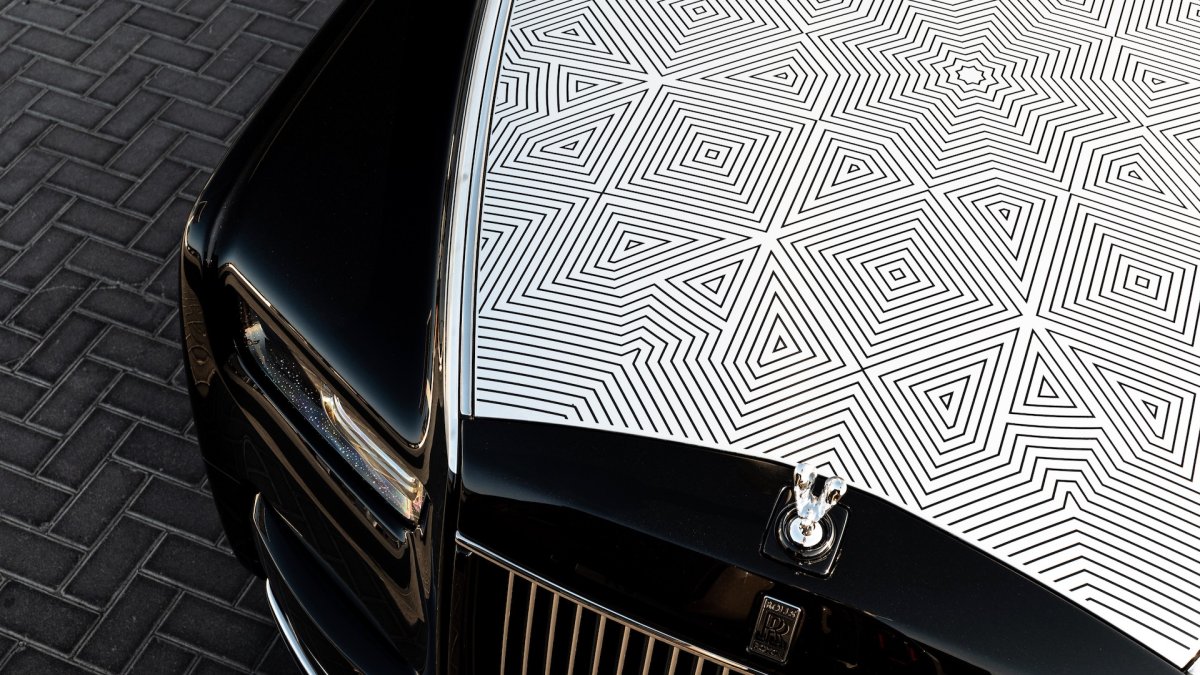
The Phantom Arabesque is the first Rolls-Royce to feature a laser-engraved hood, and it took five years to develop. Inspired by Middle Eastern mashrabiya wood screens, the intricate pattern is etched at a depth of 145 to 190 microns, just enough to reveal a darker color layer beneath the surface paint. The result produces subtle visual shifts as light moves across the bodywork.
Overseen by the Rolls-Royce Private Office in Dubai, the process requires meticulous hand sanding after the laser work to achieve the final finish. The technique offers a significant advantage over traditional painted patterns: it is both more intricate and more durable, withstanding the elements without fading or chipping.
Mercedes-Benz Prints Paint Like an Inkjet
Mercedes-Benz is pursuing a different technological approach with its PixelPaint system, first unveiled in 2024. The robotic tool deposits small amounts of paint from close proximity, functioning much like an oversized inkjet printer. A 3D camera and monitoring software ensure precision, enabling intricate, repeatable designs that would be impossible to achieve by hand.
The system debuted commercially on the 2026 Mercedes-Maybach SL 680 Monogram Series, which features repeated Maybach logos across its hood. Developed in partnership with robotics company ABB, PixelPaint entered production in 2025 and operates out of Mercedes' Manufaktur Studio in Sindelfingen, Germany, which opened in late 2024 to handle expanding bespoke orders.
A Booming Market for the Ultra-Wealthy
These technologies reflect a rapidly growing market for bespoke automotive customization. Rolls-Royce reports that its North American average transaction price has climbed from under $300,000 to over $500,000 in the past decade. Global commissions through its five invitation-only Private Offices doubled in 2025, signaling that the wealthiest buyers are demanding ever more elaborate personalization.
Environmental and Future Benefits
Beyond aesthetics, the PixelPaint system offers practical advantages. It reduces paint waste, lowers volatile organic compound emissions, and eliminates the need for paint booth runoff treatment. By removing the need for masking tape and repeat applications, it also saves significant production time. Mercedes sees potential to extend the technology beyond the luxury segment into mainstream manufacturing, where efficiency gains could benefit a broader range of vehicles.
This article is based on reporting by The Drive. Read the original article.
Originally published on thedrive.com