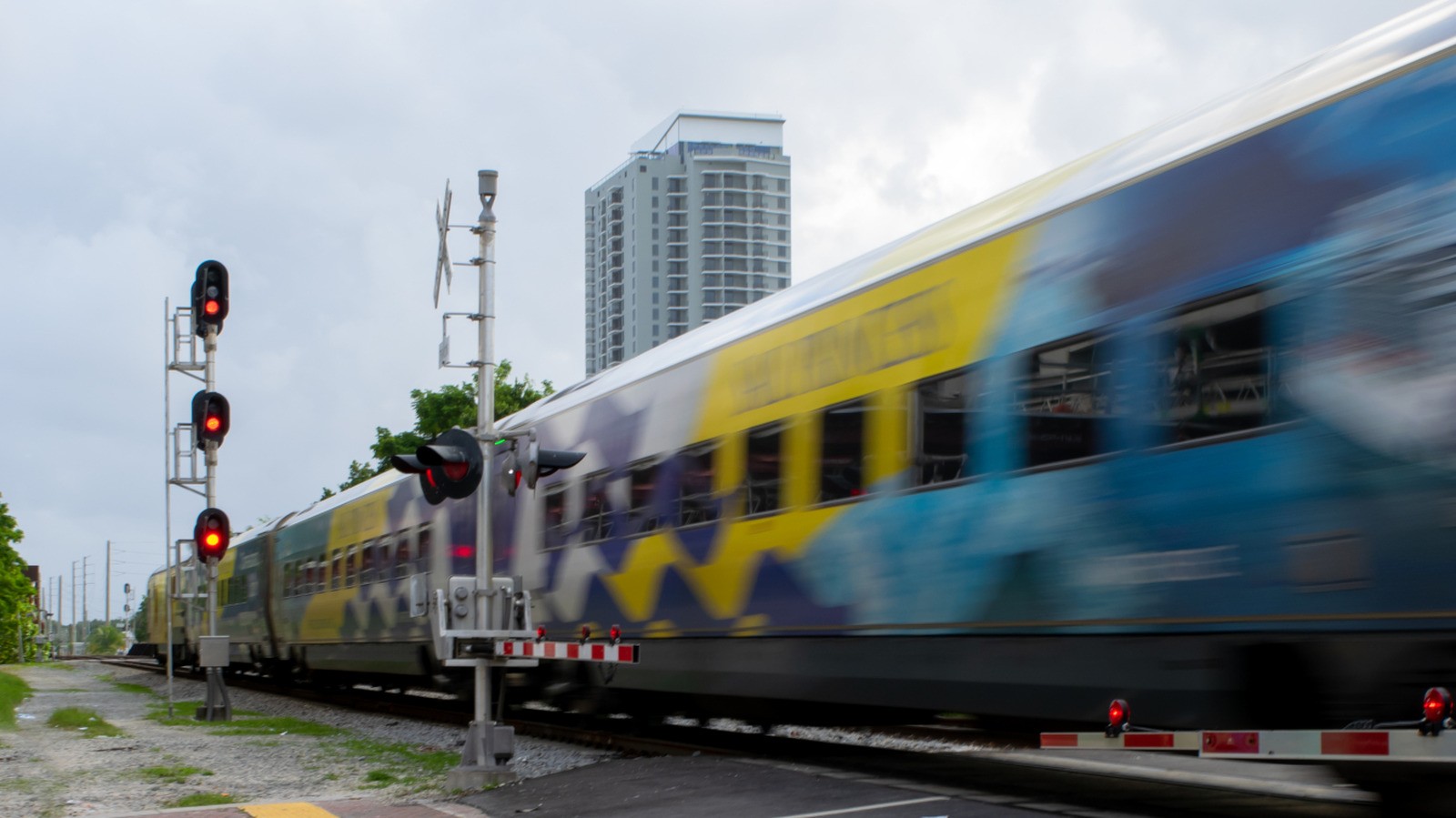
Brightline heads toward a financial reckoning
Brightline, the privately operated passenger rail company that has become one of the most closely watched transportation experiments in the United States, is nearing a possible court-supervised restructuring as major debt payments come due in June. The company is still seeking a buyer, but reporting cited in the source material says that effort has not produced an acceptable offer, leaving restructuring talks as the more immediate path.
The timing matters. According to the source text, Brightline is facing major debt payments due on June 15 and July 1. Competing groups of municipal and corporate bondholders have proposed loans that would keep the railroad operating while it restructures in court. That suggests the central issue is not an immediate collapse of train service, but a balance-sheet problem severe enough to force a reset in ownership or financing.
A rail service with strong visibility and heavy liabilities
Brightline has occupied a rare position in American transportation. It has been presented as proof that modern passenger rail can attract riders in corridors where driving is slow and flying is inconvenient. The company built a recognizable brand around cleaner stations, newer trains, and a more polished customer experience than many travelers associate with legacy US rail service.
Yet the source material points to a basic contradiction at the heart of the business. Ridership may be growing, but the company is carrying billions in debt and projected faster growth than it ultimately achieved. A private rail operator can win praise from riders and still struggle if the financing assumptions behind expansion are too aggressive.
That distinction is important for understanding what Brightline’s situation does and does not prove. It does not necessarily show that Americans are uninterested in trains. Instead, it raises harder questions about whether private passenger rail in the US can scale without a capital structure that is more patient, cheaper, or more publicly supported.

What restructuring could look like
The most immediate signal from the reporting is that Brightline is considering rescue financing tied to restructuring. In practice, that would allow trains to keep running while the company works through its debts in court. It could also position lenders to become owners as part of that process.
That possibility would mark a significant shift. Brightline has been closely associated with the vision of its founder and backers, but a restructuring would move practical control toward creditors focused on preserving value and stabilizing operations. For passengers, the near-term outcome could be relatively calm if service continues uninterrupted. For investors and policymakers, the event would be more consequential, because it would show how fragile large private rail bets can become when growth trails debt obligations.
The company’s self-imposed sales process appears to have bought time, but not enough. Bankers reportedly extended a May 22 deadline for bidders in hopes of attracting stronger interest. With that window now effectively exhausted, the financing conversation has shifted from expansion and exits to survival and control.
More than a company story
Brightline’s predicament is also a test case for transportation policy. Passenger rail in the US has long struggled to compete against highways and air travel, both of which benefit from deeply embedded public systems and spending. Brightline tried to show that private capital could move faster. Even if the trains continue operating, a restructuring would underscore how difficult it is to make rail pencil out on commercial terms alone.
The source material also notes another factor that has shaped Brightline’s reputation: safety concerns and a high-profile record of fatalities along its route. That issue is part of the public narrative around the company, even though the immediate restructuring push appears tied to debt rather than deaths. In other words, financial pressure, not only reputational damage, is what has brought the railroad to this point.
That separation matters because it reframes the company’s crisis as structural rather than purely operational. A business can survive controversy if its fundamentals are strong enough. The harder problem is when revenue growth, financing costs, and expansion plans no longer align.

What comes next
Several outcomes remain possible. A buyer could still emerge, though the reporting indicates that scenario looks increasingly remote. Brightline could secure enough lender support to keep operating through a formal restructuring. Or the process could reshape the company more dramatically, with creditors taking control and reassessing future ambitions.
For now, the most likely immediate story is continuity for riders and upheaval for the capital stack. That is not the same as failure of passenger rail demand. It is, however, a warning about how expensive it is to build and operate modern intercity rail in the US, especially when financed with substantial debt and ambitious expectations.
If Brightline does enter restructuring, the industry will be watching closely for two signals. The first is whether trains keep running smoothly enough to preserve customer trust. The second is whether a reorganized Brightline can emerge with a financial model that fits the realities of American rail rather than the optimism that launched it.
- Major debt payments are due June 15 and July 1.
- Bondholder groups have proposed loans to keep operations running during restructuring.
- The company’s search for a buyer has not yet produced an acceptable deal.
- The core pressure appears to be debt load, not an immediate shutdown of service.
Whatever happens next, Brightline has already forced a national conversation about what passenger rail can be in the US. Its next chapter may determine whether that conversation is about expansion, rescue, or a more realistic hybrid between private ambition and public support.
This article is based on reporting by Jalopnik. Read the original article.
Originally published on jalopnik.com