Introduction
Alternators are essential for powering a car's electrical systems, but they also place a parasitic load on the engine, reducing power output and fuel economy. While automakers have explored solutions like 48-volt electrical systems, these add weight and complexity. The mad engineers at Garage 54, a Russian YouTube channel famous for unconventional automotive experiments, have taken a different approach: an alternator driven by exhaust gases, much like a turbocharger.
The Concept: Exhaust-Driven Alternator
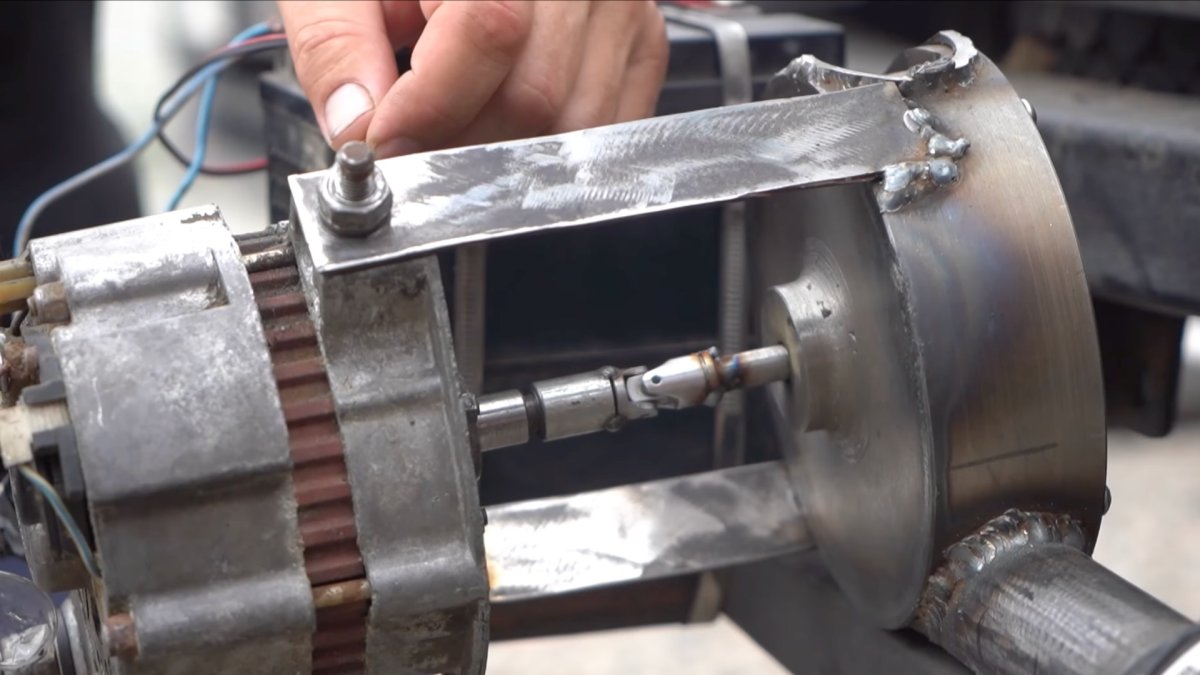
Instead of being belt-driven from the crankshaft, Garage 54's alternator alternative uses a turbine spun by exhaust flow. The spinning motion generates electricity, essentially creating a miniature power plant turbine. The team measured the RPM of a conventional alternator to set a design target, then built a custom housing and fan-like wheel with flat steel blades.

Design and Engineering Challenges
The turbine alternator consists of a round housing and a bladed wheel. Exhaust gases enter and exit through precisely located ports. If ports were directly opposite, gases wouldn't travel far enough to spin the wheel efficiently. The clearance between wheel and housing had to be minimal to extract maximum energy from exhaust gases. The entry port and chamber volume—determined by housing diameter, blade count, and position—were kept small to maintain pressure. This required trial and error.
Installation and Testing
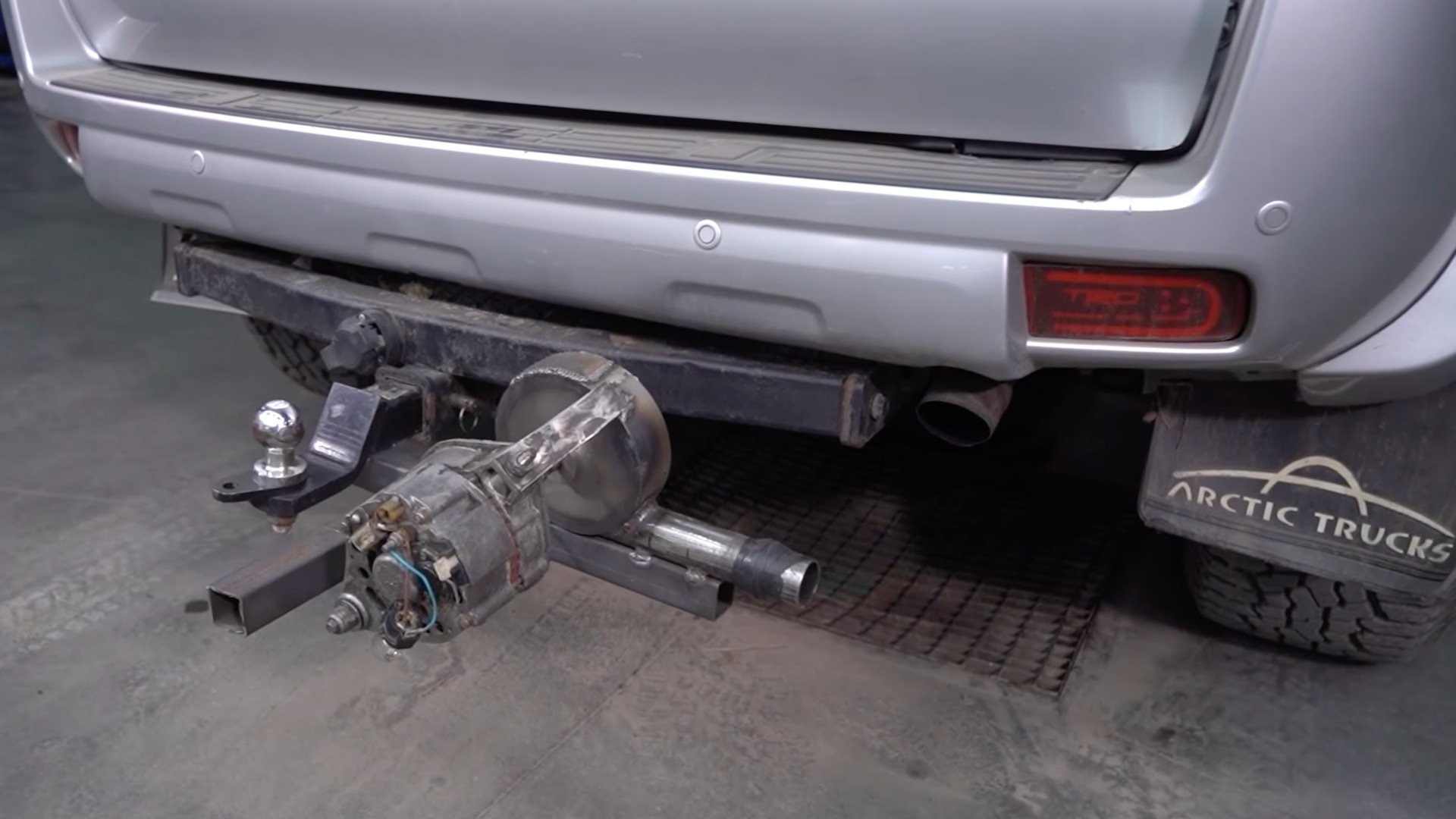
The finished device is compact but far from OEM-approved. The turbine drives a conventional alternator via a tiny driveshaft, plumbed directly to the tailpipe. The entire apparatus hangs off the rear bumper on a modified trailer hitch. Testing aimed to power three light bulbs at idle. At about 2,500 RPM, the turbo-alternator succeeded in keeping the bulbs lit, albeit with a diabolical noise. The hosts noted concerns about excessive backpressure and the system's practicality.

Conclusion
While not a production-ready solution, Garage 54's exhaust-driven alternator demonstrates an innovative approach to reducing engine parasitic loss. The experiment proves the concept works, but significant hurdles remain for real-world application.
This article is based on reporting by The Drive. Read the original article.
Originally published on thedrive.com