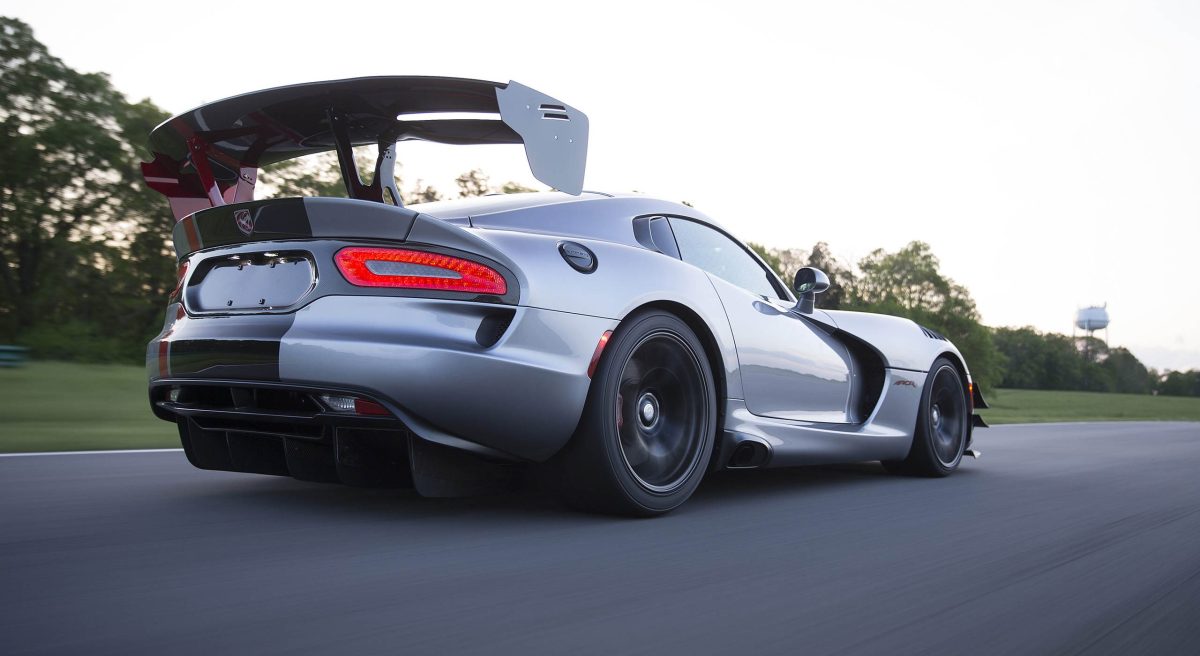
The Viper is not returning
Dodge has delivered one of the clearest answers performance-car fans are likely to get: the Viper is done. In an interview with The Drive, SRT chief Tim Kuniskis said the car “reached the end of its life cycle,” directly rejecting the idea that a sixth-generation revival is on the way.
For years, the Viper has remained a perennial comeback rumor because it occupied such a singular place in American performance culture. It was loud, raw, manual, and unapologetically difficult. That same analog identity helped define its appeal, but it also made the car harder to carry into a market shaped by evolving safety rules and more software-heavy performance benchmarks.
The reason Dodge says it died
Kuniskis told the outlet that the Viper did not disappear because of emissions rules or low sales, two explanations commonly repeated in enthusiast circles. Instead, he pointed to ejection-mitigation requirements. According to his account, complying would have required airbag placement that was effectively incompatible with the way occupants sat in the car.
That is a more specific and more structural explanation than the folklore surrounding the Viper’s death. It suggests that the car’s architecture, not simply its engine or demand profile, collided with the regulatory path ahead. Once that happens, revival becomes more than a branding exercise. It becomes an engineering and packaging problem that may erase the traits that made the original special.
An analog icon in a digital performance era
Kuniskis also used the interview to underline the Viper’s core contradiction. He praised its track ability and its capacity to compete globally despite being an analog, manual-transmission machine. But he also acknowledged the market had moved on. In his telling, a modern Viper would likely have needed to become an automatic or dual-clutch car.
That admission gets to the heart of why some legacy performance names do not return cleanly. Once a product is strongly tied to a specific driving philosophy, updating it to fit current expectations can undermine the very character enthusiasts want preserved. The Viper’s brutality was the brand. Smoothing it out might make it viable, but it might also make it no longer a Viper in the cultural sense.
Why this matters beyond one car
The Viper’s end is also a case study in how regulation and performance technology reshape automotive identity. Track performance today is increasingly achieved through automation, software control, gearbox sophistication, and complex packaging. That does not just make cars faster. It narrows the space for vehicles built around simplicity and driver intimidation.
Kuniskis’ reference to the C8 Corvette underscores that point. Chevrolet’s mid-engine sports car reflects a different answer to the same era: embrace advanced engineering, accept a new layout, and optimize performance accordingly. The Viper, by contrast, belonged to a world where excess displacement, manual control, and raw ergonomics were still central to the product brief.
What remains
- The Viper’s absence is now being framed by Dodge leadership as final, not temporary.
- The key issue cited was ejection-mitigation compliance, not the explanations most commonly repeated by fans.
- The interview also suggests that any modern equivalent would have had to abandon part of the formula that defined the original.
That makes the Viper less a delayed comeback than a closed chapter. In today’s market, some icons can evolve. Others become artifacts of a specific engineering moment. Dodge is signaling that the Viper belongs in the second group.
This article is based on reporting by The Drive. Read the original article.
Originally published on thedrive.com