Every time a new electric vehicle reaches reviewers, a familiar ritual plays out. Someone charges it to full, points it down an interstate at an unrealistic speed, drives until the battery hits zero, and publishes the number as a final judgment on the entire machine. The 2026 Jeep Recon just went through that ritual, and the reaction tells you more about contemporary EV writing than it does about the SUV.
A Benchmark Born From a 2007 Tabloid Saga
Cast your mind back to 2007, when an astronaut reportedly pulled on a Maximum Absorbency Garment — the MAG, which is the polite term for the diaper worn on spacewalks — got into her car, and drove roughly 900 miles without stopping from Houston to Orlando to confront her ex's new girlfriend. She has since said the media exaggerated the tale and that she never actually wore the diaper. Regardless, the episode was wild enough to permanently install the phrase "astronaut love triangle" in the cultural vocabulary.
Somewhere along the way, that story appears to have become an unspoken engineering standard for electric cars. When a new EV lands, reviewers immediately chase the absolute 100-to-zero-percent highway range figure. Anything that cannot match Tesla efficiency on the interstate and keep a driver moving for four to six hours straight gets marked down as inferior. It is a test designed around a driver with no bladder, no passengers, and no reason to ever stop.
What the Jeep Recon Actually Delivered
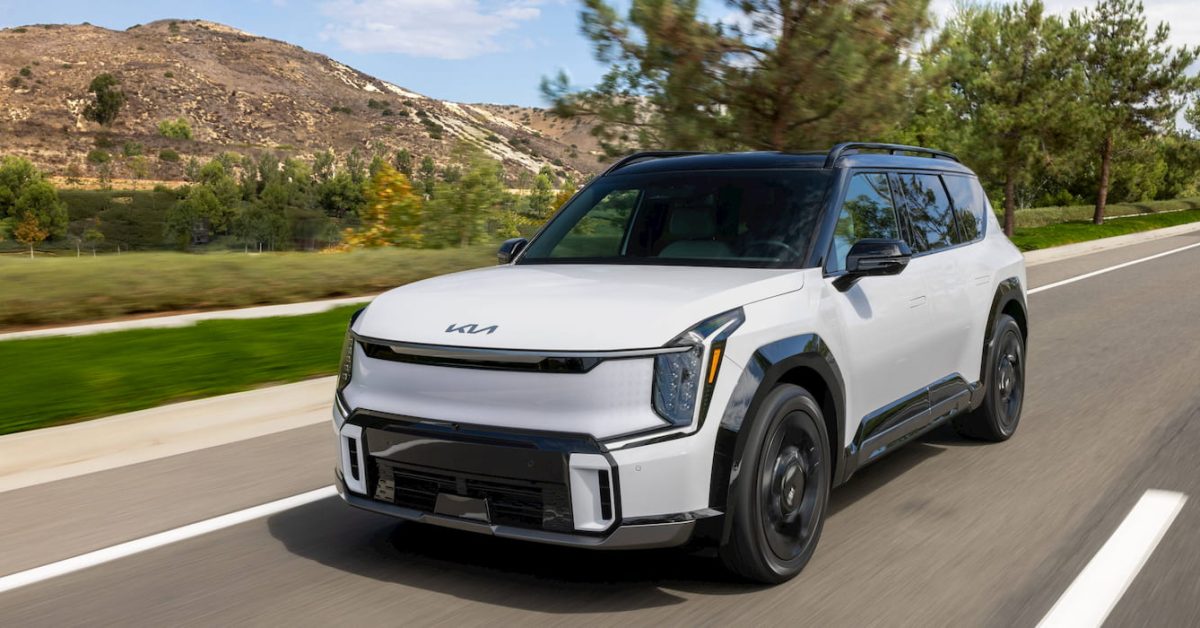
Car and Driver recently ran the 2026 Jeep Recon Moab launch edition through its 80 mph highway evaluation. The vehicle covered 160 miles. The Autopian wasted no time declaring it a spectacular failure on the strength of that number alone, with a jab about hoping a charging station would be waiting at the trailhead.
Worth noting for context: the Recon carries a 94 kWh battery pack, and it is capable of pulling roughly 200 kW at peak DC fast charging speeds. Those two figures matter far more to a real road trip than a single full-to-empty sprint does.
Nobody Actually Drives From Full to Empty in One Sitting
Here is the reality the diaper standard ignores. Almost no one drives an electric vehicle from a complete charge down to zero in one long, agonizing stretch. Whether you can reproduce a 100-to-zero test depends largely on whether you are wearing Depends. For reasons that remain unclear, a large share of EV commentary seems to assume we all drive as though we are padded up and nursing a grudge.
Interstate travel is limited by two forces that have nothing to do with battery chemistry: the patience of your traveling companions and the size of the smallest bladder in the vehicle. Pee is not even the only constraint. Human bodies stiffen up. People need to stand, stretch, and walk around. A cross-country haul is a series of interruptions, and an EV's charging stops slot neatly into the breaks a driver was going to take anyway.
The Real Math on 90-Mile Hops
Consider I-10 across Texas, which is precisely the kind of highway where a driver might genuinely hold 80 mph for hours. With 160 miles of total range available, that journey breaks down into comfortable 90-mile hops between chargers. At 80 mph, a 90-mile leg is a little over an hour behind the wheel — a natural interval for a stop even in a gasoline car.
Why the 10-to-60 Percent Window Is the Sweet Spot
For the Recon and its 94 kWh pack, that 90-mile hop maps cleanly onto the 10-to-60 percent charging window, and it roughly matches the spacing between the better charging stations on the stretch between El Paso and San Antonio. Keeping the battery inside that band is exactly how experienced EV owners approach long trips.
The reason is simple physics of charging curves: DC fast chargers deliver their maximum power when the battery is relatively depleted. The Recon can pull around 200 kW at peak. If you arrive at a charger sitting at 10 percent, plug in, walk inside to use the restroom, and grab a drink, you are pulling maximum charging speed for the entire time you are away from the car. By the time you return, the battery is back in the range you need for the next hour of driving. That is not a compromise. It is the efficient way to travel in an EV.
Trail Rated Is a Different Promise
The headline of this discussion is the point: the Recon is not astronaut diaper rated. It is Trail Rated. Jeep's branding promise is about rocks, ruts, mud, and grade, not about sustaining a single uninterrupted highway sprint until the battery is flat and the driver is squirming. Judging an off-road-focused electric SUV primarily by its full-to-zero interstate endurance is a bit like judging a pickup truck by its lap times.

What a More Honest Evaluation Would Measure
- Time required to cover a realistic 400-mile day, including charging stops, rather than a single unbroken depletion run.
- Charging speed actually sustained in the 10-to-60 percent window that road-trippers use in practice.
- Comfort, cabin space, and whether the seats still feel good after the third hour of driving.
- Off-road capability, which is the thing the Recon was engineered to deliver in the first place.
- Availability and spacing of fast chargers along the specific corridors a buyer is likely to drive.
None of this means highway range is irrelevant. It matters, and buyers should know the number. But a single 160-mile result at a constant 80 mph is a data point about an extreme edge case, not a verdict on a vehicle. The drivers who will actually buy a Recon are far more likely to care whether it can climb a trail, whether the charging stop lines up with lunch, and whether everyone in the car is comfortable. On those questions, the diaper test offers no answer at all.
This article is based on reporting by CleanTechnica. Read the original article.
Originally published on cleantechnica.com