
Hyundai and Kia are testing a new approach to sanitizing vehicle interiors
Hyundai and Kia have disclosed a cabin-sanitizing technology that uses far-ultraviolet C light to reduce airborne viruses and bacteria inside vehicles, including while occupants are present. The system, called Plasma Care UVC, remains at the research stage, but the automakers say it has already shown measurable reductions in pathogens during controlled tests designed to simulate real in-cabin conditions.
The announcement matters less as a near-term product launch than as a signal of where automotive interior technology may be headed. Since the pandemic, carmakers have expanded their focus on cabin air quality, filtration, and occupant wellness. Hyundai and Kia’s project pushes that trend a step further by attempting active disinfection of the vehicle interior rather than just ventilation or particle capture.
What the companies say the system does
According to the supplied source text, Plasma Care UVC operates in the 200 to 230 nanometer wavelength range, commonly described as far-UVC. Hyundai and Kia say that range can carry enough energy to kill bacteria and viruses while not penetrating beyond the outer keratin layer of human skin. On that basis, the automakers are presenting the technology as potentially safe for use in occupied cabins.
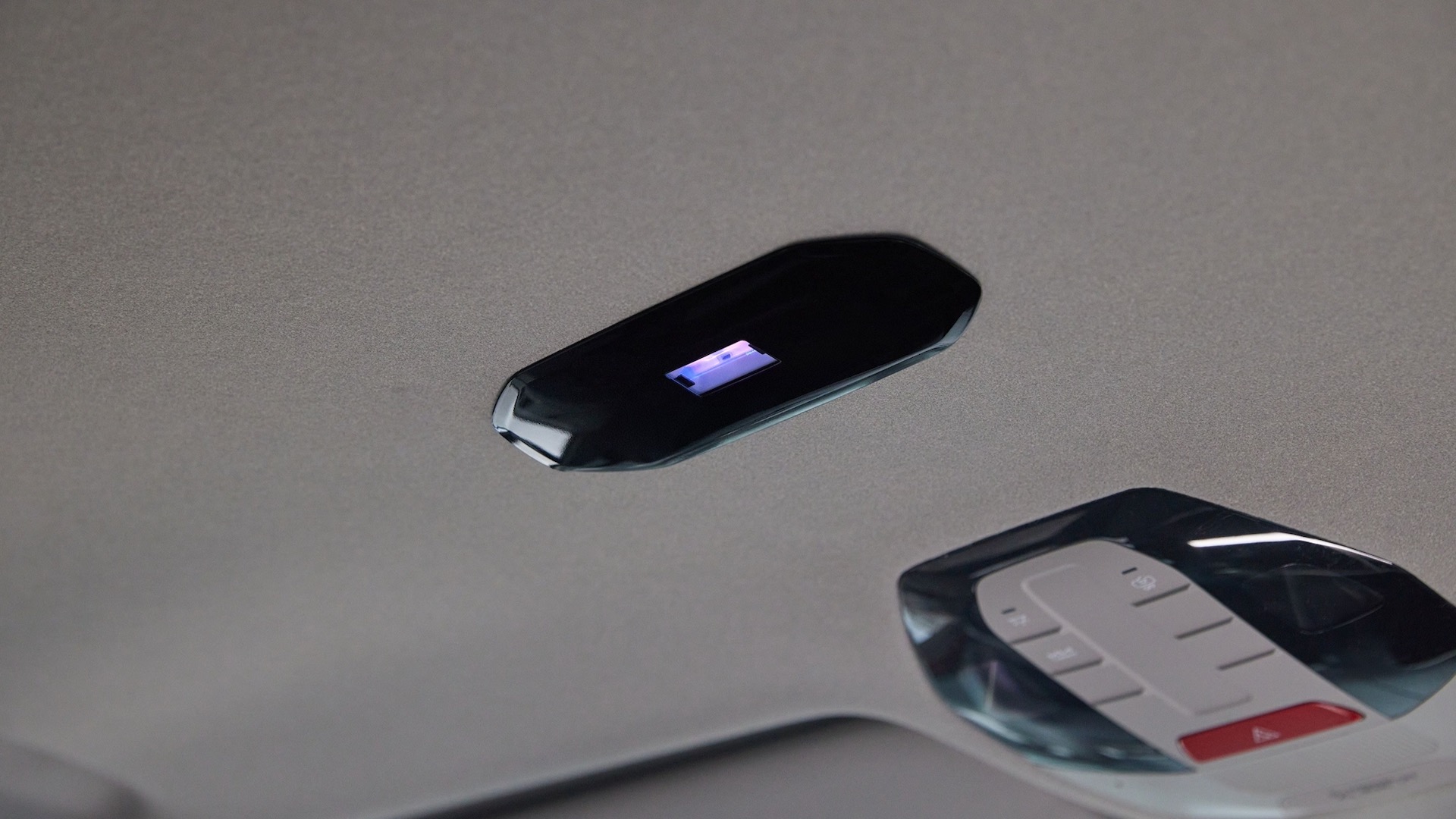
The companies also say they modified the concept substantially for automotive use. A vehicle interior is a confined environment with passengers seated close to any emitter hardware, alongside a dense collection of displays, controls, plastics, and other electronics. Those constraints meant shrinking the components, adding filtering for an added safety layer, and validating durability to standards expected for interior automotive parts.
Instead of relying on LEDs, Hyundai and Kia reportedly used a plasma lamp because it is better suited to reaching the targeted wavelength range. That choice suggests the companies are still optimizing the tradeoffs between effectiveness, packaging, power draw, thermal management, and integration with other cabin systems.

What the early test results show
The data released with the project are promising but clearly preliminary. In a chamber of about 282 cubic feet intended to simulate a car interior, Hyundai and Kia say the system reduced airborne viruses by 96.8% within 30 minutes. In a separate lab setting, the same hardware reportedly eliminated 99.9% of pneumonia-causing bacteria after 30 seconds and fully eliminated that bacteria after 60 seconds.
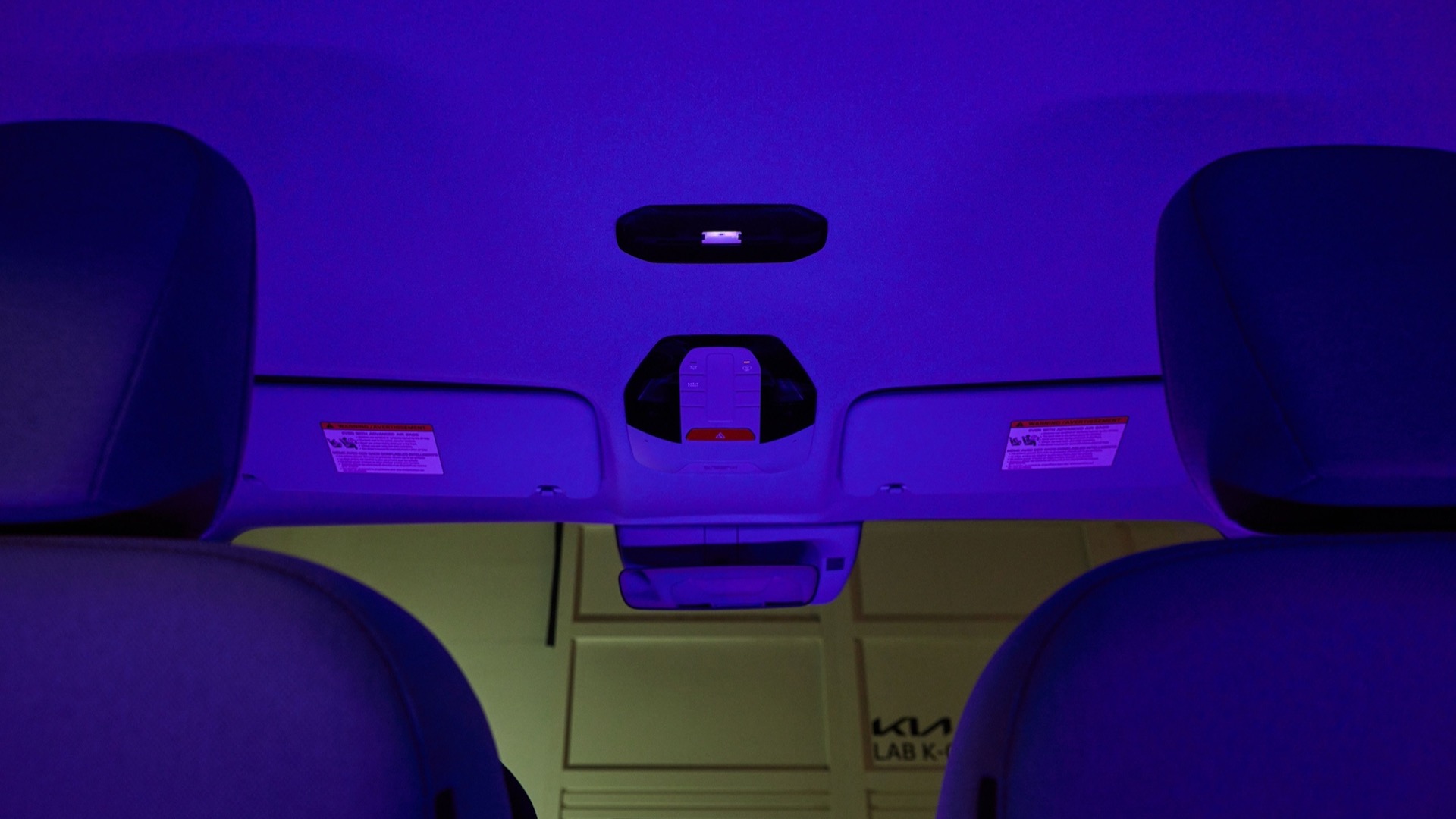
The automakers also describe a vehicle-based test using a Kia PV5 electric van. In that trial, the UV treatment reportedly killed 99.9% of E. coli in the cabin after 40 minutes of operation. Taken together, those results indicate the companies are testing across both simulated and vehicle-specific environments rather than relying on a single lab demonstration.
Even so, the current evidence should be read carefully. The figures come from company-described testing and not from a production deployment in everyday driving conditions. They do not, based on the supplied text, establish how the system performs across varied temperature ranges, humidity levels, passenger loads, airflow settings, or long-term wear. Nor do they settle how regulators will evaluate a technology that intentionally exposes occupied spaces to ultraviolet radiation, even at far-UVC wavelengths.
Why this could matter for commercial fleets
If the concept advances, one of the clearest use cases may be shared vehicles. Ride-hailing cars, autonomous shuttles, delivery vans with multi-stop duty cycles, and commercial passenger vehicles all face recurring issues around odors, surface cleanliness, and perceived hygiene. Hyundai and Kia say the system may help reduce odors in addition to sanitizing the cabin, which broadens its appeal beyond infection control alone.
That combination could be especially relevant in vehicles that operate for long hours with rapid passenger turnover. In those settings, traditional cleaning requires downtime and labor, while filtration mainly addresses particles moving through the HVAC system. A cabin-integrated sanitizing process could offer another layer of environmental control if it proves safe, durable, and economically viable.
The technology also fits a broader industry effort to redefine the car interior as a managed environment. Over the past several years, automakers have increasingly marketed cabins around air purification, bioweapon-mode filtration, antimicrobial surfaces, and wellness-oriented climate features. A far-UVC system would extend that logic from passive protection to active treatment.

The main hurdle is not engineering alone
Hyundai and Kia are explicit that the technology is not ready for production vehicles. More testing is planned, and any commercial rollout would depend on regulatory approval. That caveat is central. Automotive history is full of concept-stage health and convenience features that generated attention but never reached the market, either because cost and packaging were difficult to justify or because regulators and liability teams demanded a higher bar of proof.
In this case, safety validation is likely to be decisive. The companies are making a strong claim: that the selected far-UVC range can be used inside occupied cars without harming passengers. Even if the underlying physics is favorable, converting that into a mass-market automotive product requires confidence across many edge cases, including prolonged exposure, reflections inside different cabin materials, maintenance conditions, and failure modes over the life of the vehicle.
There is also the question of consumer demand. Some buyers and fleet operators may see clear value in automated sanitization, particularly in shared or high-use vehicles. Others may view it as a niche feature, especially if the effect is slow, if the cost is high, or if simpler alternatives such as improved ventilation and manual cleaning remain adequate.
A research project with strategic value
Even if Plasma Care UVC never appears in a showroom vehicle, the project is still revealing. It shows Hyundai and Kia continuing to invest in experimental cabin technologies that sit at the intersection of health, electronics, and user experience. It also reflects how automakers are broadening their conception of vehicle innovation. The competition is no longer only about drivetrain efficiency, software interfaces, or automated driving. Increasingly, it is also about what happens inside the cabin and how that environment is monitored, managed, and sold.
For now, Plasma Care UVC should be understood as a prototype backed by company testing rather than a product announcement. The early results are notable, particularly the claimed reductions in viruses and bacteria across different test setups. But the path from lab performance to production acceptance remains uncertain.
What Hyundai and Kia have demonstrated, at minimum, is that cabin sanitization is still an active area of automotive R&D. Whether far-UVC becomes a practical vehicle feature will depend on two questions the current announcement cannot yet answer: can the system meet a regulator’s standard of safety, and can it deliver enough real-world value to justify its complexity?
This article is based on reporting by The Drive. Read the original article.

Originally published on thedrive.com


![Nissan reveals its newest EV, an affordable electric city cruiser with 259 km of range [Images]](https://electrek.co/wp-content/uploads/sites/3/2026/09/Nissan-affordable-Pixo-EV.jpeg?quality=82&strip=all&resize=1200,628)

