Ram brings back the TRX, and pushes it further upmarket
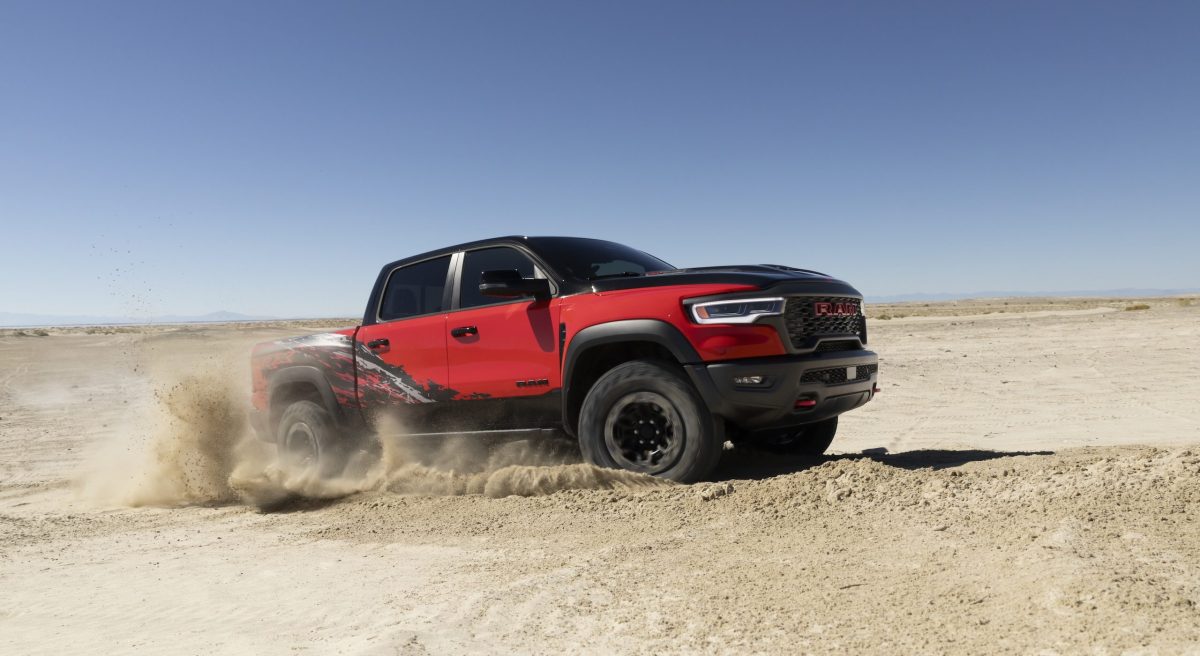
Ram has reopened the order books for the 2027 Ram 1500 TRX, reviving one of the most extreme factory off-road pickups on the US market and placing it firmly in six-figure territory. According to The Drive, the standard truck starts at $102,790 including a $2,795 destination fee, while a limited-run Bloodshot Night Edition package adds another $9,995.
The return of the TRX is important not only because the nameplate is back, but because it confirms Ram still sees demand for high-output internal-combustion halo vehicles even as the broader industry talks increasingly about electrification, efficiency and software-defined driving. At a base price above $100,000, the new TRX is not trying to be a mass-market performance truck. It is being positioned as a premium statement product aimed at buyers who want supercar acceleration, desert-truck posture and the cultural cachet of a supercharged V8.
That is a narrow but profitable slice of the market. It is also one where identity matters almost as much as specification. Ram appears to understand that, which helps explain why the relaunch leans heavily into excess rather than restraint.
Hellcat power remains the headline
The centerpiece of the new truck is the familiar supercharged 6.2-liter V8, the Hellcat engine that has become one of Stellantis' defining performance assets. In the 2027 TRX, it is rated at 777 horsepower and 680 pound-feet of torque, paired with an eight-speed automatic transmission and standard full-time four-wheel drive.
Ram says the truck can reach 60 miles per hour in 3.5 seconds using launch control and continue to a top speed of 118 mph. Those figures underline the TRX’s unusual market position. This is a full-size off-road pickup delivering acceleration numbers closer to high-performance sports sedans and exotics than to conventional utility vehicles.
That formula is not new, but it remains commercially potent because few vehicles combine this mix of attributes:
- Very high horsepower from a factory-backed V8 package.
- Full-size pickup practicality and visual presence.
- Off-road branding strong enough to compete with desert-performance rivals.
- Daily drivability aided by modern automatic transmission and driver-assist systems.
The Drive notes that Ram also highlighted a technology differentiator: the TRX and the related Ram RHO are described as the only high-performance off-road trucks to offer a Level 2 Plus hands-free driver-assist system, branded by Stellantis as Hands-Free Active Drive Assist. The claim is framed as a direct competitive jab at Ford’s Raptor line, which has long been the most obvious reference point for any TRX discussion.

Pricing signals a different strategy
The pricing is arguably as important as the horsepower. A starting figure of $102,790 places the TRX well above the point where a buyer is choosing simply between practical truck trims. At that level, the truck becomes a discretionary luxury-performance purchase, one that competes for attention not just with other pickups but with premium SUVs, sports cars and specialty off-road machines.
The optional Bloodshot Night Edition makes that positioning even clearer. For nearly $10,000 extra, buyers get a hand-painted Blacktop upper, a Flame Red hood stripe, exterior splash graphics, red interior accents and beadlock-capable wheels. The package reads less like a utility upgrade and more like a collector-minded appearance statement.
That matters because the modern high-end truck business increasingly depends on emotion, scarcity and differentiation. In earlier decades, performance pickups often occupied a quirky niche. Today, they are central to brand image, social visibility and high-margin personalization. The TRX’s return suggests Ram wants to defend that territory aggressively, even if volume remains limited.
Why this launch matters beyond one truck
The relaunch says something broader about the state of the US performance vehicle market in 2026. Despite regulatory pressure, emissions scrutiny and an industry-wide transition toward electrified powertrains, there is still strong brand value in loud, high-displacement, supercharged internal-combustion products. For automakers, halo vehicles like the TRX serve multiple functions at once: they support pricing power, attract attention to the broader truck lineup and reinforce a performance identity that can lift less extreme models.
The Drive also includes a telling quote from Ram CEO Tim Kuniskis. Asked how long the reborn Hellcat-powered TRX might remain on the market, he replied, “Call Washington.” That brief answer points to the regulatory uncertainty surrounding vehicles like this one. The limitation is not consumer appetite. It is whether policy, compliance costs and emissions rules leave enough room for such products to continue.
In that sense, the 2027 TRX is both a product and a signal flare. It shows that Ram believes there is still value in deploying its most theatrical combustion hardware while it can, rather than retiring it quietly. That may resonate with buyers who see vehicles like the TRX as part of a closing chapter in American performance engineering.
Performance nostalgia meets modern truck tech
What makes the TRX especially effective as a market proposition is that it is not pure nostalgia. Yes, the appeal depends heavily on the return of a revered supercharged V8. But the truck is also wrapped in contemporary features, updated driver assistance and a level of polish that positions it above the rough-edged performance specials of earlier eras.
That mix helps explain why high-end performance trucks remain durable despite changing market narratives. Buyers are not choosing between old and new so much as combining them. They want heritage powertrains, aggressive design, off-road credibility and modern convenience in a single package.
Ram is betting that enough customers will pay for exactly that combination. The base price ensures the TRX stays aspirational. The power figures ensure it stays relevant in enthusiast circles. And the limited-run package helps sustain the sense that this is more than a utility vehicle with extra output.
Whether the revived TRX lasts for years or only for a brief regulatory window, its return is a clear reminder that the performance truck arms race is not over. If anything, it has become more expensive, more image-driven and more explicit about who it is for.
This article is based on reporting by The Drive. Read the original article.
Originally published on thedrive.com