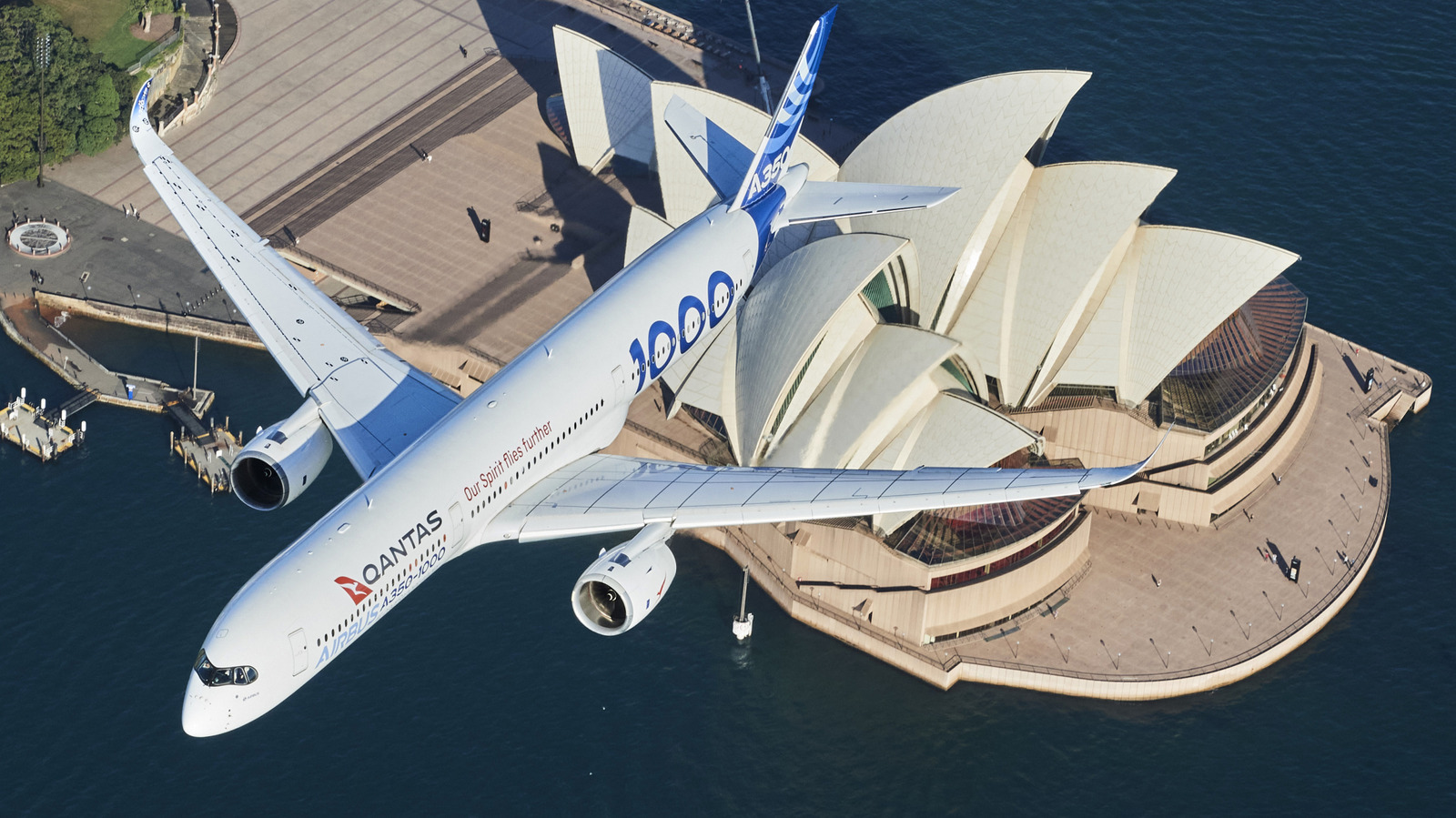
Airbus and Qantas move Project Sunrise into flight testing
Airbus and Qantas have taken a visible step toward some of the longest passenger flights ever attempted, beginning test work on a new ultra-long-range version of the A350-1000 that is intended to connect Sydney nonstop with New York and London. The aircraft is part of Project Sunrise, a program Qantas began in 2017 to make routes of roughly 10,000 nautical miles practical for regular commercial service.
The first experimental flight took place in June 2026 near Toulouse, France, where Airbus flew the aircraft with two pilots and a flight engineer for nearly four hours to gather data. The initial sortie was only the start of a broader test campaign. According to the source material, Airbus expects about two months of testing before the aircraft advances toward final delivery and certification milestones. If the program stays on track, the aircraft could be ready for commercial use by April 2027.
That timeline matters because the technical challenge is not simply about range. Airlines have operated very long flights for years, including routes such as New York to Singapore, London to Perth, and Auckland to New York. Those services already stretch close to the practical edge of today’s long-haul operations, typically running about 18 to 19 hours over distances that can approach 9,500 miles. Project Sunrise pushes beyond that envelope, targeting flights between Sydney and either New York or London that could last about 22 hours.
Why this A350 is different
The aircraft being tested is not a larger airliner built from scratch. Instead, Airbus and Qantas are working from the existing A350-1000 platform and adapting it for far greater endurance. The central tradeoff is straightforward: reduce passenger count, free up weight, and use that margin for additional fuel and long-duration cabin planning.
In standard form, the A350-1000 can seat far more passengers than the Project Sunrise version will carry. The ultra-long-range configuration described in the candidate source is planned for 238 passengers, a sharp reduction from the type’s maximum high-density capacity. That lower seat count is not only about fuel economics. On a flight lasting nearly a full day, cabin space, passenger movement, and fatigue management become core parts of the product rather than secondary considerations.
This also explains why the aircraft is notable even though it is not the biggest jet in service. The Airbus A380 remains the larger passenger aircraft by capacity, but size alone does not solve the equation for ultra-long-haul travel. Project Sunrise is built around efficiency, payload discipline, and a cabin layout calibrated for an unusually long time in the air.

The business case for nonstop extremes
For Qantas, the appeal of these routes is easy to understand. Sydney to London and Sydney to New York are among the world’s most discussed aviation city pairs because they connect major business, financial, and tourism markets that currently require a stop for most travelers. A true nonstop service would save transfer time, reduce missed-connection risk, and give the airline a premium product with few direct rivals.
That does not mean the economics are simple. Ultra-long-haul routes demand a specialized aircraft, a carefully chosen passenger mix, and fares that reflect the limits on seat density. Qantas appears to be betting that a substantial group of travelers will pay for time savings and convenience, especially on marquee international sectors. The airline has not yet said which of the two headline routes will launch first, but the stated plan is to eventually operate both.
The program also carries symbolic weight. Project Sunrise takes its name from World War II nonstop flights Qantas operated between Sri Lanka and Western Australia, journeys known for their extreme duration. The modern version is far more sophisticated and commercial in intent, but the branding underscores the idea that Qantas wants these future services to be seen as a distinct milestone in aviation rather than a routine network addition.
What passengers can expect
While the test work now underway is focused on aircraft performance, the passenger proposition is just as important to whether the project succeeds. Flights lasting around 22 hours force airlines to think differently about comfort, movement, and the rhythm of time onboard. A reduced-capacity cabin gives designers more room to work with, and Qantas has framed the aircraft as a purpose-built long-distance product rather than a standard widebody stretched into a new mission.
That approach reflects a broader trend in long-haul aviation. Airlines increasingly use aircraft families such as the A350 to open routes that would once have been impractical, not by making planes dramatically larger but by improving efficiency and tuning interiors to the mission. Project Sunrise is an extreme example of that strategy. It uses a familiar airframe, but the business model and cabin assumptions are tailored to a narrow slice of the market.
The passenger experience will still be debated. Some travelers will see a 22-hour nonstop as a major convenience. Others will view any journey of that length as inherently demanding, no matter how refined the cabin becomes. Both reactions can be true. What matters for Qantas is whether enough customers consistently choose nonstop service over one-stop alternatives.

A test for the next phase of long-haul aviation
The current flight-test phase does not guarantee commercial success, but it marks the point where Project Sunrise has moved from concept to measurable execution. If Airbus completes the program on schedule and Qantas brings the aircraft into service in 2027, the result will not merely be a longer route map. It will be a practical test of whether airlines can profitably extend nonstop flying into a new bracket of distance and duration.
That is why the test matters beyond Australia. Airlines around the world watch each shift in aircraft capability for clues about what new city pairs become viable. A successful A350-1000 ultra-long-range program could reinforce a model in which aircraft are optimized to connect high-value markets directly, even when those missions sit at the outer limits of current commercial aviation.
For now, the key fact is that the aircraft intended to make those flights possible is finally in the air. The next several months will determine whether one of commercial aviation’s most ambitious route concepts is ready to become a scheduled reality.
This article is based on reporting by Jalopnik. Read the original article.
Originally published on jalopnik.com