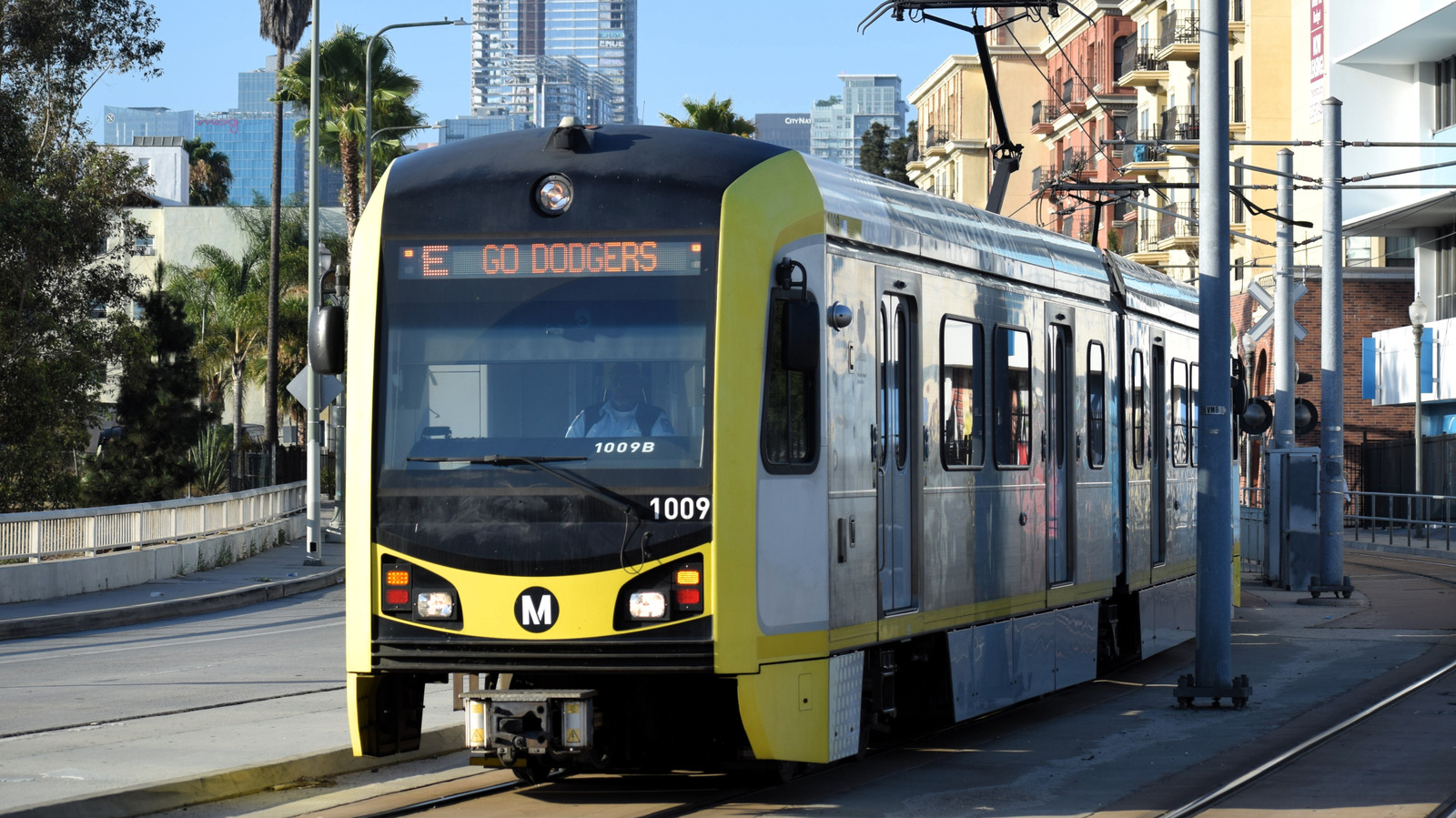
LA Metro is testing whether cash can change how Los Angeles moves
Los Angeles County has spent decades building a reputation for traffic, long commutes and deep dependence on private cars. LA Metro is now trying a more direct intervention: pay people to drive less and see whether behavior changes fast enough to matter.
The agency plans to give 2,000 LA County households up to $600 if they leave at least one vehicle parked at home for five weeks and use other ways to get around. The effort, called the One Car Challenge, is aimed at households that normally depend on more than one car, although single-car households can also apply.
The structure is simple. Selected participants will track odometer readings and travel behavior through the GoCarma smartphone app. If they meet the program requirement of keeping one household car off the road while relying on alternatives such as public transit, carpooling, biking or walking, they can earn as much as about $120 a week.
For a region where driving is often treated less as a choice than a necessity, the challenge is notable because it does not begin with a new rail line or a highway restriction. It begins with a household decision and a financial incentive. That makes the program both modest and potentially revealing. If people can be persuaded to experiment with fewer car trips, Metro may get a clearer answer about whether incentives can reduce traffic and emissions even before major infrastructure projects are complete.
From pilot to larger test
The expanded effort builds on a smaller 2023 pilot in Santa Monica involving 300 households. According to LA Metro, that earlier program produced a 16.16% increase in walking, biking and transit use. On its own, that figure does not prove a lasting shift in travel habits across the county. But it was enough for the agency to scale the idea up dramatically.
Funding for the larger test comes from a $2 million Regional Early Action Planning grant from the Southern California Association of Governments. That matters because the program is not just a public-awareness campaign. It is being treated as a policy experiment with data collection built in from the start.
Officials cited by NBC Los Angeles said the new pilot will be used to evaluate whether incentive-based programs can reduce vehicle miles traveled and whether they could become a long-term transportation demand management tool. The results are also expected to inform future transportation policy, efforts to improve traffic flow and attempts to reduce vehicle emissions.
Those goals put the One Car Challenge in a broader planning context. Los Angeles is trying to prepare for continued population pressure, climate obligations and the transport demands associated with the 2028 Olympics. The region has also been slowly expanding rail service and bike infrastructure. But major capital projects take years, while travel behavior can shift much faster if residents think the alternatives are practical enough to try.

Why the program matters beyond the payout
Paying people not to drive can sound gimmicky, but the logic is straightforward. Many households do not test transit or active transportation because the downside risk feels immediate: longer travel times, more complex trip planning, or concern that daily routines will break down. A cash incentive changes that calculation by compensating people for the inconvenience of experimentation.
That makes the program valuable even if only some participants permanently change their habits. Metro is effectively buying insight into what stops people from driving and what finally gets them to try something else. In a county with about 9.6 million residents, that information can be useful even if the challenge itself reaches only a small share of the population.
The design also reflects a realistic view of how travel works in Los Angeles. The program does not demand that households give up driving entirely. It asks them to leave one vehicle parked. For multi-car homes, that creates room to test partial substitution rather than total lifestyle disruption. A household might keep one car available for essential trips while shifting school, work, shopping or short local errands to transit, biking, carpooling or walking.
That kind of partial change is often how large transport transitions begin. If a family learns it can manage with one less daily driver, that can reduce mileage, fuel use and congestion without requiring a fully car-free lifestyle.
Limits and questions the challenge will have to answer
The program still faces obvious constraints. Los Angeles remains a difficult place to navigate without a car in many neighborhoods, especially where rail coverage is limited or where bus travel is slower than driving. The challenge may work best for households that already live near transit, have flexible schedules, or can combine remote work with shorter local trips.
That means the program’s outcomes will need careful interpretation. If results are strong, Metro will still need to ask whether they can be reproduced across less connected parts of the county. If results are weak, the failure may say as much about infrastructure gaps as it does about resident willingness to change.
There is also the question of duration. Five weeks is long enough to force households to reorganize routines, but not necessarily long enough to establish permanent habits. The more important finding may be whether participants continue using alternatives after the payments end.
Even so, the One Car Challenge is a serious policy test because it ties money, mobility and measurement together. Instead of assuming new transport options will automatically attract riders, Metro is checking whether a temporary incentive can push residents over the threshold from skepticism to trial.
For a city defined by the car, that may be the most important part. If households discover that some trips do not need to happen behind the wheel, even a limited program could produce lessons far larger than its participant count suggests.
This article is based on reporting by Jalopnik. Read the original article.

Originally published on jalopnik.com