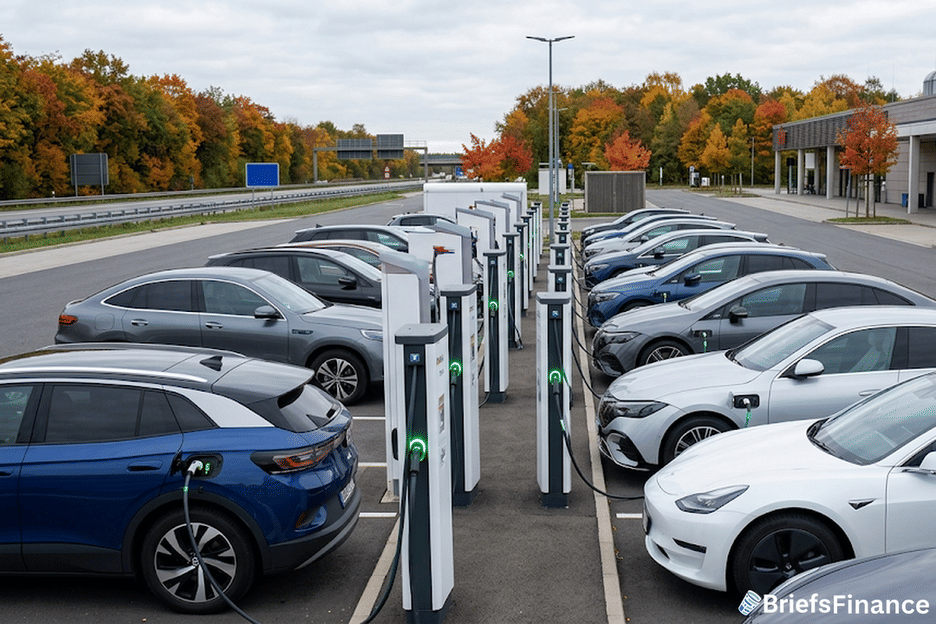
Record Shift to Electric Vehicles
In the second quarter of this year, a record 12 percent of German drivers replaced their combustion-engine vehicles with electric vehicles (EVs), according to new data. This marks a significant acceleration in the country's transition to electric mobility, driven largely by a sharp spike in fuel prices that followed geopolitical tensions in the Middle East.
The surge in EV adoption comes as petrol and diesel prices jumped above €2 per liter in Germany, a psychological threshold that has historically prompted consumers to reconsider their transportation choices. The price increase was triggered by the U.S.-Israeli military campaign against Iran, which disrupted global oil supplies and sent energy markets into turmoil.
Fuel Prices as a Catalyst
The conflict in the Middle East has had an immediate and tangible impact on European motorists. In Germany, fuel prices soared past €2 per liter for the first time in years, making daily commuting significantly more expensive for millions of drivers. For many, the math of switching to an electric vehicle has become increasingly compelling, despite the higher upfront cost of EVs.
"The price at the pump is a powerful motivator," said an industry analyst. "When fuel costs exceed €2 per liter, the total cost of ownership for EVs becomes more favorable, especially for those who drive long distances regularly."
This economic pressure is reflected in the record 12 percent replacement rate, which measures the share of drivers who traded in a gasoline or diesel car for an EV during the quarter. The figure represents a substantial jump from previous quarters and suggests that the energy crisis is accelerating Germany's transition away from fossil fuels.

Impact on the German Auto Market
The shift is reshaping Germany's auto market, with EV sales climbing even as overall car sales remain sluggish. Automakers are responding by ramping up production of electric models and expanding their EV lineups to meet growing demand. Charging infrastructure is also being expanded, though many experts argue that more investment is needed to keep pace with the surge in EV adoption.
The trend is particularly pronounced in urban areas, where charging infrastructure is more developed and daily driving distances are shorter. However, rural drivers are also making the switch, aided by government incentives and improvements in battery range.
Government Policies and Incentives
German policymakers have long encouraged EV adoption through subsidies and tax breaks, but the recent surge appears to be driven more by market forces than policy. The federal government's "Energiewende" (energy transition) program has set ambitious targets for reducing carbon emissions, and the transport sector is a key focus. However, with fuel prices now at record highs, consumers are making the switch on their own accord.
Some officials have called for additional measures to support the transition, such as expanding charging networks and reducing electricity costs for EV owners. Others have warned that the high cost of electricity could undermine the economic case for EVs, especially if energy prices remain elevated due to the conflict.

Long-Term Implications
The record EV adoption rate in Germany could have lasting effects on the country's automotive industry and its climate goals. If the trend continues, Germany could significantly reduce its dependence on imported oil and cut greenhouse gas emissions from transportation. However, the situation remains fluid, and the long-term trajectory will depend on how the Middle East conflict evolves and whether fuel prices stabilize.
For now, German drivers are voting with their wallets, and the message is clear: when fuel becomes too expensive, they will embrace electric mobility. The second quarter of 2026 may well be remembered as a turning point in Germany's electric revolution.
This article is based on reporting by Automotive News. Read the original article.
Originally published on autonews.com


![Nissan reveals its newest EV, an affordable electric city cruiser with 259 km of range [Images]](https://electrek.co/wp-content/uploads/sites/3/2026/09/Nissan-affordable-Pixo-EV.jpeg?quality=82&strip=all&resize=1200,628)

