Volkswagen's PowerCo Delays Canadian Battery Plant to 2029
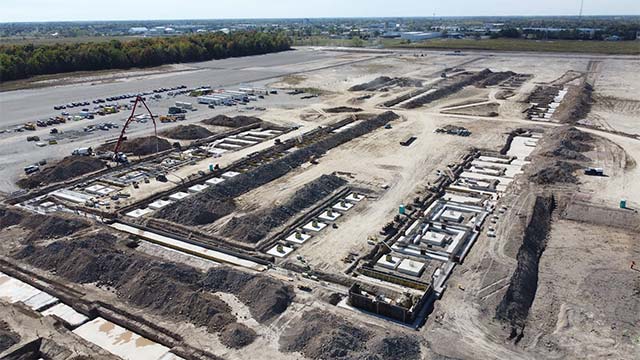
PowerCo, the battery manufacturing arm of Volkswagen Group, has pushed back the start of production at its St. Thomas, Ontario cell factory to 2029. The company pointed to two intertwined forces behind the decision: weaker-than-expected market demand and ongoing technological change in battery design and manufacturing. The plant had been positioned as a centerpiece of Volkswagen's effort to build a North American battery supply chain close to its vehicle assembly operations.
The revised start date does not amount to a cancellation. PowerCo said the St. Thomas facility remains the "cornerstone" of its North American strategy, language that signals the project is being re-phased rather than abandoned. For a region that has spent years courting battery investment, the distinction matters — but so does the delay itself, which pushes first output several years beyond the expectations originally attached to the site.
Why the Timeline Slipped
Two factors were cited: market demand and technological advancements. Those are related. When EV sales growth slows, automakers adjust production plans, and battery suppliers must in turn reconsider how much capacity they need and when they need it. Building a plant too early risks stranded capital; building too late risks losing ground to competitors.
The technology variable is equally consequential. Cell formats, chemistries and manufacturing processes have been evolving quickly, and a factory designed around one generation of cells can become outdated before it ever ships a product. By stretching its construction and commissioning timeline, PowerCo gives itself room to align the plant with more current designs rather than locking in specifications years in advance.
The phrase "technological advancements" is doing a lot of work in the company's explanation. It implies that the delay is not purely defensive. A supplier that waits can potentially build a more efficient, lower-cost line from the outset, avoiding the burden of equipment that no longer reflects best practice. The trade-off is the loss of early-mover scale and the risk that demand recovers before capacity is ready.

The St. Thomas Site and North America's Battery Map
St. Thomas sits in southwestern Ontario, a corridor that has attracted a cluster of automotive and battery-related investment. Locating cell production there places it within reach of assembly plants on both sides of the border, which can reduce logistics costs and exposure to cross-border supply disruptions. PowerCo's decision to keep the project alive, even on a longer timeline, preserves that geographic logic.
For Canada, the plant has been treated as evidence that the country can capture a meaningful share of North American battery manufacturing rather than merely supplying raw materials. A delay of this kind tests that narrative. It does not erase the investment, but it stretches out the point at which jobs, tax revenue and industrial spillovers materialize. Provincial and federal officials who supported the project will now be measuring returns on a later horizon.
Reading the EV Demand Signal
The delay arrives amid a broader reassessment of electric-vehicle growth rates. After a period of rapid expansion, several markets have seen demand cool as early adopters are largely served and mainstream buyers weigh cost, charging access and resale value. Automakers have responded by slowing some EV programs, adjusting targets and renegotiating supplier commitments. Battery manufacturers sit at the far end of that chain and feel the adjustment later, but often harder.
It is worth noting what the announcement does not say. PowerCo did not abandon the project, did not announce a reduction in planned capacity, and did not withdraw from Ontario. The company framed the change as a scheduling matter tied to external conditions. That framing leaves room for the timeline to shift again in either direction, depending on how demand and technology evolve between now and 2029.

A Cornerstone, Re-Phased
Calling the Ontario plant a cornerstone of North American strategy is a statement about intent as much as about construction schedules. Volkswagen needs battery capacity on the continent if it intends to build EVs there at scale, and local cell production can help insulate the company from tariffs, freight costs and the volatility of shipping cells across oceans.
At the same time, a cornerstone that arrives later changes the shape of everything built around it. Vehicle programs that assumed domestically produced cells in the mid-2020s will need to source elsewhere in the interim, likely through imports or existing supplier arrangements. That gap is where the practical consequences of the delay will be felt first.
Questions That Remain
Several details were not addressed in the announcement. PowerCo did not specify whether the delay changes the plant's intended production capacity, nor whether hiring and construction schedules will be adjusted proportionally. The company also did not say which technical changes prompted the re-evaluation, leaving open the question of whether the St. Thomas line will differ meaningfully from the design originally contemplated.
Those gaps matter for the surrounding ecosystem. Local officials, utilities and training institutions have been planning around a battery plant of a certain scale and a certain opening date. A multi-year shift in the schedule changes their own assumptions, even if the headline investment figure stays the same.
![Nissan reveals its newest EV, an affordable electric city cruiser with 259 km of range [Images]](https://electrek.co/wp-content/uploads/sites/3/2026/09/Nissan-affordable-Pixo-EV.jpeg?quality=82&strip=all&resize=1200,628)
What Happens Next
Between now and the revised start date, the practical questions will concern site preparation, supply contracts and workforce development. A longer runway can be used to train staff, refine equipment specifications and coordinate with vehicle programs. It can also create uncertainty for local suppliers and municipalities that planned around an earlier opening.
For Volkswagen Group, the challenge is balancing electrification ambitions against capital discipline. Battery plants are expensive and slow to build, and committing to capacity ahead of demand is a gamble. PowerCo's move suggests the company is willing to trade speed for flexibility — accepting a later start in exchange for a plant that better matches the market and technology it will actually serve.
- The St. Thomas, Ontario plant will now start production in 2029.
- PowerCo cited market demand and technological advancements as the reasons.
- The company described the site as the cornerstone of its North American strategy.
- The project is delayed, not cancelled.
- The decision reflects softer EV sales conditions and evolving battery technology.
This article is based on reporting by Automotive News. Read the original article.
Originally published on autonews.com