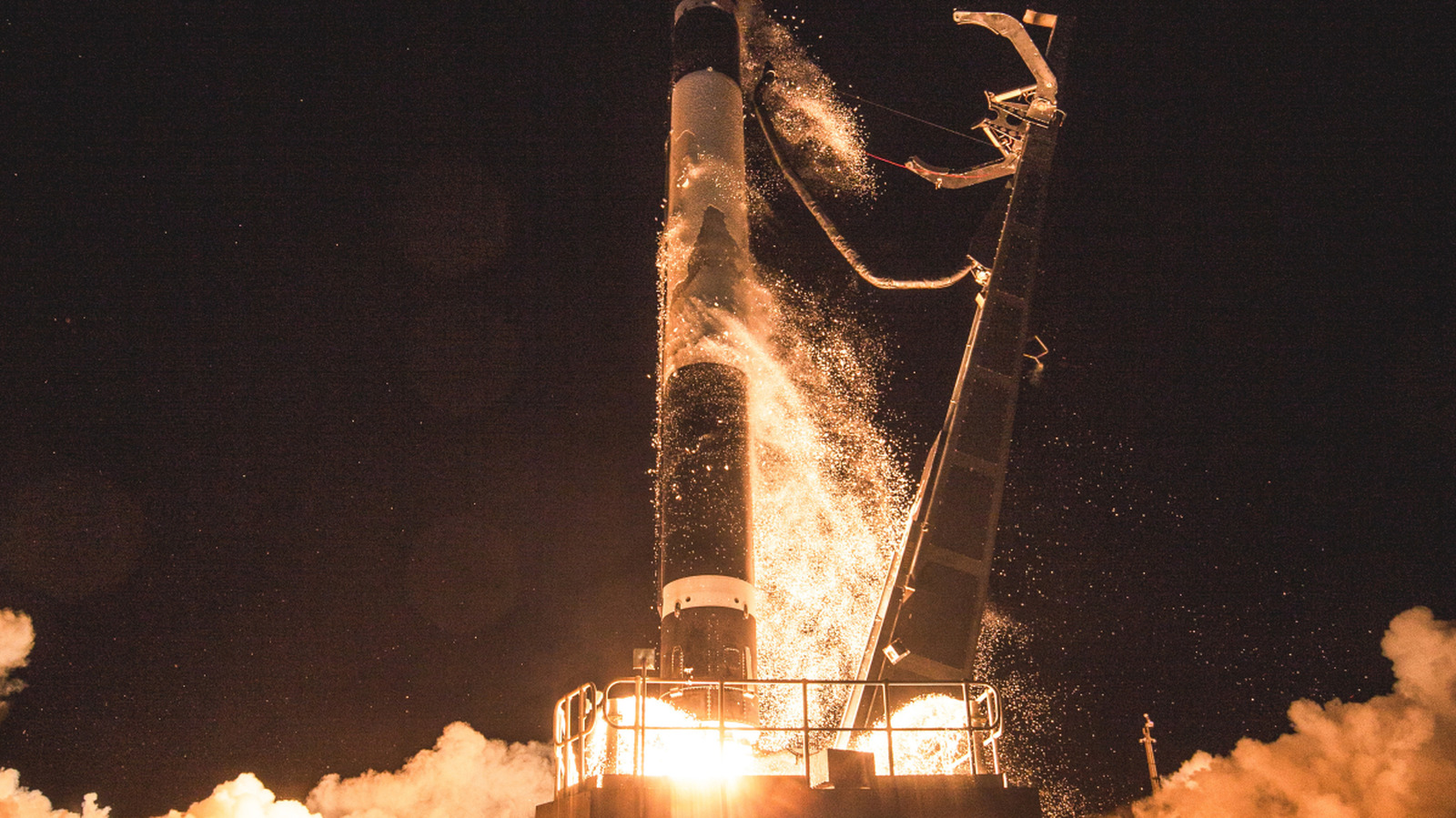
A military-style scramble reaches the launch pad
The U.S. Space Force is moving closer to a long-sought goal in space operations: launching a mission on extremely short notice rather than on timelines measured in months or years. In the latest demonstration, Rocket Lab launched an Electron rocket for the Space Force’s Tactically Responsive Space program after receiving an unscheduled Notice to Launch, completing the job in 16 hours and 42 minutes.
According to the source material, that was about 10 hours faster than the previous record set on another TacRS mission. The mission did not just prove a pad turnaround concept. It also placed an operational payload into orbit, where the spacecraft then moved into the next stage of the exercise.
The result signals a shift in how military planners are thinking about space access. The analogy used in the source article is clear: the Space Force wants to learn how to scramble rocket launches more like fighter aircraft. The comparison is imperfect, but the strategic logic is straightforward. If an event in orbit requires a response, launch systems that need weeks of preparation may be too slow.
Why speed matters in orbit
The pressure behind these exercises is the growing importance of satellites in military and national-security planning. As orbital activity expands, so does concern that satellites could be targeted in a conflict. The source text specifically points to Chinese anti-satellite capabilities, including maneuverable spacecraft that could seize or collide with an object in orbit.
That threat model changes what “launch readiness” means. It is no longer enough to have rockets that can deliver payloads reliably if those missions can only happen on long schedules. A tactically responsive model aims to put a spacecraft in orbit quickly enough to inspect, support, or counter a developing problem.
In that sense, the Rocket Lab mission was less about beating a record for its own sake and more about compressing the time between decision and action. Moving from standard launch planning to a same-day response framework would represent a meaningful operational change for military space systems.
The latest mission suggests some pieces of that framework are becoming more mature. Rocket Lab’s Electron vehicle was tasked with placing one of the company’s Pioneer spacecraft into orbit as part of the drill. The mission shows that the responsive-launch idea can include an actual spacecraft doing actual work, not only a symbolic countdown exercise.

Victus Haze moves from launch to on-orbit operations
The mission’s next phase is a rendezvous and proximity operations drill in space. After launch, Electron deployed the Pioneer spacecraft, which Rocket Lab says was built for maneuverability. The source text describes the exercise as a simulated response to a potentially threatening or wayward satellite.
In the scenario, another spacecraft, a Jackal vehicle built by True Anomaly, plays the role of the target object. The practical question is whether the Space Force can not only launch rapidly but also field a spacecraft capable of approaching and interacting with an orbital object on short notice.
This is an important distinction. Responsive launch alone is only part of the mission chain. The broader military value depends on whether the launched spacecraft can perform useful tasks once it reaches orbit, whether that means inspection, tracking, proximity operations, or other forms of response.
The source article also notes a remaining limitation. Even if a launch can happen in less than a day, an adversary or threat that acts within only a few hours could still outpace that response. The demonstration therefore marks progress, but not final sufficiency.
What the program says about the launch market
The TacRS program also highlights a broader change in the launch sector. Space access has traditionally been treated as a carefully scheduled event with long planning cycles, narrow windows, and extensive preparation. Responsive-space programs pressure launch providers to operate more like logistics networks or military support infrastructure.
Rocket Lab’s performance in this mission suggests smaller launch systems may have an advantage in this role. Electron is not competing on raw lift with heavy rockets, but the program’s focus is not on size. It is on readiness, integration speed, and the ability to get a spacecraft into orbit with minimal delay.
The source text frames this as a sign that space is becoming a place operators can go to more directly rather than only through prolonged preparation. That idea should not be overstated, since rapid launch remains exceptional. Still, the exercise shows how military demand can push launch companies toward new operating standards.
It also creates a test bed for spacecraft designed around responsive missions. A maneuverable satellite launched quickly is more useful in a tactical scenario than a payload that reaches orbit but lacks the ability to reposition or inspect another object.

More missions are already lined up
The program is continuing. According to the supplied source text, three more TacRS missions are planned over the next year: Victus Surgo, Victus Salo, and Victus Sol. The first two are expected to use SpaceX Falcon 9 rockets with spacecraft from Impulse Space and MIT, while Victus Sol is set to launch on a Firefly Alpha.
That schedule matters because it means the latest mission is part of a sustained campaign rather than a one-off experiment. Repetition is essential if the Space Force wants responsive launch to become an operational capability instead of a demonstration milestone.
Each additional mission will test not just rocket performance but the institutional systems around it: notice procedures, payload integration, launch coordination, and post-launch operations. Those are often the real bottlenecks in any military-technical process, and compressing them reliably is harder than posting a single standout time.
The latest Rocket Lab mission therefore stands as both a record and a benchmark. It shows that the Space Force’s responsive-space concept can work faster than before, with a real spacecraft and a follow-on orbital drill. It also underscores how much of the future contest in space may hinge not only on capability in orbit, but on how quickly new capability can be deployed when conditions change.
This article is based on reporting by Jalopnik. Read the original article.
Originally published on jalopnik.com


![Nissan reveals its newest EV, an affordable electric city cruiser with 259 km of range [Images]](https://electrek.co/wp-content/uploads/sites/3/2026/09/Nissan-affordable-Pixo-EV.jpeg?quality=82&strip=all&resize=1200,628)