A radical minivan shape came with a very literal hazard
General Motors’ wedge-shaped minivans from the 1990s remain memorable for styling that looked dramatically different from the boxier family haulers they were trying to beat. But the same styling choice that made the Chevrolet Lumina APV, Pontiac Trans Sport, and Oldsmobile Silhouette stand out also created an unusually personal problem: some owners could smack their heads on the upper edge of the front door while getting in.
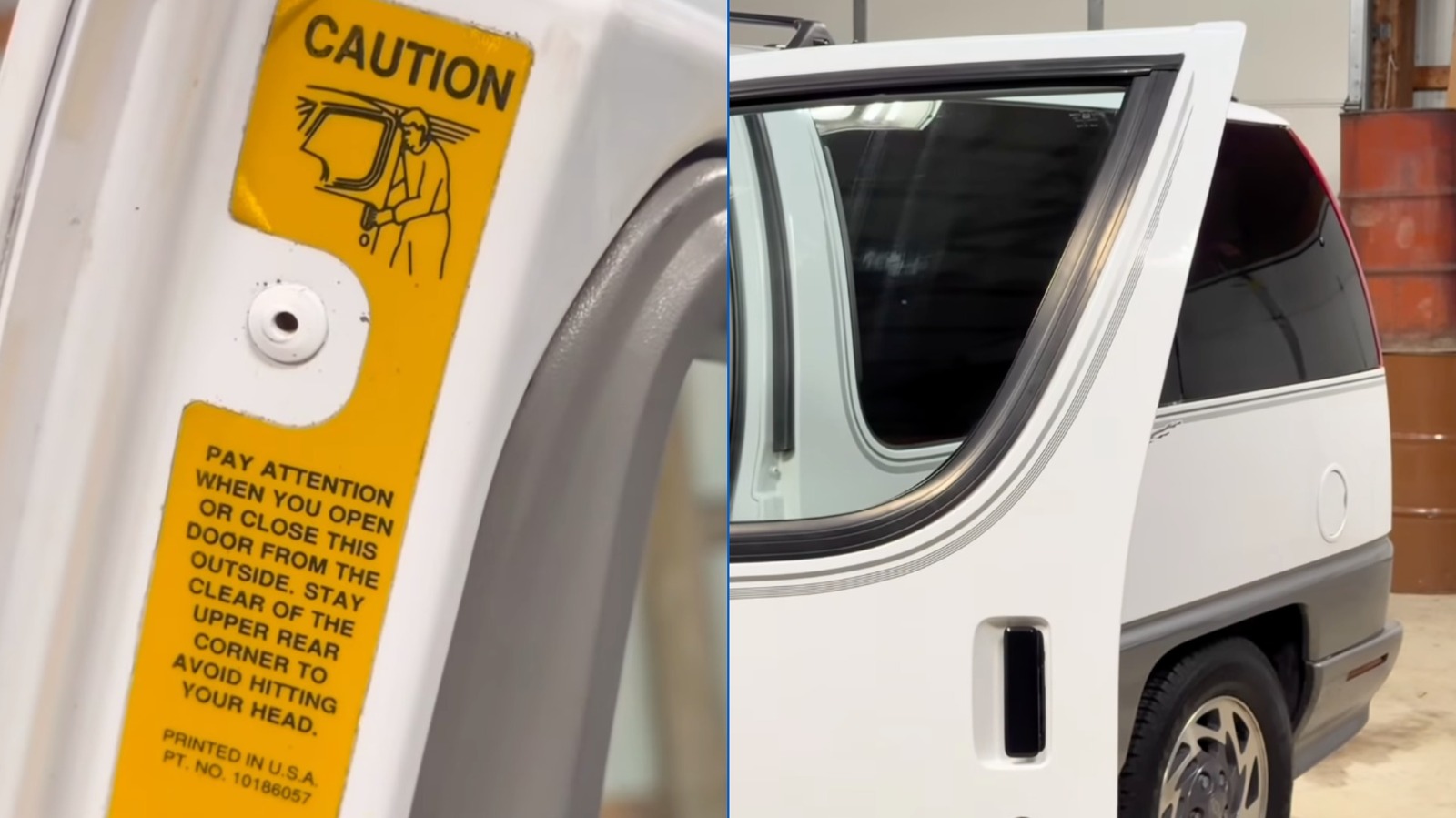
According to the supplied source text, GM’s front door design rose into the roofline and paired that height with a swept-back shape. The result was a door opening geometry that placed part of the frame at face level for many people. That is the sort of flaw that sounds almost comic in hindsight, but it also says something serious about how aggressive styling can undermine the basic ergonomics of a vehicle.
The warning came after the impact risk was already there
The most striking detail is not just that the door could catch people out. It is GM’s response. Rather than changing the shape in the moment described by the source, the workaround highlighted in the article was a warning sticker, identified there as part number 10186057. The sticker revealed itself once the door was open, effectively reminding occupants that the door itself could be a hazard.
That kind of fix belongs to an era when manufacturers sometimes treated awkward human-factor problems as something to be managed through labeling rather than eliminated through redesign. A warning label can reduce liability and improve awareness, but it does not change the underlying interaction. In this case, the user had to encounter the risky geometry before the caution became visible.
Why the design existed in the first place
The source text places these vans in the broader history of the minivan market. Chrysler’s early Caravan and Voyager established the front-engine, front-drive minivan template as a commercial success, and competitors struggled to dislodge them. GM responded not with a cautious imitation, but with something visually futuristic. The vans carried large expanses of glass, a steeply sloped windshield, triangular front quarter windows, and a dramatic side profile that pushed their identity far beyond ordinary family transport.
That gamble made the vehicles easy to remember. It also made them a case study in how a consumer product can succeed on visual distinctiveness while still forcing compromises onto everyday use. A minivan is, above all, an appliance for repetition: loading children, climbing in during rain, stepping out in tight parking spaces, and doing it again the next day. Any design choice that disrupts those motions gets amplified by frequency.
Automotive ergonomics are often invisible until they fail
One reason stories like this continue to circulate is that they expose a hidden layer of vehicle design. Buyers tend to notice horsepower, fuel economy, cargo room, and styling. They are less likely to think about the path a forehead takes when moving through a door opening. Yet those mundane interactions can shape whether a car feels intuitive, awkward, or unsafe.
The supplied text describes the problem in vivid terms: a tired parent rushing into the vehicle in bad weather could easily meet a hard edge instead of a clean opening. That image is useful because it captures the real test for practical design. Family vehicles are not judged in ideal showroom conditions. They are judged in rushed, distracted, imperfect moments.
A memorable lesson from an unusual chapter in minivan history
GM’s so-called Dustbuster vans are still remembered because they looked bold in a segment that often rewards caution. That visual ambition deserves some credit. But the head-height door frame has become one of those enduring examples of a product decision that chased novelty too far. The warning sticker only sharpened that legacy by turning an avoidable design issue into a piece of automotive folklore.
For modern manufacturers, the lesson is straightforward. Distinctive form can help a vehicle stand out, but it cannot come at the expense of basic human use. If the path into a family van is surprising enough to need a factory warning label, the design has already delivered the wrong kind of innovation.
Key points
- GM’s 1990s Lumina APV, Trans Sport, and Silhouette used a swept-back front door design that could place the upper frame at face level.
- The source text says GM addressed the issue with a warning sticker, part number 10186057.
- The episode highlights how striking styling can conflict with everyday ergonomics in practical vehicles.
This article is based on reporting by Jalopnik. Read the original article.
Originally published on jalopnik.com