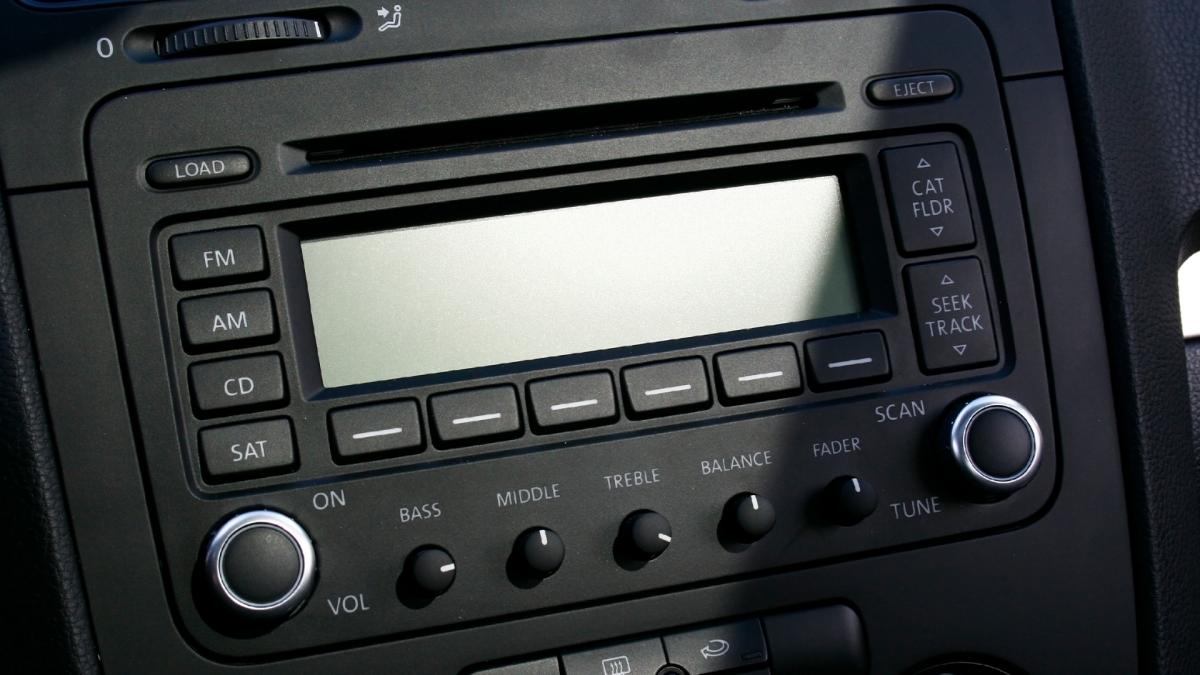
Congress revives the fight over AM radio in cars
AM radio, a technology many drivers rarely think about, is back at the center of a national transportation debate. A bill moving through Congress would require automakers to include AM radio receivers in new vehicles, reviving a fight that blends emergency communications, industrial cost concerns, and the rapid redesign of the modern car.
The proposal is called the AM Radio for Every Vehicle Act. According to the source article, it is part of the Motor Vehicle Modernization Act of 2026 and could also be folded into the broader Build America 250 Act. That larger legislation contains a wider set of transportation provisions, including highway safety programs and bridge rehabilitation, which gives the AM radio measure a possible path through a bigger and more urgent legislative package.
The timing matters. The source says lawmakers want the broader bill approved before September 30, when current highway and transit funding authorities expire under the existing surface transportation law. If Congress and the president do not act by then, federal support for highways, bridges, and transit programs could lapse. That deadline raises the stakes for every measure attached to the package, including the AM radio requirement.
Why lawmakers want AM preserved
The main argument from supporters is not that AM radio is popular in daily use. It is that the technology still serves a distinct purpose when other systems fail. Backers argue that the question is not how often drivers tune in, but what remains available during emergencies, outages, or disruptions that affect digital alternatives.
That framing has helped turn a legacy feature into a resilience issue. AM radio has long been associated with public alerts and broad geographic reach, and supporters view that role as reason enough to keep it in the dashboard even as infotainment systems become more software-driven and connected.
The measure also has bipartisan backing, which is one reason observers see this year’s push as more serious than earlier attempts. In transportation policy, bipartisan support does not guarantee passage, but it often determines whether a proposal stays symbolic or becomes legislatively viable. Here, the presence of a larger transportation bill and a hard funding deadline gives the issue more momentum than a standalone cultural defense of old media would have had on its own.
Why automakers have pushed back
Opposition from the auto industry has been consistent, and the source identifies cost as the central practical objection. Automakers and allied research groups previously argued that adding or preserving AM capability is not as simple as keeping an old feature alive for nostalgia’s sake.
In the earlier 2023 version of the same bill, the Alliance for Automotive Innovation and the Center for Automotive Research argued that high-voltage electric vehicle powertrains can interfere with AM reception. They also said the expense of including receivers could run as high as $70 per vehicle. The source notes that these costs were projected to total $3.8 billion for car companies by 2030.
Those figures matter because even seemingly modest per-vehicle hardware costs can become meaningful when applied across millions of units. In a market where manufacturers are already under pressure to manage battery costs, software integration, regulatory compliance, and competitive pricing, any mandated component becomes part of a larger margin calculation.
The auto sector’s resistance therefore reflects more than a dislike of regulation. It reflects a view that the industry is being asked to preserve a feature that can be technically difficult to implement cleanly in some vehicles and that may deliver limited value to many buyers in normal daily use.
The EV transition changed the policy argument
Electric vehicles have made the AM debate more concrete. As vehicles move toward high-voltage architectures and more electronically dense cabins, legacy radio systems are no longer automatically compatible with every design choice. That creates a policy friction point: lawmakers may see AM as essential public infrastructure, while manufacturers may see it as a costly engineering requirement imposed on a market heading in another direction.
This tension is increasingly common in transportation. Cars are no longer just mechanical products. They are networked electronic platforms. That means older public-interest features, whether radio, diagnostics, or safety interfaces, now compete with design constraints and business models shaped by software and electrification.
The AM mandate debate is therefore about more than a receiver. It is about who decides which functions remain universal in the next generation of vehicles: regulators, automakers, or the market.
What happens next
For now, the proposal remains in an early stage. The source says the Build America 250 Act was introduced on May 18 and advanced by the House Transportation and Infrastructure Committee a few days later with a bipartisan 62-2 vote. It has not yet passed the House of Representatives.
Still, that committee action suggests the broader bill has real movement. If the AM radio language stays attached to a must-pass transportation package, its prospects improve significantly. If it is separated or delayed, the measure could again run into the same coalition of technical and cost objections that blocked earlier versions.
The outcome will send a wider signal. A successful mandate would show that Congress is willing to preserve specific legacy communications tools inside new vehicles when lawmakers believe they still serve a public function. A failure would suggest that even bipartisan support may not be enough when the underlying industry argues the requirement no longer fits the technical and economic realities of the modern car.
Either way, AM radio’s return to the legislative agenda shows that old technologies do not disappear quietly when they intersect with infrastructure, emergency planning, and national transportation policy. In a car industry being reshaped by electrification and software, one of the sharpest current disputes is over whether a century-old broadcast band still deserves guaranteed space in every new dashboard.
This article is based on reporting by The Drive. Read the original article.
Originally published on thedrive.com