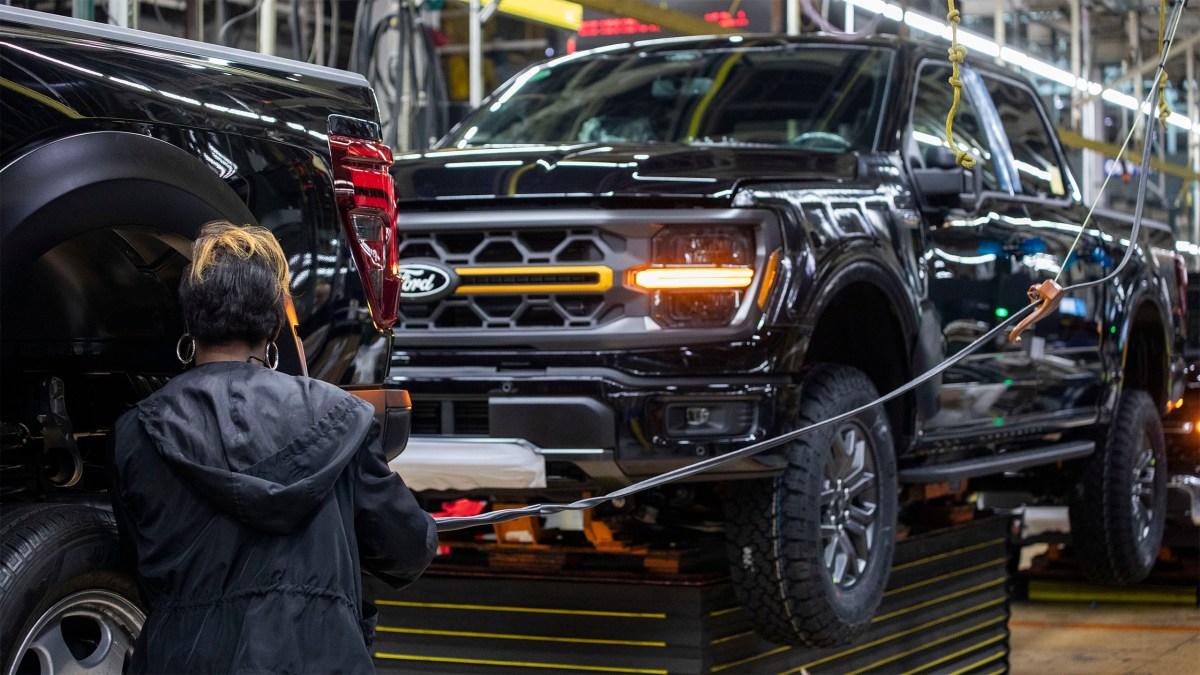
A key material shortage is still hitting America’s biggest pickup franchise
Ford’s F-150 production is still being squeezed by an aluminum shortage that began affecting output late last year, according to reporting summarized by The Drive. The issue is not merely a supply-chain inconvenience. It is now tied to a much larger cost burden, with Ford projected to spend $2 billion on commodities in 2026, double its original estimate, because of rising metal costs.
That combination of constrained production and escalating input costs is especially significant for the F-150 because the truck is more than just another model line. It is one of Ford’s most commercially important vehicles and a central part of the U.S. full-size pickup market. Pressure on F-150 production therefore carries both financial and symbolic weight.
The shortage has become persistent, not temporary
The most important detail in the source material is duration. Aluminum has been in short supply for more than half a year, and the problem is still affecting output. That makes this less about a short-lived disruption and more about a lingering industrial constraint with real planning consequences.
Automakers can often absorb brief component or commodity interruptions by adjusting schedules, prioritizing trim levels, or drawing down inventory. But when a shortage persists, it starts to alter broader operating assumptions. Forecasting gets harder, supplier negotiations change, and production planning becomes more defensive.
For Ford, the persistence of the aluminum issue suggests that even mature manufacturing systems remain vulnerable to upstream materials instability. The truck plant can be ready to build; the market can be ready to buy; but if a core input remains tight, the system still slows.

Why aluminum matters so much to the F-150
The source material does not provide a technical history lesson, but the importance of aluminum to the F-150 is implicit in the impact. A shortage severe enough to “wreak havoc” on production indicates that the metal is not easily substitutable at the scale or speed required.
That rigidity matters across the automotive sector. Vehicle manufacturing relies on deeply integrated material choices that shape tooling, cost, weight, repairability, and performance. When the price or availability of a major material shifts, the consequences are rarely confined to procurement departments. They ripple directly into production schedules and margins.
In Ford’s case, the reported jump to $2 billion in 2026 commodity spending underlines how quickly materials inflation can overwhelm earlier assumptions. Even if production volumes eventually normalize, the economics of those vehicles can still deteriorate sharply when commodity markets move against the manufacturer.
The broader industry setting is not calm either
The Drive’s roundup places the Ford story in a wider environment of automotive uncertainty, including tariff concerns, job-cutting pressure at Audi, declining Volvo sales across a recent period, and continuing electrification milestones elsewhere in the industry. Ford’s aluminum problem therefore arrives in a sector already dealing with volatile costs, policy risk, and uneven demand signals.
That matters because supply shocks are easier to manage when the surrounding system is stable. They are harder to absorb when companies are already juggling macroeconomic pressure, international trade risk, and capital demands tied to technology transitions.
In that sense, the aluminum shortage is not only a Ford-specific issue. It is another example of how the post-pandemic lesson of industrial fragility has not gone away. The weak point may shift from semiconductors to batteries to raw materials, but the strategic problem remains similar: a modern vehicle is only as resilient as its most constrained essential input.

What this means for the truck market
If F-150 supply remains constrained, the effects can extend beyond Ford’s internal finances. Pickup buyers, dealers, suppliers, and competitors all feel the change. Reduced availability can tighten inventories, shift transaction dynamics, and create openings for rival models if consumers cannot get the configurations they want.
The source material does not quantify output losses or inventory impact, so those effects should not be overstated. But the phrase “constraining stock of the pickup” signals that the problem is visible enough to affect availability, not just factory accounting.
That is the kind of issue that can persist in the background of a market even when it stops dominating headlines. Buyers may experience it as fewer units on lots or longer waits. Manufacturers experience it as a drag on revenue quality and predictability.
The real takeaway
The Ford update is a reminder that the automotive industry’s most consequential stories are not always glamorous product launches. Sometimes they are about metal. An aluminum shortage that continues to interfere with F-150 production months after it emerged tells us something basic but important: the industry’s dependence on complex, price-sensitive material flows remains a central business risk.
Ford may eventually work through the constraint. But the reported doubling of expected commodity spending shows that even when production problems are managed, cost damage can linger. For automakers, resilience is not just about building the next vehicle. It is about securing the materials that make building it possible at all.
This article is based on reporting by The Drive. Read the original article.

Originally published on thedrive.com