A children’s toy joins the electric era
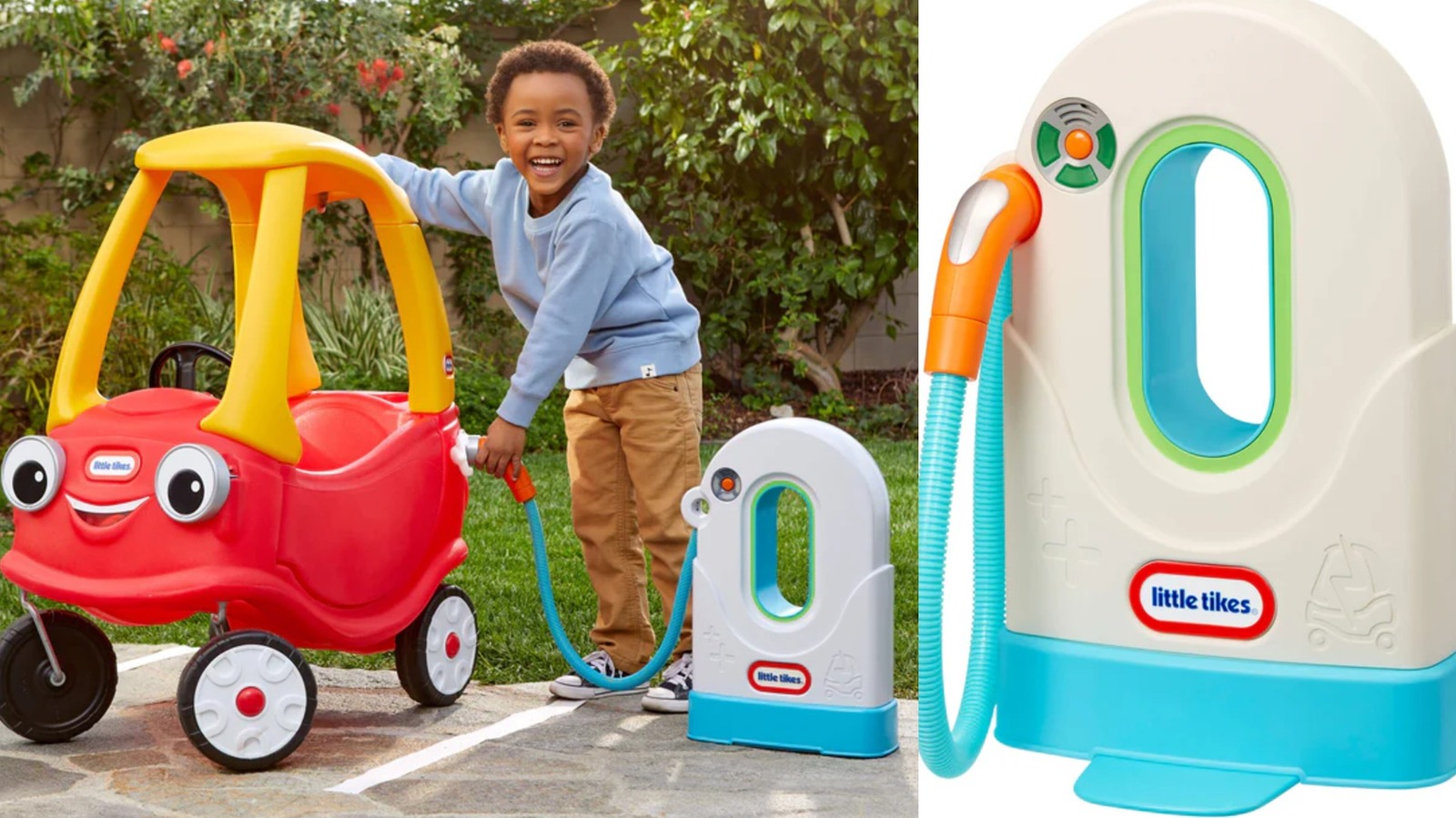
Little Tikes has introduced a pretend EV charger accessory for the Cozy Coupe, the red-and-yellow ride-on toy that has been part of American childhood for decades. On the surface, it is a simple product extension: a battery-powered play accessory with charging sounds, glow-in-the-dark decals, and a plug that fits the toy’s fuel door. But the launch also says something larger about how electric-vehicle culture is settling into the mainstream.
The new accessory, called the Cozy E-Charging Station, sits alongside the brand’s long-running gas-pump-style play accessory rather than replacing it. That detail matters. Little Tikes is not erasing one form of play in favor of another; it is updating a familiar pretend-driving experience to reflect the transportation landscape children now see around them.
Why this small launch stands out
Toys often absorb big social and technological shifts quietly, long before those shifts feel fully settled in policy or industry debate. When a major children’s brand adds an EV charging prop to one of its most recognizable products, it suggests that electric vehicles have moved beyond niche status and into the realm of ordinary reference points.
The Cozy Coupe is an unusually powerful object for that kind of signal. The supplied source text notes that the toy has been around since 1979 and that more than 10 million had been sold by 2009. It also cites a long-running pop-culture claim about the Cozy Coupe becoming the best-selling “car” in the United States in 1991, with more than 500,000 units produced that year. Whether readers treat that comparison literally or playfully, the underlying point is clear: this is not a marginal toy line. It is one of the most recognizable products in its category.
That gives even a modest accessory launch more weight than it would otherwise carry. Children’s play products are often where adult technologies become normal before children can fully articulate what they represent. A pretend steering wheel, fuel pump, or charging cable is not teaching a technical lesson in energy systems. It is building familiarity.

Play as soft infrastructure for adoption
Little Tikes says the new accessory “introduces eco-friendly concepts through fun, engaging pretend play.” That wording is marketing language, but it points to a real mechanism. Children do not learn transportation only by reading about it; they learn through the objects and routines adults place around them. When pretend play includes charging rather than only refueling, the idea of an EV stops looking novel and starts looking ordinary.
That does not mean a toy charger changes consumer demand in any direct or measurable short-term sense. It does mean that cultural adoption of a technology is broader than vehicle sales figures. It includes what children see in parking lots, what parents talk about at home, and what toys companies assume will feel familiar enough to sell.
The product details reinforce that normalization. The charger makes noise. It glows. It connects to the same door where earlier versions simulated fuel. The ritual is different, but the imaginative role-play remains the same: the child “prepares” the car to go. That substitution is precisely how technological change becomes socially legible.
The economics are part of the story too
The supplied article notes another detail that mirrors the real market: the EV charger accessory is priced slightly above the classic pump. The Cozy E-Charging Station is listed at $32.99, compared with $29.99 for the Cozy Pumper. In the context of a toy accessory, the gap is minor. Symbolically, though, it echoes a familiar pattern in transportation, where newer technologies often arrive carrying a premium before they become cheaper or more standard over time.
There is also a subtle irony baked into the launch. The source text points out that both the Cozy Coupe and the charging accessory are made from petrochemical-derived plastics. That does not invalidate the product, but it does underline a broader truth about the energy transition: new habits and symbols often emerge inside old industrial systems rather than outside them.

What the launch really tells us
The strongest reading of this story is not political and not especially complicated. Little Tikes has recognized that EV charging is now part of the visual vocabulary of everyday life. A toy company only makes this kind of update if it expects parents and children to understand it immediately.
That makes the accessory less interesting as a toy review than as a cultural marker. It suggests that the electric-car transition has reached a point where it can be miniaturized, stylized, and sold as pretend infrastructure for preschoolers. Few technologies feel fully mainstream until they can be reduced to an accessory in a child’s play world.
What the accessory includes
- A battery-powered, button-activated charging noise function.
- Glow-in-the-dark decals.
- A plug designed to work with the Cozy Coupe fuel door.
The transportation transition is often told through battery factories, charging corridors, policy fights, and quarterly sales reports. Those metrics matter. But so do the quieter signals. A pretend charger attached to an iconic ride-on toy will not determine the future of mobility, yet it captures something important: electric vehicles are no longer only an industry story. They are becoming part of childhood imagination too.
This article is based on reporting by Jalopnik. Read the original article.
Originally published on jalopnik.com

![Volkswagen's new electric hot hatch delivers more power than the Golf GTI [Images]](https://electrek.co/wp-content/uploads/sites/3/2026/09/Volkswagen-ID.3-GTI-EV-side.jpeg?quality=82&strip=all&resize=1200,628)