Why Used Vehicles Remain Strategic for Dealership Groups
Used vehicles are becoming an even more important lever for dealership groups navigating an affordability-constrained auto market. According to Automotive News, dealership groups that lead in used-vehicle sales are following a relatively disciplined formula: they diversify sourcing beyond trade-ins, align inventory with local demographics, and build reputation through consistent quality standards.
The emphasis on used sales is not hard to understand. When affordability becomes a larger issue for consumers, used inventory offers more pricing flexibility than new vehicles and can support both volume and margin strategies. The source material also points to a broader industry context in which public dealership groups are leaning on used vehicles in the first quarter and beyond as part of their response to affordability pressure.
Sourcing Beyond the Trade-In Is Now a Competitive Requirement
One of the clearest signals in the supplied material is that top used-vehicle retailers are not relying only on customer trade-ins to fill their lots. Instead, they are diversifying sourcing. That suggests a market in which traditional acquisition channels are no longer sufficient for dealers that want to maintain selection, pricing coverage, and sales momentum.
There are practical reasons for that shift. Trade-in flow can be uneven and heavily influenced by new-vehicle sales conditions. If dealers depend too much on that pipeline, they may struggle to keep enough variety on hand or to source vehicles at the mix of ages, body styles, and price points their markets demand. A broader sourcing strategy helps reduce that vulnerability.
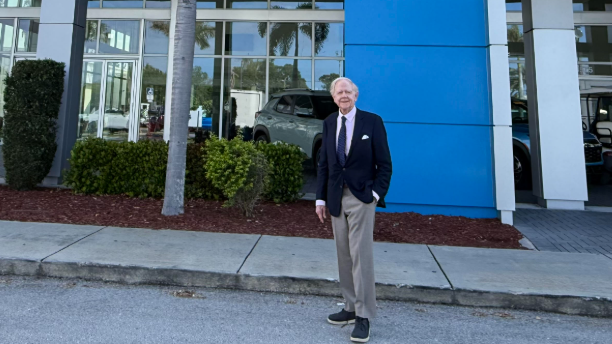
In competitive used-car retail, inventory breadth can itself become a selling point. Automotive News quotes Wallace Automotive Group owner Bill Wallace saying that customers respond to a wide selection of used-vehicle options. Even in a short source excerpt, that point stands out because it connects the back-end sourcing strategy directly to the customer-facing sales proposition.

Local Demographics Are Driving Inventory Decisions
The report also says top groups match inventory to local demographics. That may sound obvious, but it is a more demanding standard than simply carrying a large number of vehicles. It implies dealers are making sharper judgments about which vehicles are likely to move in a specific market rather than relying on a generic nationwide view of demand.
In practice, that kind of alignment can affect everything from price bands to vehicle categories. A dealer group serving a market with especially price-sensitive buyers may need a deeper bench of lower-cost options. Another market might respond better to particular body styles or brands. The underlying point is that used-vehicle success is not only about having more units. It is about having the right units for the local buyer base.
That approach also matters when affordability is a dominant theme. Consumers who are pushed out of some new-vehicle price ranges are not entering the used market as a single bloc with identical needs. Matching inventory to local demographics is one way dealerships try to convert that broad affordability challenge into a more precise retail strategy.
Quality Standards as a Trust Mechanism
The third pillar identified in the source material is reputation built through quality standards. In used-vehicle retail, trust has always been central, but it becomes even more important when shoppers are stretching budgets and trying to minimize the risk of a bad purchase. A dealership group that can establish a consistent quality threshold has a better chance of turning selection into actual transactions.
That can also differentiate franchised groups from less standardized corners of the used-car market. If customers perceive a dealer’s used inventory as better screened or more dependable, the retailer may have more resilience even when price competition is intense.
The source text does not spell out the exact quality processes these groups use, so the key supported conclusion is narrower: leading dealers are treating quality standards not as a back-office detail, but as part of the business model that underpins their reputation and sales performance.

A Market Defined by Execution, Not Hype
This is not a breakthrough technology story, but it is a meaningful industry signal. The used-car business is becoming more strategic for large dealership groups precisely because the wider market is under pressure. In that environment, operational execution matters. Retailers that can source broadly, stock intelligently for local demand, and sustain customer confidence through quality controls are in a stronger position to capture sales.
The source material stops short of offering a full quantitative ranking analysis, and it provides only a limited excerpt. Even so, the direction is clear. Used vehicles are not just a fallback category for dealers when new-car conditions tighten. They are an increasingly central response to the affordability crisis shaping the U.S. retail auto market.
For dealership groups, that likely means the competitive edge will come less from any single tactic than from how well sourcing, inventory planning, and reputation reinforce one another. The leaders in used sales appear to understand that the market is not rewarding scale alone. It is rewarding disciplined fit between what dealers acquire, what local buyers need, and what those buyers believe they can trust.
This article is based on reporting by Automotive News. Read the original article.
Originally published on autonews.com