A modern production car is moving beyond hydraulic brakes
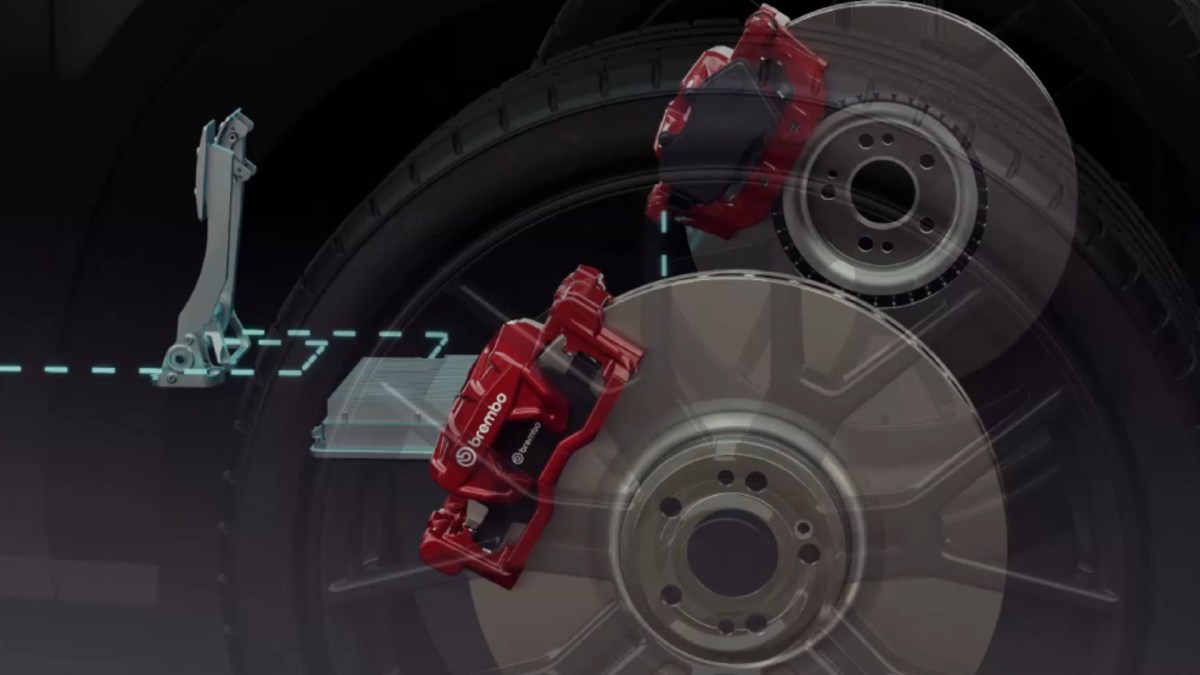
Brembo’s Sensify braking system is headed into production, marking what the source describes as the first modern car without hydraulic brakes. The company’s new setup removes the traditional fluid-based system and replaces it with an electronic brake-by-wire architecture using electric motors.
That makes this more than a component launch. It is a step toward a different definition of what automotive braking hardware can look like in the software-defined vehicle era. Hydraulic systems have been a core assumption of modern cars for generations. Sensify challenges that assumption directly.
Why the timing makes sense now
The source places this development in the context of hybrids and electric vehicles, where drivers increasingly rely on regenerative braking to slow the car. According to the report, BMW says drivers of current EVs often barely activate their mechanical braking systems because electric motors are handling much of the work. That matters because it changes the practical role of friction braking hardware.
In a conventional vehicle, hydraulic brakes are constantly central. In an EV-heavy market, they are still essential for safety, but they are no longer doing the same day-to-day share of the work. That creates room for new architectures, especially if those architectures can integrate more naturally with digital vehicle systems.
Sensify is being presented in exactly that way. Brembo says the system is designed as a scalable, adaptable solution that can fit both next-generation driver assistance systems and fully autonomous applications. In other words, the brake system is no longer just a mechanical subsystem. It is becoming part of a larger electronic and software stack.

From hydraulic logic to software-defined logic
Brembo positions Sensify as a plug-and-play solution that can be integrated either at the platform level as part of a zonal architecture or within an existing vehicle ecosystem. That language is important because it connects braking to one of the biggest structural changes underway in the auto industry: the migration from scattered electronic control units toward more centralized, software-led vehicle architectures.
In that world, electronically controlled braking has obvious appeal. It can potentially simplify integration with advanced driver assistance features, support new packaging decisions, and fit more cleanly into vehicles designed around software updates and coordinated control systems. Brake-by-wire also aligns with the broader industry push to make traditional mechanical domains more programmable.
The source does note an important caveat: Brembo’s announcement was light on details about the system itself and about how fail-safes are implemented. That is a material gap, because braking is one of the most safety-critical systems in any vehicle. A production launch is therefore significant, but it does not eliminate the need for scrutiny around redundancy, fallback modes, maintenance, and certification approaches.
Production has already started, but the customer remains undisclosed
The clearest commercial signal in the report is that series production has already started for a leading global vehicle manufacturer. A Brembo spokesperson told the source that the company cannot disclose the customer because of confidentiality agreements. Even so, the statement does more than tease a future partnership. It confirms that at least one automaker has moved past concept-stage interest and into actual manufacturing.
That matters because new braking architectures can attract attention long before they are ready for the assembly line. Production is the threshold that counts. It means an automaker decided the technology was mature enough to integrate into a real vehicle program, with all the validation, sourcing, and safety responsibilities that implies.
The undisclosed-customer element also suggests this could be an early move in a broader supplier race. If one major manufacturer is already in production, others are likely studying whether the architecture offers advantages in cost, weight, integration, or feature flexibility.

What this could mean for future vehicles
Sensify’s importance is not limited to braking performance alone. If fluid-free braking becomes credible at scale, it could influence how vehicles are engineered across several layers at once. It could affect service models, platform design, ADAS integration, and how legacy mechanical systems are rethought for EV and autonomy-oriented architectures.
The source’s emphasis on scalability is especially relevant here. A technology aimed only at a flagship niche would be interesting but limited. A system designed to support a range of architectures hints at a longer-term supplier strategy: make brake-by-wire practical enough that it can become a standard building block rather than a one-off showcase.
There are still unanswered questions, including which automaker is first, how the system handles failure scenarios, and which vehicle segment gets it before others. But the direction is already unmistakable. A core automotive system that long depended on hydraulic fluid is now entering the production era in electronic form.
That is a meaningful milestone for the software-defined vehicle transition. As EVs and advanced driver assistance systems continue to reshape what the car is, even foundational systems like braking are being redesigned around electronics and control software. Brembo’s Sensify announcement shows that this shift is no longer theoretical. It has reached the production line.
This article is based on reporting by The Drive. Read the original article.
Originally published on thedrive.com