The setup for a cosmic blue shockwave
Universe Today has published the second part of a series on Cherenkov radiation, the blue glow sometimes described as a kind of optical sonic boom. This installment does not focus first on the flash itself. Instead, it tackles the deeper prerequisite: why light, which moves at a fixed speed in vacuum, can travel more slowly when it passes through a material such as water, glass, or diamond.
That distinction is essential to understanding how a charged particle can generate Cherenkov radiation. The effect depends on a counterintuitive but well-established idea in physics: while nothing outruns light in vacuum, particles can move faster than light does in a medium if that medium slows the light enough.
The article frames the issue as a story about the “crowd” inside matter. Empty space and material substances do not treat electromagnetic waves the same way. The result is that the speed associated with light in vacuum is not the speed light necessarily maintains while crossing a substance.
Maxwell’s equations define the vacuum speed of light
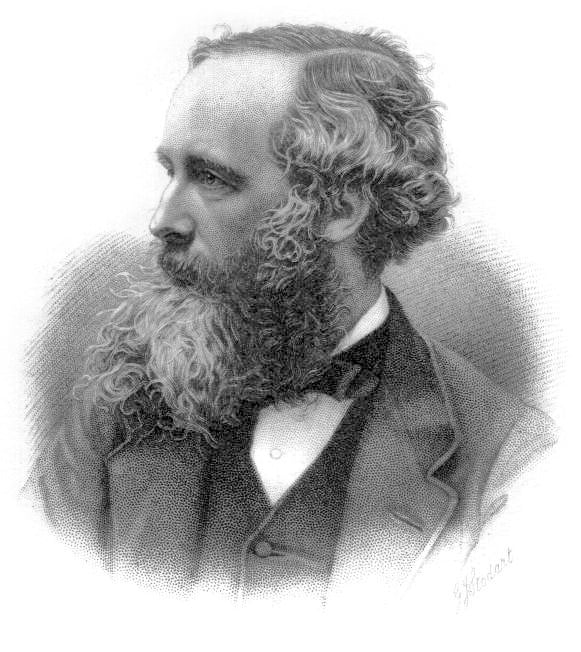
The explainer starts with James Clerk Maxwell’s 1865 unification of electricity, magnetism, and light. Maxwell’s equations show that the speed of light in vacuum emerges from two constants associated with empty space itself. That speed is 299,792,458 meters per second.
The number is exact, and that matters because the article is careful not to imply that light’s fundamental speed limit is approximate or negotiable. In vacuum, the speed is fixed. But Maxwell’s framework also makes clear that the vacuum is only one case. Once a material is introduced, its electromagnetic properties change the effective behavior of the wave.
That is the hinge point in the discussion. The universal constant remains what it is, yet the actual propagation of light through matter depends on how that matter responds to oscillating electric and magnetic fields.

Matter acts like drag on the wave
According to the article, materials have their own electric and magnetic properties, and those properties effectively act as a drag on the electromagnetic wave. Atoms and molecules respond to the passing field, producing their own ripples that interfere with the original wave. The result is a lower propagation speed through the medium.
This is not drag in the ordinary, mechanical sense of friction between surfaces. The piece instead emphasizes the collective response of the material’s microscopic constituents. Light interacts with a structured environment rather than an empty one, and that interaction changes the pace at which the wave moves forward.
The effect is summarized by the index of refraction, a single number defined as the ratio of the speed of light in vacuum to the speed of light in the medium. The higher the index, the more the material slows light.
Different materials slow light by very different amounts
The article offers several concrete examples. Air has an index of refraction of about 1.0003, so its effect is tiny and usually imperceptible in everyday life. Water has an index around 1.33, which means light travels through it at roughly 75% of its vacuum speed. In glass, the index is about 1.5. In diamond, it is around 2.4, reducing light to less than half its vacuum speed.
These examples matter because they make the concept physically intuitive. The speed of light is often discussed as if it were always the same observable quantity in every situation. The explainer corrects that simplification by separating the invariant vacuum speed from the lower medium-dependent speeds encountered in real materials.
Water is especially important because it is one of the classic settings in which Cherenkov radiation becomes visible, such as in nuclear reactor pools. When a charged particle travels through water faster than light can move through that water, the result is the familiar blue glow.

Scientists have slowed light to human walking speed
One of the most striking details in the article is that specially engineered laboratory materials have slowed light to the pace of a person walking down a corridor. The explainer says this has been achieved inside ultracold atomic clouds.
That example is useful for two reasons. First, it shows that “slowing light” is not a loose metaphor but a real, experimentally demonstrated capability in carefully designed systems. Second, it highlights how strongly a medium’s electromagnetic response can shape wave propagation.
Light itself is massless, and that often makes its slowing in matter sound paradoxical to non-specialists. The article leans into that tension. It points out that light cannot simply be “grabbed” in the ordinary sense, yet the organized response of atoms and molecules is enough to reduce its effective speed dramatically.
That is precisely why the piece serves as a good bridge toward Cherenkov radiation. Once it is accepted that the local speed of light in a medium can be substantially lower than the vacuum constant, the idea of a particle outrunning that local wavefront no longer sounds like a violation of relativity.
Why this matters for the ‘light boom’
The article is part of a series, and its purpose is largely explanatory. But it addresses an enduring source of confusion in public discussions of physics. Many people hear “nothing can travel faster than light” and assume that any reference to a particle moving faster than light must be wrong. The more precise statement is that nothing with mass exceeds the speed of light in vacuum.
In a medium, the situation changes. If the medium slows light enough, an energetic particle can move faster than the light signal does in that material, producing a shock-like electromagnetic effect. That is the basis of Cherenkov radiation, the optical analog that gives the series its “light boom” theme.
As a science communication piece, the explainer is less about a new discovery than about conceptual groundwork. But that groundwork is valuable. It connects Maxwell’s 19th-century equations, the modern language of refractive index, and the spectacular visual phenomenon of Cherenkov light into one coherent chain.
Core ideas highlighted in the explainer
- The speed of light in vacuum is exactly 299,792,458 meters per second.
- Materials alter electromagnetic wave propagation because of their own electric and magnetic response.
- The index of refraction measures how much a medium slows light compared with vacuum.
- Light moves at about 75% of its vacuum speed in water.
- Diamond reduces light to less than half its vacuum speed.
- Engineered systems have slowed light to walking pace in laboratory conditions.
The enduring significance of the piece is that it shows how a phenomenon that sounds impossible becomes straightforward once the frame is corrected. Light is not “broken” by matter, and relativity is not suspended. Instead, the medium changes the conditions. In that altered environment, a charged particle can trigger the brilliant blue signature physicists call Cherenkov radiation.
That makes this kind of explainer useful well beyond the immediate article. It helps readers move from slogan-level physics to a more exact understanding, which is often where the most interesting scientific ideas begin.
This article is based on reporting by Universe Today. Read the original article.
Originally published on universetoday.com