A missing population of early-universe gas clouds comes into view
Astronomers working with data from the Hobby-Eberly Telescope Dark Energy Experiment, or HETDEX, say they have identified tens of thousands of gigantic hydrogen gas halos surrounding galaxies that existed roughly 10 to 12 billion years ago. The result adds substantial weight to a long-standing idea in cosmology: that early galaxies were embedded in vast reservoirs of hydrogen that helped fuel rapid star formation during the era often called cosmic dawn.
The finding, described in a study published in The Astrophysical Journal, is significant not just because it adds more examples to the record, but because it changes the scale of what researchers can analyze. Previous evidence had pointed to only a few thousand such halos. Expanding that count into the tens of thousands gives astronomers a much larger statistical sample for testing models of how matter was organized in the young universe.
Why hydrogen halos matter
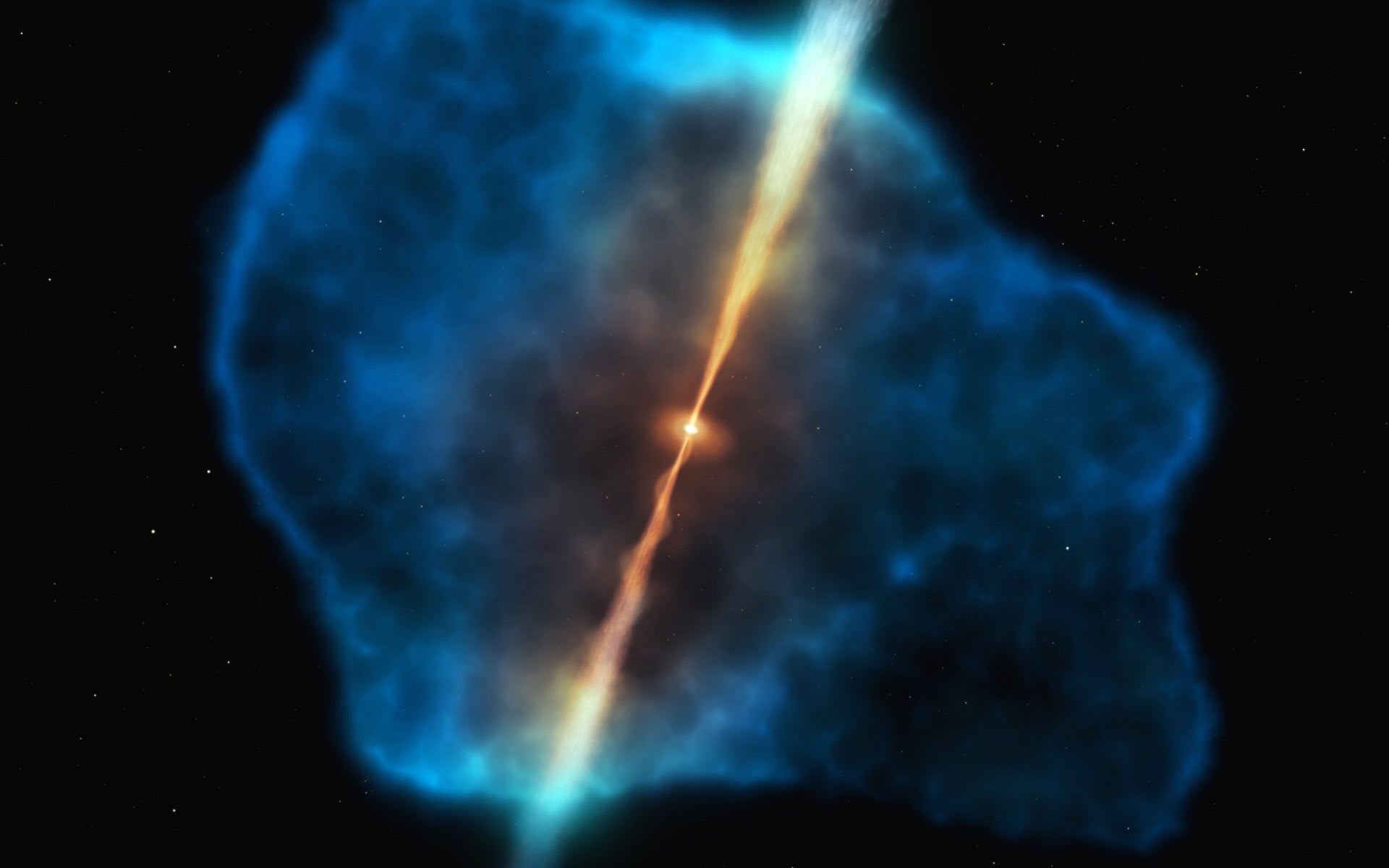
Standard cosmological models describe a young universe permeated by massive clouds of neutral hydrogen. Out of that material, the first generations of stars and galaxies formed. For years, astronomers have theorized that many early galaxies should have been surrounded by enormous halos of hydrogen gas, known as Lyman-alpha nebulae. Those halos would have served as a crucial supply of raw material for fast galaxy growth.
The challenge is that hydrogen is difficult to detect directly because it does not emit its own light in a simple, bright way. According to the source material, the gas can glow when it is illuminated by bright ultraviolet-emitting galaxies and stars. That means astronomers need both the right physical conditions and the right instruments to pick up the signal.

How HETDEX pulled it off
HETDEX was designed to map the positions of more than one million galaxies in order to measure the influence of dark energy. That mission produced exactly the kind of large, repeatable spectral dataset that can also help answer other big questions about the universe. The research team used a statistical technique known as stacking, which combines spectra from thousands of distant galaxies to reveal faint spectral features that would be too weak to detect in single objects alone.
That point matters. The newly reported halos were not simply waiting to be spotted in a few unusually bright systems. Instead, the data had to be combined at scale to bring out a signal buried in the noise. In practical terms, that means the result is as much about survey astronomy and data method as it is about a single observation.
The source text notes that the Hobby-Eberly Telescope is one of the largest in the world and that the HETDEX instrument produces around 100,000 spectra in each observation. That kind of throughput is what makes faint-population discovery possible. It is a reminder that modern astronomy increasingly advances through industrial-scale data collection paired with careful statistical analysis.
What the discovery changes
The reported halos line up with a picture of the early universe in which galaxies were not isolated islands but nodes within large gaseous environments. If galaxies 10 to 12 billion years ago were commonly wrapped in extended hydrogen structures, then those structures were likely part of the pipeline by which matter flowed into star formation and galaxy assembly.
That helps connect observation back to theory. The question was never only whether a few dramatic halos existed, but whether they were common enough to support the prevailing story of rapid early growth. A sample in the tens of thousands makes that broader interpretation harder to dismiss.
It also suggests that survey-based astronomy may still be undercounting important diffuse structures in the universe. Features that are too faint to emerge in one object at a time can become visible when large datasets are treated as collective evidence. That is an increasingly powerful pattern across astrophysics.
What remains to be learned
The discovery does not settle every question about the role of these halos. Astronomers will still want to characterize their sizes, brightness distributions, environments, and relationship to different galaxy types. They will also want to compare the observations against simulations to test how accurately current models describe the movement of gas into and around forming galaxies.
But even before those follow-on studies arrive, the result stands out as a meaningful advance. It expands the observed census of a theorized cosmic structure by an order of magnitude and does so at a time in the universe’s history that remains central to understanding how the first major systems took shape.
A larger lesson from the data era of astronomy
There is also a broader methodological story here. HETDEX was built to investigate dark energy, yet its data are now illuminating another major problem in cosmology. That kind of reuse is becoming one of the strengths of large observatories: a single survey can support discoveries across multiple domains if the dataset is deep enough and the analytical tools are strong enough.
For Developments Today, this is exactly the sort of science story worth watching. It is not a speculative claim or a single-image curiosity. It is a population-scale result that sharpens a foundational picture of the early universe. Tens of thousands of giant hydrogen halos now appear to have been part of the cosmic landscape during the era when galaxies were growing fast. That gives astronomers a much firmer observational basis for understanding how cosmic dawn actually unfolded.
This article is based on reporting by Universe Today. Read the original article.

Originally published on universetoday.com