A bet on bigger living volume without bigger launch mass
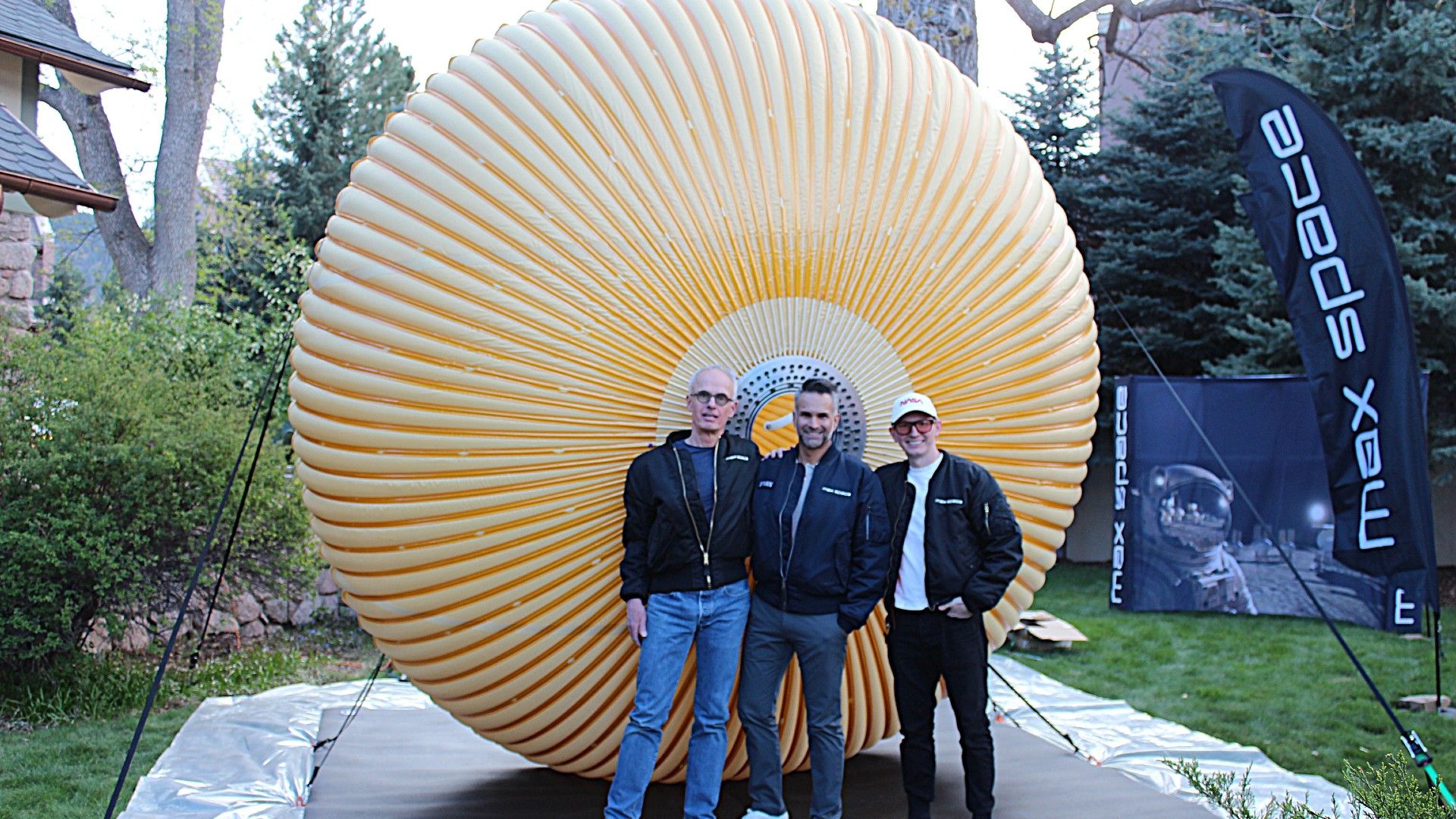
Max Space has unveiled a large sub-scale version of its expandable habitat at the Space Foundation’s 41st annual Space Symposium in Colorado Springs, offering a closer look at its concept for future orbital and lunar infrastructure. The company’s pitch is straightforward: if long-duration human activity in space is going to expand, the industry needs habitable volume that can scale without imposing the full launch penalties of rigid structures.
Company executives framed the display as more than a simple show model. Chief executive Saleem Miyan described it as a physical demonstration of a new approach to space infrastructure, emphasizing greater habitable volume, lower launch mass and logistics burden, and a scalable architecture intended for commercial low Earth orbit stations, lunar surface systems, and future deep-space missions.
Why expandable habitats keep returning
The appeal of expandable space habitats is easy to understand. Rockets reward compact payloads, but crews need room once they arrive. A structure that launches in a smaller form and then expands in space offers a way to reconcile those competing demands. The concept has surfaced repeatedly over the years because it addresses one of the most persistent bottlenecks in human spaceflight: useful internal volume is expensive to launch.
Max Space is positioning itself around that exact problem. The company argues that permanent human presence on the moon and in space will require more than capsules and tightly packed modules. It will require something closer to real estate: larger, scalable, livable environments that can support long-duration operations.

The use cases stretch from orbit to the moon
The source text places the habitat concept across a wide range of potential destinations. Low Earth orbit is the most immediate commercial target, especially as companies prepare for a post-ISS era in which private stations are expected to take on more research, industrial, and tourism activity. More habitable volume could be a selling point in that market, where crew comfort, internal layout flexibility, and operational efficiency matter.
The lunar application is even more strategically ambitious. Surface habitation on the moon faces strict mass constraints, difficult logistics, and the need for systems that can support humans for extended stays. A scalable habitat could, in principle, help address the volume side of that challenge if it proves robust enough for long-duration use.
The company also points further outward to deep-space missions, where the importance of living space increases with mission duration. The longer people remain away from Earth, the less acceptable cramped transit-only environments become.
A concept reveal, not a flight-ready declaration
The unveiling is still a concept and demonstration story, not an operational deployment announcement. What Max Space showed at the symposium was a large sub-scale habitat, not a launched system. That distinction matters because expandable structures must prove more than clever packaging. They have to satisfy demanding requirements around durability, environmental protection, systems integration, and long-term habitability.
Still, public physical demonstrations can matter in the space sector because they move a concept out of slide decks and renderings. A visible structure gives customers, partners, and policymakers something tangible to evaluate. It also signals that the company wants to be part of the conversation around the next generation of orbital stations and lunar infrastructure rather than waiting for those markets to fully mature first.

The larger infrastructure question
Max Space’s announcement lands at a moment when the industry is increasingly focused on what comes after the current era of government-led station building. Commercial operators, lunar planners, and deep-space advocates all face the same structural question: what kinds of habitats make sustained activity beyond Earth economically and operationally plausible?
The company’s answer is that habitable volume must become more scalable. That is a sensible argument. If future space activity grows, crews will need spaces that support work, storage, systems operations, and everyday living more effectively than tightly constrained rigid modules allow.
What remains unresolved is execution. Expandable habitats have to show they can combine size advantages with reliability, integration simplicity, and mission-specific performance. In space infrastructure, elegant concepts only matter if they survive harsh operating conditions and fit into real launch and mission architectures.
What comes next
For now, Max Space has used one of the industry’s biggest gatherings to stake out a position in a critical but still unsettled market. The company wants expandable habitats to be seen not as niche experiments but as core infrastructure for low Earth orbit stations, lunar bases, and eventual deep-space missions.
That is an ambitious claim, but it matches the broader direction of the sector. As human spaceflight pushes toward longer stays and more permanent outposts, the question is no longer only how to reach orbit or the moon. It is how to live there at scale. Max Space is arguing that expandable architecture belongs near the center of that answer.
This article is based on reporting by Space.com. Read the original article.
Originally published on space.com