A spacecraft headed to Jupiter has captured a rare interstellar event
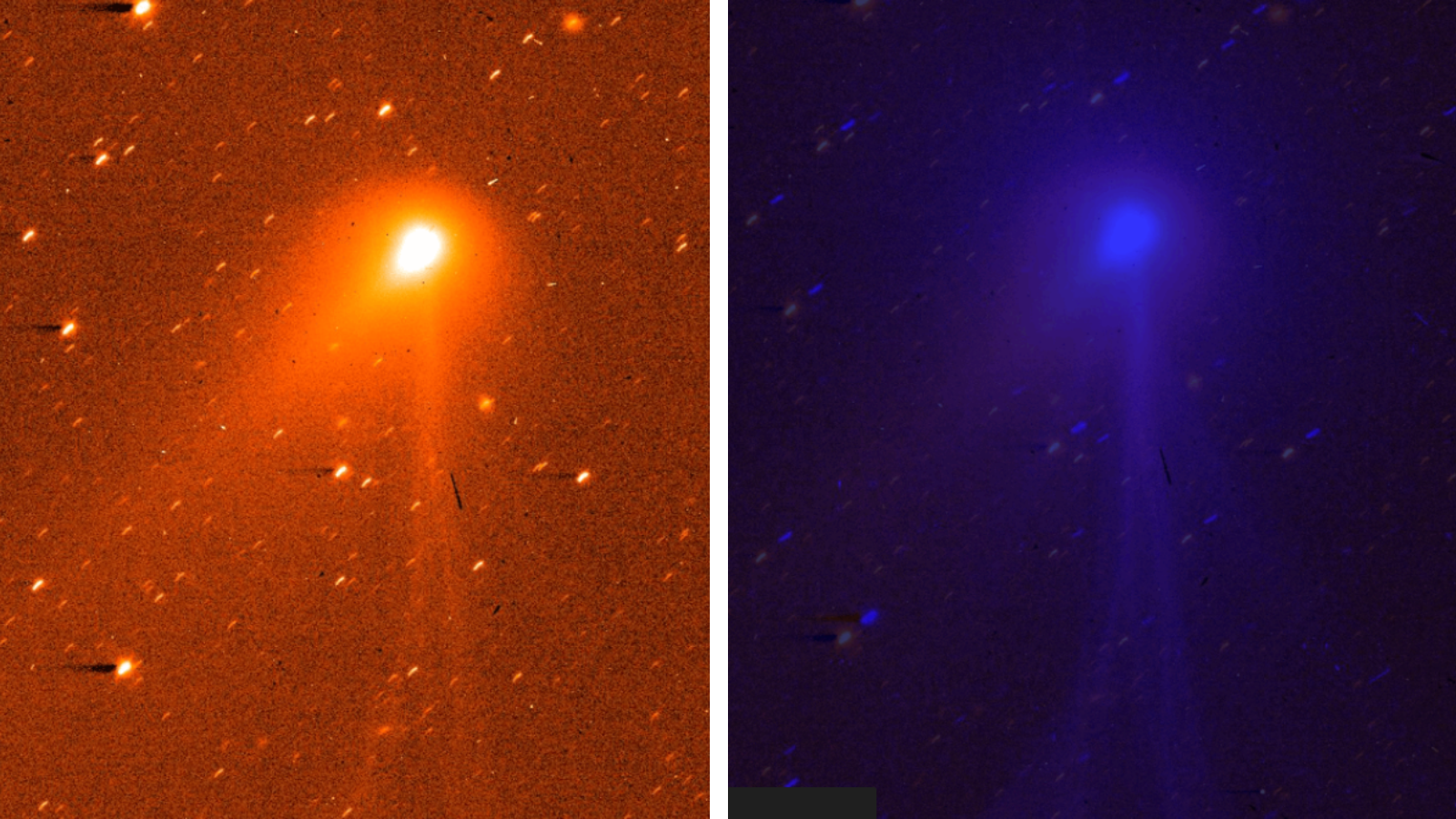
The European Space Agency's Jupiter Icy Moons Explorer, better known as JUICE, has observed the interstellar comet 3I/ATLAS releasing water vapor at an extraordinary rate. According to the supplied source material, researchers estimate the comet is ejecting about two tons of water every second, roughly equal to 70 Olympic swimming pools of water vapor per day.
That number is dramatic, but the deeper reason the observation matters is rarity. 3I/ATLAS is described as only the third object discovered passing through the solar system from beyond its boundaries. Such visitors offer scientists an unusual opportunity to study matter formed around other stars without leaving home territory. In that sense, 3I/ATLAS is not just another comet. It is an imported sample of planetary-system history from somewhere else in the galaxy.
JUICE made the observation in November 2025 using its MAJIS and JANUS instruments while the spacecraft continued its long journey toward Jupiter and its icy moons. The comet, like comets native to the solar system, began shedding material as it approached the sun and solar heating activated its icy surface. That familiar behavior is what makes the object scientifically useful. Even though it originated beyond the solar system, it is responding to solar energy in ways researchers can compare with comets formed closer to home.
Why interstellar comets are so valuable
Every planetary system forms from a mix of gas, dust, ice and rock, but the exact recipe and history differ. Interstellar objects provide one of the few direct ways to compare our system's leftovers with material shaped around other stars. If scientists can identify what 3I/ATLAS is made of, and how it behaves under solar heating, they gain a window into conditions that may predate the sun or arise from a very different stellar environment.
The candidate source text explicitly notes that the discovery could help scientists study the elements present during the formation of planets around other stars, potentially much older than the sun. That is a powerful scientific implication. It means the comet could preserve chemical information from a distant and possibly ancient system, carried intact across interstellar space until its path intersected ours.
JUICE is an especially interesting observer for this job. The spacecraft was not built as an interstellar-object chaser; its primary mission is Jupiter and its moons. Yet modern planetary probes increasingly function as flexible scientific platforms, able to contribute to opportunistic discoveries during cruise phases. In this case, a mission aimed at the outer solar system has helped capture data on a visitor from beyond it.

A fleeting chance to study material from another star system
Interstellar objects move quickly, and observation windows can be limited. That makes every instrument and every dataset count. The reported water outflow from 3I/ATLAS confirms that the comet is active and dynamically evolving as it interacts with sunlight. Active comets are especially informative because the gases and dust they release can be analyzed to infer their composition.
The estimate of roughly two tons per second also gives a sense of scale. This is not a trivial leak from a cold relic drifting through space. It is a substantial ongoing release, the kind of activity that can feed spectroscopic analysis and help researchers compare this object's chemistry with that of comets originating within the solar system.
At the same time, the strongest supported claims here remain bounded by the provided material. We know JUICE observed the comet, that the comet is active and that researchers see a major scientific opportunity in studying it. The supplied text does not provide a full chemical inventory, nor does it claim definitive conclusions yet about how 3I/ATLAS differs from local comets. That caution matters. The observation is important partly because it opens a line of inquiry, not because it has already closed one.
Why this observation stands out
- 3I/ATLAS is only the third known interstellar object detected passing through the solar system.
- JUICE observed the comet ejecting about two tons of water per second.
- The activity gives scientists a rare chance to study material associated with planet formation around another star.
- The finding shows how spacecraft in transit can produce high-value science outside their core mission targets.
For space science, interstellar objects compress huge questions into brief observational windows. They hint at how common planetary building blocks may be across the galaxy, how different star systems evolve and how much our own solar system's chemistry is typical or unusual. The data from 3I/ATLAS will not answer all of that on its own, but it adds another precious data point from a class of objects that is still scarcely sampled.
JUICE's observation also underscores the value of keeping capable instruments active and adaptable throughout long missions. On its way to Jupiter, the spacecraft has already contributed to a distinctly different frontier: the study of matter that formed somewhere else entirely. For a field built on rare opportunities, that makes 3I/ATLAS one of the more intriguing passersby the solar system has seen.
This article is based on reporting by Space.com. Read the original article.
Originally published on space.com