From doctrine to claimed operational combat
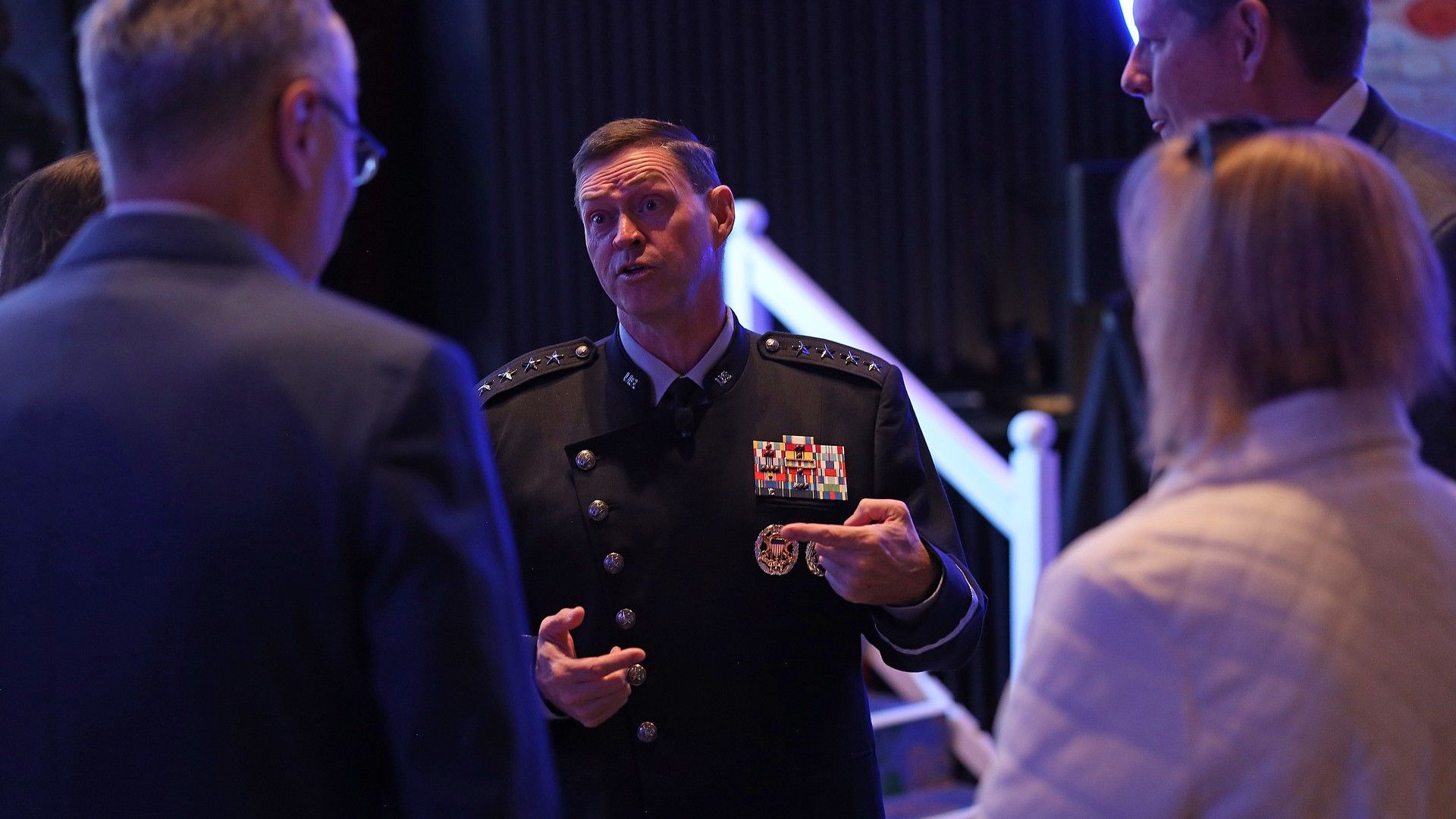
The head of the US Space Force says the service is no longer speaking in hypotheticals. In remarks at the Space Foundation’s 41st Space Symposium in Colorado Springs, Chief of Space Operations Gen. Chance Saltzman said the United States’ ongoing war in Iran has demonstrated that the Space Force has become a fully “combat credible” force.
The significance of that statement lies less in rhetoric alone than in what Saltzman said it now represents. His message was that space power has moved from a planning concept to an operational reality, with Guardians delivering effects in support of combat missions. In his words, the discussion is no longer about theories or plans but about real operational combat and the people executing it.
That is a notable public shift. For years, military discussion about space has often emphasized deterrence, resilience, communications, positioning, and support functions. Saltzman’s framing goes further by treating space operations as active and integral warfighting contributions rather than background infrastructure.
What Space Force leadership says happened
According to the source reporting, Saltzman said the service has demonstrated “combat space power at work” throughout the war in Iran. He described the Space Force as enabling a variety of support missions and said it had even carried out electronic warfare. Even in the limited details provided, that is an important claim because it places space operations inside the active conduct of a current conflict rather than in a preparatory or peripheral role.
The source text does not provide a full operational breakdown of those activities, and that absence is itself telling. Public discussion of military space missions frequently remains high level because of sensitivity around capabilities, methods, and vulnerabilities. Still, Saltzman’s decision to speak in this register at a major industry and defense gathering signals a clear intent: the service wants policymakers, contractors, and the broader defense community to view it as an operational combat arm.
That framing may have immediate budgetary and institutional consequences. When a service can point to ongoing wartime operations rather than future scenarios, it strengthens its case for resources, procurement priority, and doctrinal influence. A “combat credible” identity is not just descriptive. It is also a way of defining what the service should be funded and organized to do next.
Why the rhetoric matters
The Space Force was established amid recurring debates about whether it represented bureaucratic duplication or a necessary military specialization. Statements like Saltzman’s are designed to answer that question with operational evidence. If space effects are now being delivered in active conflict, then the argument for a dedicated service becomes easier for its leaders to make.
The comments also reflect a broader shift in how the United States publicly describes warfare. Space is increasingly presented not merely as a support domain, but as a place where contested actions can shape the outcome of terrestrial operations. Electronic warfare, mission enablement, and real-time effects all suggest a model in which orbital and spectrum-related capabilities are tightly interwoven with conventional combat.
That does not mean the public has been given a complete picture. The reporting excerpt offers only a partial account of what the service says it has done. But even that partial account is enough to mark a change in tone. The Space Force is claiming visible ownership of wartime contributions, and its top officer is doing so in direct, contemporary terms.
A milestone in the service’s self-definition
The setting matters too. The Space Symposium is one of the most prominent gatherings for the military-space sector, bringing together senior officials, defense firms, and industry stakeholders. By using that platform, Saltzman was not only describing operations but shaping the narrative around the Space Force’s maturity. He was effectively telling the sector that the era of proving relevance has been replaced by the era of executing combat missions.
Whether that message leads to changes in acquisition priorities or doctrine will become clearer over time. But the immediate significance is straightforward. The service’s senior leader is publicly connecting the Space Force to active wartime performance, including electronic warfare effects, and presenting that performance as evidence that the service has crossed an important threshold.
For the defense establishment, that is a consequential claim. It suggests that debates over future space conflict are being overtaken by arguments about present-day space combat. If that framing holds, the strategic conversation will shift from whether space can be a warfighting domain to how openly and extensively the United States is prepared to use it as one.
This article is based on reporting by Space.com. Read the original article.
Originally published on space.com