A useful challenge to the labels astronomers rely on
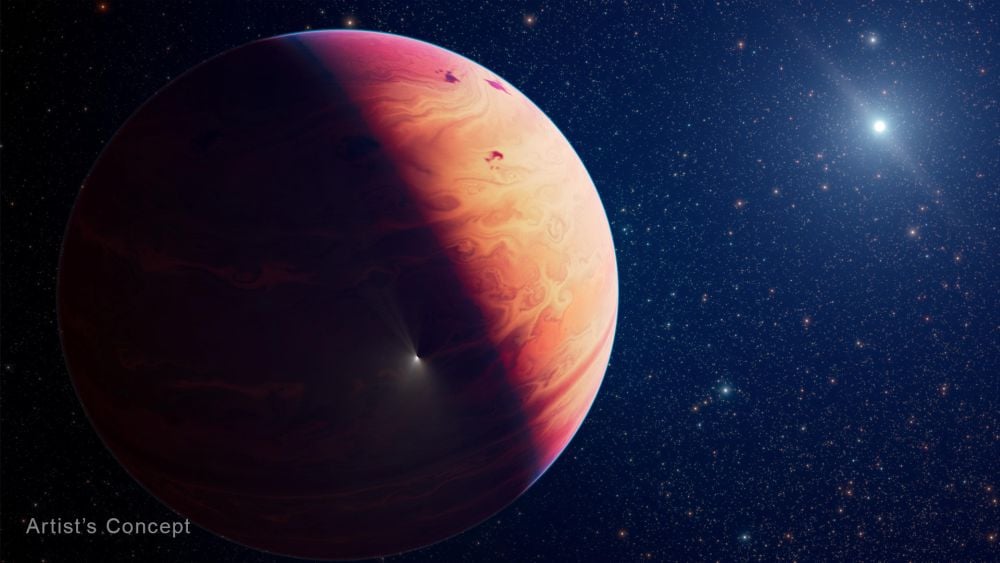
Some of the most valuable discoveries in astronomy are not entirely new classes of objects but difficult cases that force scientists to rethink the categories they already use. That is the significance of 29 Cygni b, a directly imaged substellar object described by Universe Today as sitting near the contested boundary between a planet and a star.
On one side of that divide are familiar planets like those in the Solar System. On the other are stars, whose defining feature is sustained hydrogen fusion. Between them lies a poorly behaved middle ground occupied by brown dwarfs and very massive gas giants. These objects challenge simple classification because their masses, chemistry, and formation histories do not always point in the same direction.
The new observations from the James Webb Space Telescope add an especially compelling example to that debate. 29 Cygni b is reported to be about 15 times as massive as Jupiter and to orbit its A-type host star at a distance of 2.4 billion kilometers. That mass places it close to the region where astronomers often invoke the deuterium-burning limit, a commonly used threshold in discussions of brown dwarfs.
Mass alone may not settle the question
For years, mass has been one of the simplest ways to talk about the planet-star boundary, but it has never been fully satisfactory. Brown dwarfs are often described as failed stars because they can fuse deuterium but not hydrogen. Yet the source article emphasizes that composition is not the clean dividing line. Jupiter, like stars and brown dwarfs, is composed mostly of hydrogen and helium.
That shifts the debate from what these objects are made of to how they form. Planets are generally understood to emerge in protoplanetary disks around young stars through a bottom-up accretion process. Dust grains become pebbles, pebbles become larger bodies, and eventually planets assemble. Stars, by contrast, form through the collapse and fragmentation of much larger gas clouds.
But even that distinction can blur. Fragmentation processes can also occur within disks, and astronomers have already found massive exoplanets at wide separations from their host stars that do not fit neatly into a single origin story. This is why directly observed edge cases matter so much: they provide evidence that can be tested against competing formation models.

What Webb saw around 29 Cygni b
According to the supplied text, JWST directly imaged 29 Cygni b using its coronagraph. The telescope also detected heavier elements including carbon and oxygen, with carbon monoxide specifically mentioned in the report excerpt. That is a notable observation because it hints at an origin story that may look more planetary than stellar.
If 29 Cygni b formed in the protoplanetary disk around its star, then its chemistry becomes part of the case for treating it as a planet-like object despite its large mass. If it formed more like a star, through collapse and fragmentation, the label might shift the other way. The object therefore becomes less interesting as a naming problem and more interesting as a test of which formation pathway better fits the evidence.
The source article frames this clearly: its mass suggests something star-like, while the chemical evidence points toward planetary formation. That tension is exactly what makes the object scientifically valuable.
Why the gray zone matters
Classification disputes can sound semantic, but they affect how astronomers model planetary systems and interpret survey data. If very massive objects at wide orbital distances can form in disks more often than expected, then the range of outcomes for planet formation may be broader than standard simplified accounts suggest. If instead many such bodies are better understood as low-mass stellar companions, then the inventory of giant planets around stars may need to be interpreted more conservatively.
Objects like 29 Cygni b also help refine what observers look for in future surveys. Mass estimates alone may not be enough. Orbital architecture, atmospheric composition, and direct-imaging data can all become essential pieces of the classification puzzle. The more edge cases astronomers can analyze in detail, the stronger the eventual framework becomes.
A better definition may come from formation, not appearance
The emerging lesson from this line of work is that nature does not always organize itself around human thresholds. A cutoff based on deuterium burning is useful, but it may not capture the full physical story. Two objects with similar masses could arrive there through different formation channels and therefore belong to meaningfully different populations.
That is why JWST’s role is so important. By directly imaging substellar objects and probing their chemistry, the telescope can supply evidence that was previously out of reach. In the case of 29 Cygni b, it is not simply adding another exotic world to the catalog. It is helping astronomers ask a sharper question about what should count as a planet in the first place.
For now, the dividing line remains unresolved. But that may be a sign of progress rather than confusion. The better the observations become, the harder it is to force borderline objects into oversimplified bins. 29 Cygni b is valuable precisely because it resists easy labeling and, in doing so, pushes planetary science toward a more precise understanding of how these worlds and near-worlds come to exist.
This article is based on reporting by Universe Today. Read the original article.
Originally published on universetoday.com