A New Eye on Incoming Threats
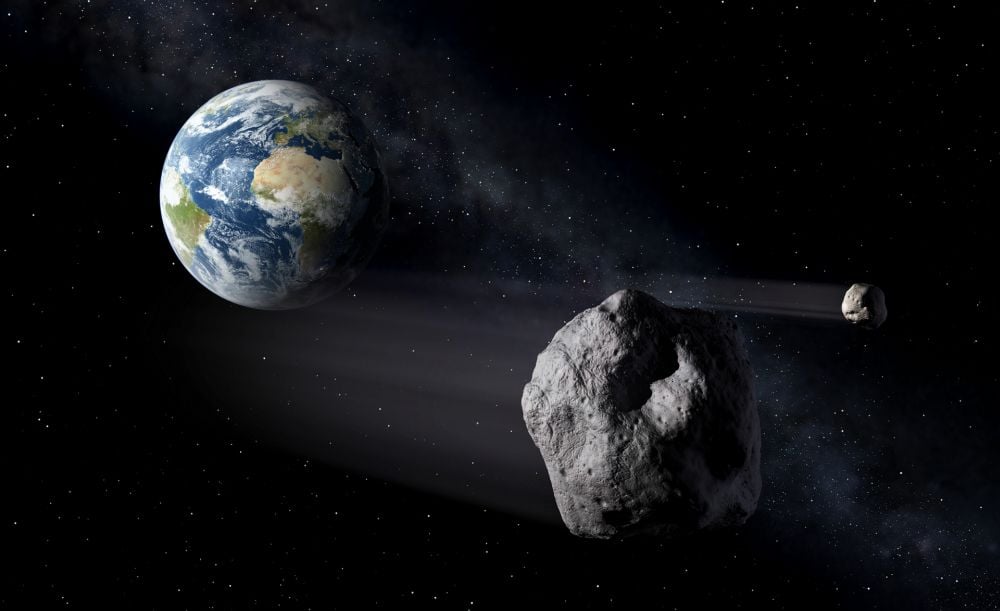
The Vera Rubin Observatory in Chile is about to give humanity an unprecedented ability to detect small asteroids just hours before they strike Earth. The observatory's decade-long Legacy Survey of Space and Time will continuously scan the entire visible sky every few nights, and new research shows it will be capable of spotting objects as small as one meter in diameter as they make their final approach toward our planet.
While objects of this size are too small to cause significant ground damage, they produce spectacular fireballs when they enter the atmosphere and occasionally drop meteorites that are scientifically valuable. Detecting them before impact would allow astronomers to predict exactly where and when these events will occur, enabling rapid mobilization of recovery teams and observation instruments.
How the Detection System Works
The Rubin Observatory is equipped with the largest digital camera ever built for astronomy, a 3.2-gigapixel instrument that can image an area of sky 40 times larger than the full Moon in a single exposure. Combined with the observatory's 8.4-meter primary mirror, this camera can detect extremely faint objects that current survey telescopes miss.
The Legacy Survey of Space and Time will operate by imaging the entire accessible sky repeatedly over ten years. Software will automatically compare images taken at different times, flagging objects that have moved between exposures. This moving object detection pipeline is optimized for finding asteroids and comets, and the new research shows it will be sensitive enough to catch very small, fast-moving objects on collision courses with Earth.
Key capabilities of the system include:
- Detection of one-meter class objects several hours before impact
- Precise orbital determination from just a few observations
- Automatic alert generation to the global astronomical community
- Impact site prediction accurate enough to guide recovery efforts

Why Small Impactors Matter
Earth is constantly being bombarded by small space rocks. Objects in the one-to-ten meter size range hit the atmosphere several times per year, but most go undetected because they occur over oceans or unpopulated areas. When they are detected, it is usually only after the fact, when reports of bright fireballs are correlated with atmospheric monitoring data.
There have been notable exceptions. In 2008, asteroid 2008 TC3 was discovered just 19 hours before it entered the atmosphere over Sudan, becoming the first natural object to be detected in space before impact. Fragments were later recovered from the Nubian Desert. In 2023, a similar feat was achieved with asteroid 2023 CX1, detected seven hours before it burned up over the English Channel.
These rare successes demonstrated the scientific value of pre-impact detection. Knowing exactly when and where an object will arrive allows astronomers to train telescopes on the event, collecting data on the object's composition, rotation, and fragmentation that would be impossible to obtain otherwise. For objects large enough to survive atmospheric entry, knowing the impact location makes meteorite recovery far more efficient.
Beyond Small Rocks
While the detection of small impactors is scientifically interesting, the Rubin Observatory's greater contribution to planetary defense will be its ability to discover and track larger asteroids that could pose a genuine threat to human life. The survey is expected to increase the known population of near-Earth objects by a factor of ten or more, providing a much more complete census of the rocks sharing our cosmic neighborhood.
This census is critical for assessing the overall impact risk and identifying specific objects that may require deflection missions in the future. NASA's successful DART mission in 2022 demonstrated that asteroid deflection is technically feasible, but the technique requires years of lead time, meaning that early discovery is essential.

The Broader Survey
Asteroid detection is just one of many scientific objectives for the Legacy Survey of Space and Time. The survey will also study dark energy and dark matter through observations of billions of galaxies, map the structure of the Milky Way with unprecedented detail, and discover transient phenomena like supernovae and gamma-ray bursts. The moving object search is designed to operate alongside these other programs without requiring dedicated telescope time.
The Rubin Observatory is expected to begin full science operations soon, with the full survey ramping up over the following months. Once operational, it will transform the field of solar system science and significantly enhance humanity's ability to monitor and respond to the cosmic environment in which our planet exists.
A Safety Net for Earth
The combination of wide-field survey capability, extreme sensitivity, and automated detection software makes the Rubin Observatory the most capable asteroid detection system ever built. While it cannot prevent impacts, it will ensure that far fewer go unnoticed, giving scientists and emergency planners the information they need to respond effectively. For small impactors, this means better science. For larger threats, it could mean the difference between timely action and catastrophic surprise.
This article is based on reporting by Universe Today. Read the original article.
Originally published on universetoday.com