A long-running solar mystery comes into sharper focus
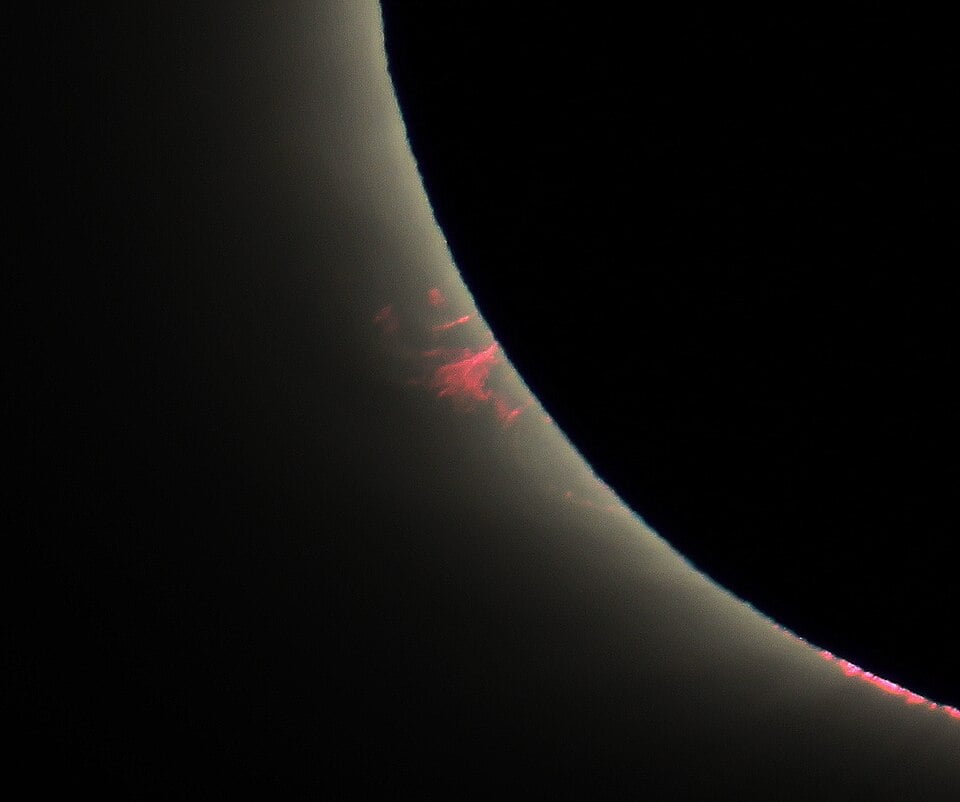
Solar prominences are among the Sun’s most visually dramatic structures and one of its most stubborn scientific puzzles. They are enormous arcs or clouds of cooler plasma suspended high in the corona, the Sun’s outer atmosphere, where temperatures exceed a million degrees. Yet the prominence material itself sits at around ten thousand degrees, making it much cooler than the environment surrounding it. Universe Today describes the contradiction vividly: it is like an iceberg floating inside a furnace.
Now researchers at the Max Planck Institute for Solar System Research have produced what the source calls the most realistic simulations yet of how these structures form and persist. The new work matters not only because prominences are strange, but because they are consequential. When they destabilize and erupt, they can hurl huge amounts of charged material into space. If that material intersects with Earth, the result can range from vivid auroras to disruption affecting satellites and power systems.
How prominences stay aloft
The basic physical explanation has been understood in outline for years: magnetic fields hold the plasma in place. Loops of magnetic force rise from the Sun’s surface and create dips where cooler material can accumulate. The harder question has been how prominences remain stable for weeks or even months. A structure that large and that thermally out of place needs continuing support. Without a fresh supply of material, it should dissipate.
The new simulations focus on a magnetic field geometry often associated with prominences: a double-arc configuration with a dip in the middle. In the model, the prominence forms in that dip and remains trapped there. What sets this work apart, according to the source, is scope. The simulations do not stop at the corona. They account for layers from the outer atmosphere down to parts of the convection zone beneath the Sun’s visible surface.
That broader treatment is important because it lets researchers examine how deeper solar processes help sustain what appears higher up. Rather than treating the prominence as a static object hanging in the corona, the model connects it to the dynamic interior and lower atmosphere that feed and disturb the magnetic structures above.

Two processes working together
Universe Today reports that the simulations show two processes working together to sustain prominences. Small bursts of magnetic turbulence deep in the Sun’s lower atmosphere help channel material upward. At the same time, the magnetic structure in the corona provides the trap that lets the cooler plasma collect rather than disperse.
That combination helps explain both persistence and fragility. A prominence can survive because it is being supplied and confined at the same time. But if the balance shifts, the same system can move toward eruption. In practical terms, that makes prominence research a space-weather issue as much as a pure physics problem.
The Sun is not just a distant object of academic interest. Modern infrastructure is vulnerable to solar disturbances. Satellites, electrical grids, and communications systems can all be affected by severe space-weather events. Better understanding of how prominences form, feed, and destabilize could therefore improve forecasting over time.
Why this modeling step matters
Simulation advances are often incremental, but some matter because they join previously separate layers of a problem. This appears to be one of those cases. By incorporating all relevant solar layers from the corona down into the convection zone, the new modeling framework offers a more physically connected explanation for a structure that has often been described in fragments.
That does not mean the mystery is solved. Solar physics is full of coupled, nonlinear processes that resist simple descriptions. But a more realistic model can narrow the gap between observation and theory. It can also help researchers test which conditions are most likely to support a long-lived prominence and which push the system toward instability.
There is also scientific value in the prominence paradox itself. The Sun’s atmosphere does not behave in intuitive ways. Cooler plasma suspended inside a much hotter region is a reminder that temperature alone does not determine structure. Magnetism, flow, geometry, and energy transfer all matter, and often dominate the picture.
That is part of why prominences keep attracting attention. They are beautiful, immense, and visibly counterintuitive. They are also tied to some of the solar events with the greatest downstream relevance for Earth.
The new simulations from the Max Planck Institute do not simply offer a prettier visualization of a known phenomenon. They provide a more comprehensive attempt to explain how the Sun can build and maintain these towering plasma structures in the first place. For solar science, that is a meaningful step. For space-weather forecasting, it may prove to be a useful one as well.
This article is based on reporting by Universe Today. Read the original article.

Originally published on universetoday.com