Perseverance finds a record of Mars from the solar system’s violent youth
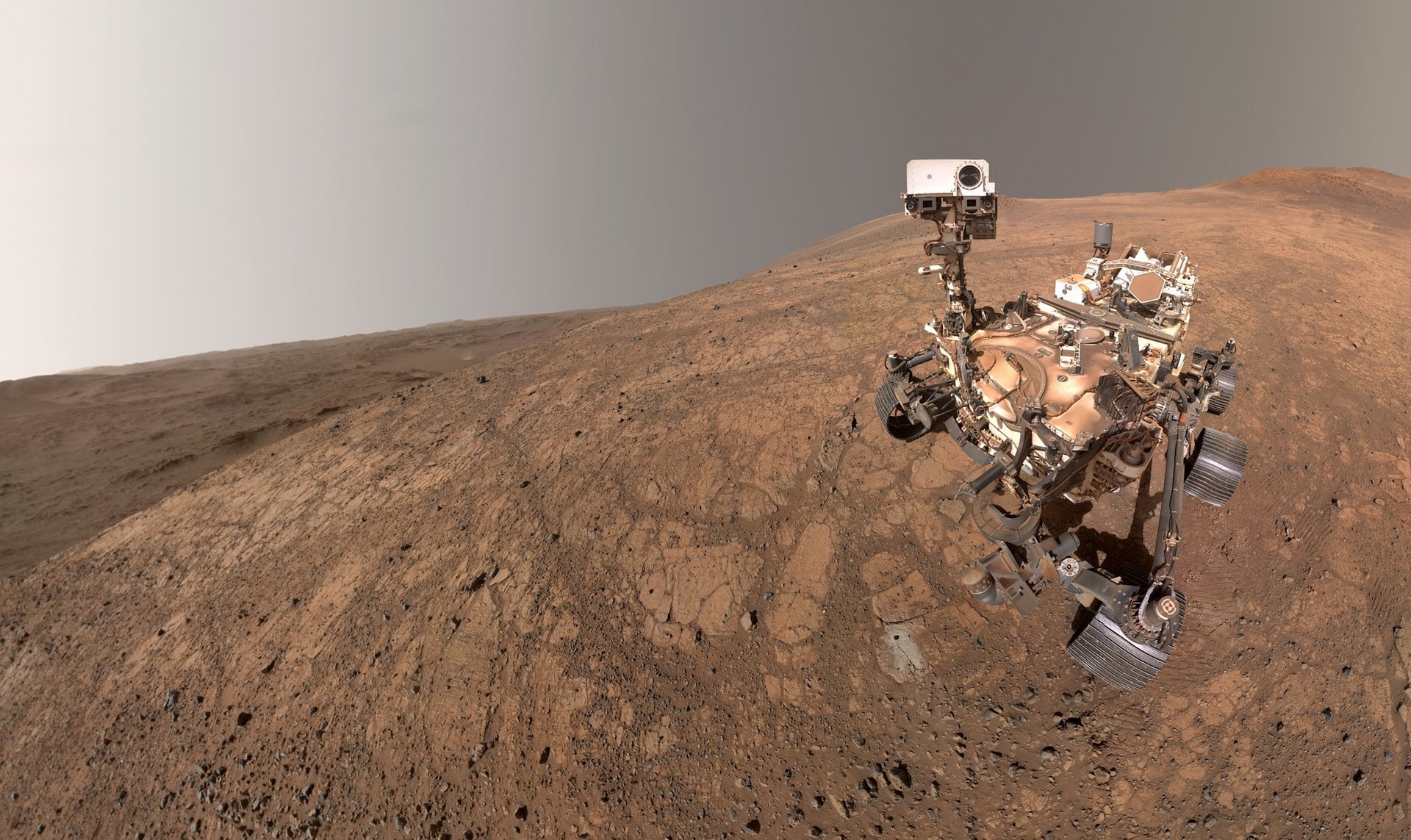
NASA’s Perseverance rover has been exploring terrain around Jezero Crater that predates the crater itself, and researchers now say that work has exposed one of the oldest geological records yet examined on Mars. In a study reported this week in Journal of Geophysical Research: Planets, a team led by researchers from Imperial College London identified an ancient layered rock formation that likely dates to more than 3.9 billion years ago and preserves evidence of repeated asteroid impacts.
The feature, known by the rover science team as the Broom Point member, is a 75-meter-thick stack of layered bedrock on the western rim region of Jezero Crater. Its age and structure make it a rare archive of conditions during the Late Heavy Bombardment, the interval between roughly 4.1 and 3.8 billion years ago when impacts in the inner solar system were far more common than they are today.
For planetary scientists, that matters well beyond Mars. Earth’s own earliest crustal record has been profoundly altered by plate tectonics. Ancient rocks have been broken apart, reheated, buried, and recycled over billions of years. Mars, by contrast, lacks plate tectonics, allowing some of its oldest geological evidence to remain comparatively intact.
Why Jezero’s rim matters
Perseverance landed in Jezero because the crater once held a lake and river delta, making it a strong site to search for clues about past habitability. But after leaving the crater floor in late 2024, the rover moved into terrain that opens a different scientific window. Instead of focusing mainly on sediments tied to ancient water, the mission is now also probing crustal materials that record events from an even earlier chapter in Martian history.
According to the report, the Broom Point rocks sit in a geological setting older than Jezero itself. That is what makes them so scientifically valuable. They may preserve a sequence of impact-related processes from a time when large bodies were striking planets, moons, and smaller worlds throughout the inner solar system.
The study says Perseverance’s data revealed six distinct rock types arranged in layers that alternate between angular fragments, known as breccias, and finer-grained rock dust. The breccia fragments also showed cavities formed by gas bubbles, indicating they were once molten. The source text further notes the presence of dark glass-bearing material, another sign consistent with violent impact-related heating and transformation.
A Martian archive of repeated impacts
Taken together, those features point to a landscape shaped by repeated bombardment. Impacts can fracture crust, melt rock, loft debris, and deposit layers of broken material over time. A thick, stratified sequence preserving those signatures offers more than a snapshot of one collision. It suggests a cumulative record of a harsh and dynamic era.
That makes the discovery particularly useful for reconstructing the Late Heavy Bombardment, a period that remains important in planetary science because it influenced the surfaces, atmospheres, and possibly the habitability of rocky worlds. If impacts were frequent and energetic enough, they could have repeatedly sterilized local environments. At the same time, they could also have created hydrothermal systems and reshaped the circulation of water and minerals in the crust.
Perseverance is not directly solving all of those questions, but it is contributing field evidence from a world where ancient terrain survives far better than it does on Earth.
What the rover is adding to Mars science
The report underscores that Perseverance is now operating in what mission scientists describe as a brand-new frontier, geographically and geologically. By sampling and imaging rocks from before Jezero formed, the rover is extending the mission’s scientific reach from habitable-environment studies into deep-time crustal history.
That broader perspective matters because Mars preserves a record of early solar system events in a way Earth cannot. On our planet, the oldest surviving rocks are fragmentary and heavily altered. On Mars, ancient impact-generated materials can remain exposed long enough for a rover to inspect them layer by layer.
The Broom Point member therefore functions as more than a local outcrop. It is a planetary time capsule, potentially capturing how repeated impacts modified the crust during one of the most chaotic eras in solar system history.

Why this matters beyond Mars
Although the discovery is rooted in Martian geology, its implications stretch outward. Understanding bombardment histories on Mars helps scientists test models of how the inner solar system evolved. It can inform debates about the timing, intensity, and geographic effects of major impact episodes. It also provides a comparison point for interpreting ancient terrains on the Moon and for thinking about the environmental pressures that shaped early Earth.
That link to Earth is especially important. Our planet almost certainly experienced the same broad era of intense impacts, but much of the direct geological record is gone. Mars offers a preserved counterpart, one that can be examined in situ with modern instruments.
The source material does not claim that Perseverance has discovered life-related evidence in these rocks, nor does it present a complete chronology of every impact event recorded there. What it does support is a more focused conclusion: the rover has helped identify a layered bedrock sequence formed in part by repeated impacts more than 3.9 billion years ago, and that sequence may provide one of the clearest accessible records of the Late Heavy Bombardment on any planetary surface currently under direct robotic investigation.
The mission’s next scientific payoff
As Perseverance continues across Jezero’s rim and surrounding terrain, formations like Broom Point can help connect local observations to solar system-scale history. Each outcrop adds context for how Mars formed, how its crust evolved, and how external forces such as asteroid strikes shaped its surface long before the planet became the cold desert seen today.
The discovery is a reminder that Mars missions do not only tell us about Mars. They also recover missing pages from the early history of rocky worlds. In this case, those pages appear to have been written in shattered, melted, and layered stone nearly four billion years ago, then left waiting on a crater rim for a rover to read them.
This article is based on reporting by Universe Today. Read the original article.

Originally published on universetoday.com