The Aircraft Designed to Quiet the Sonic Boom
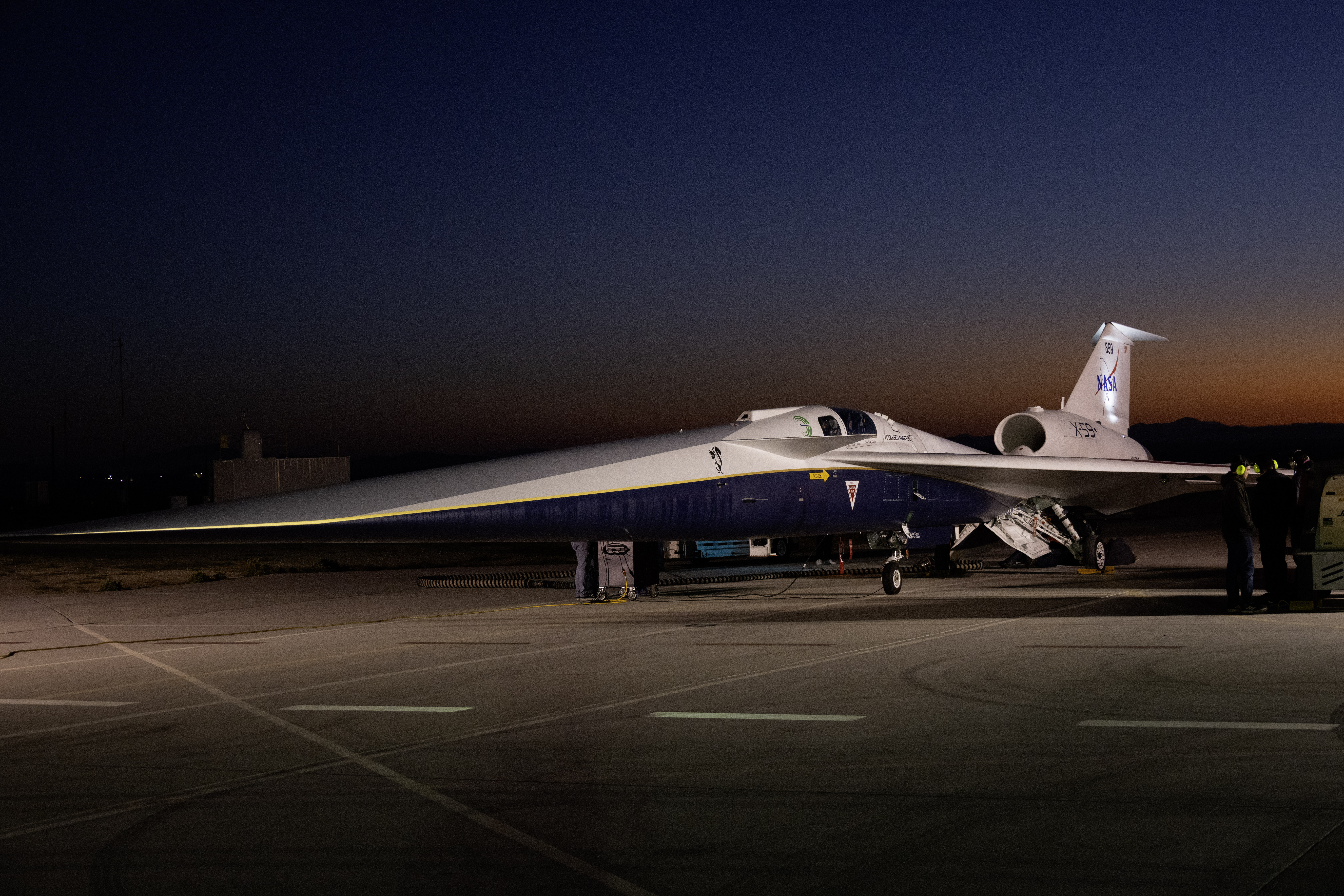
NASA's X-59 — a striking needle-nosed experimental aircraft developed by Lockheed Martin Skunk Works under the agency's Quesst mission — is advancing toward a series of test flights that could eventually reshape the rules governing commercial supersonic aviation. NASA has announced a media teleconference following the X-59's scheduled second flight, at which agency leadership, Quesst mission representatives, and the aircraft's test pilots will discuss what they have learned from early flight testing.
The X-59's defining mission is deceptively simple in concept but extraordinarily difficult in engineering: redesign a supersonic aircraft so that the sonic boom it generates is dramatically quieter, producing what NASA describes as a sonic thump — a low-level pressure wave roughly as noticeable as a car door closing — rather than the disruptive, window-rattling booms that led regulators to ban commercial supersonic flight over land in the 1970s.
Why the Sonic Boom Ban Still Matters
Commercial supersonic aviation effectively ended for most passengers in 2003 when the Concorde was retired. The aircraft had been limited throughout its operational life to trans-oceanic routes because flying supersonically over populated land areas was illegal in most countries, including the United States. The FAA banned overland supersonic commercial flight in 1973, citing the disruptive impact of sonic booms on communities below flight paths.
This restriction dramatically limited the commercial viability of any supersonic airliner. The routes where time savings from supersonic speeds are most valuable — transcontinental US flights, Europe-to-Asia corridors — are precisely the routes where overland flight is unavoidable. Without regulatory change, any new supersonic airliner would face the same geographic constraints as Concorde, limiting its market to a narrow set of premium ocean-crossing routes.
Changing this situation requires convincing regulators to revise their standards — and to do that, regulators need evidence that a quieter sonic boom exists and that the public finds it acceptable. That is precisely what the X-59 and the Quesst mission are designed to provide.

How the X-59 Shapes Sound
The X-59 achieves its quiet supersonic signature through aerodynamic features that manage shockwave formation and interaction. When an aircraft exceeds the speed of sound, it generates shockwaves that propagate through the atmosphere and coalesce at the ground level to produce the familiar double-boom. The intensity depends on the shockwave pattern the aircraft creates.
The X-59's needle-like nose — approximately 94 feet long on an aircraft that is 99 feet total — is specifically designed to disrupt this coalescence. By spreading shockwaves along a much longer aircraft body and shaping the fuselage and wings to prevent waves from merging, the design generates a weaker, more diffuse pressure signature at the ground. Engine placement above the fuselage further reduces the boom by shielding exhaust shockwaves from below.
The resulting noise level, NASA projects, should be around 75 decibels on the ground — far below the 90-plus decibel levels that conventional supersonic aircraft generate. Whether 75 decibels is acceptable to communities along flight paths is ultimately a social and political question as much as a technical one, which is why the Quesst mission includes planned community noise acceptance studies over multiple US cities.
The Path to Regulatory Change
If the X-59's test flights confirm that its sonic signature is as quiet as modeled, NASA plans to conduct demonstration flights over selected communities and collect systematic data on how residents perceive the sound. This data would be submitted to the FAA and the International Civil Aviation Organization as evidence supporting new supersonic noise standards.
The FAA has signaled openness to revising its overland supersonic ban if presented with compelling evidence that quieter aircraft have been developed. United Airlines has placed orders for supersonic aircraft from Boom Supersonic. Commercial supersonic revival depends heavily on whether regulatory frameworks evolve to allow overland routes — and the X-59's second flight is an important early step in building that regulatory argument.
This article is based on reporting by NASA. Read the original article.
Originally published on nasa.gov