A mission focused on an invisible but consequential structure
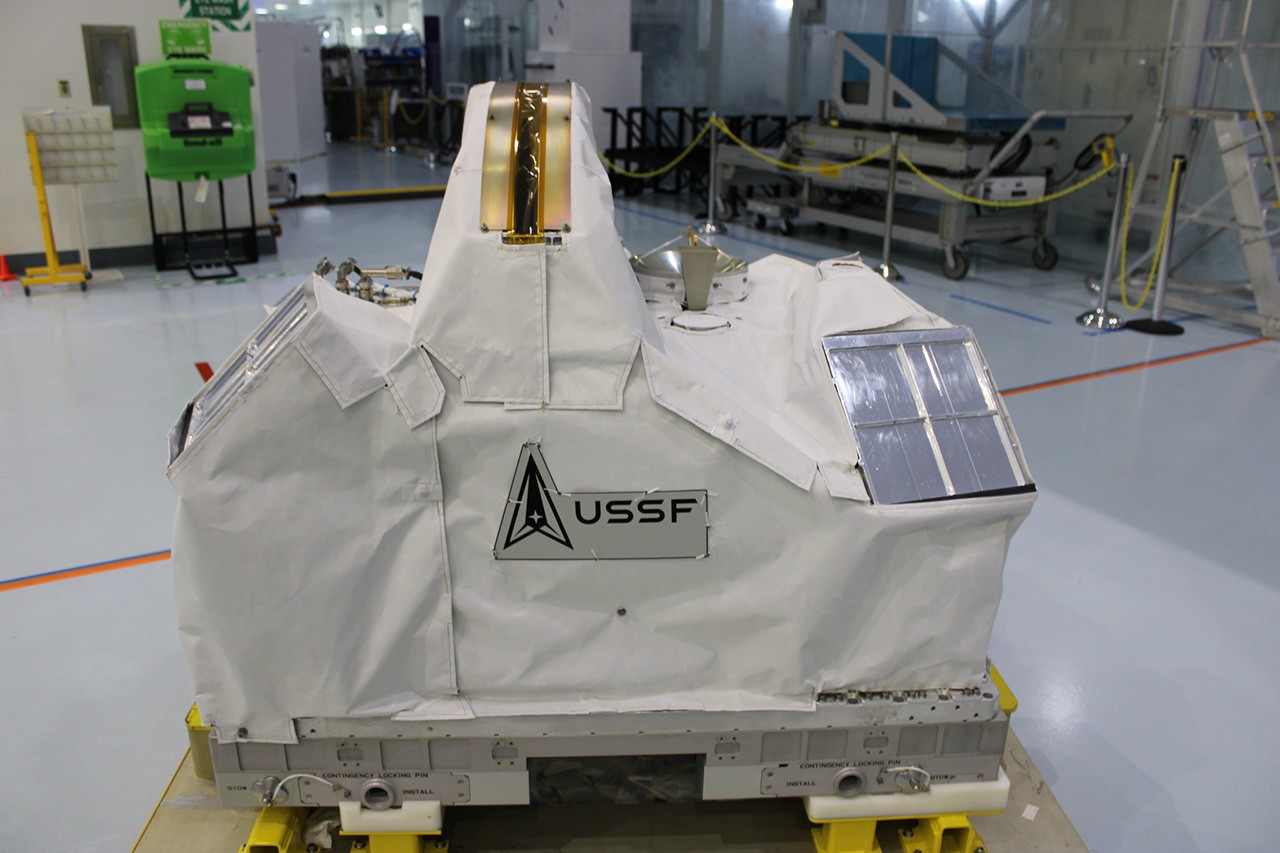
NASA is preparing to launch a mission called STORIE, short for Storm Time O+ Ring current Imaging Evolution, to study one of the least visible but most important features of near-Earth space: the ring current. The mission is scheduled to launch in May aboard the 34th SpaceX commercial resupply services mission to the International Space Station and will fly as part of the Space Test Program – Houston 11 payload, a partnership between the U.S. Space Force and NASA.
Once installed on the exterior of the space station, STORIE will look outward at the ring current, a doughnut-shaped swarm of charged particles trapped by Earth’s magnetic field. According to the supplied source text, this region plays a major role in how Earth responds to space weather and can influence technologies such as satellites and power grids.
Why the ring current matters
The ring current overlaps with the outer Van Allen radiation belt but consists of lower-energy particles. Inside it, positively and negatively charged particles move in opposite directions, creating electrical currents. Changes in those currents can alter Earth’s magnetic environment and induce effects that reach the ground.
That makes the ring current more than a scientific curiosity. During solar storms, outbursts from the Sun can trigger magnetic disturbances at Earth, and the ring current can change in size, shape, and intensity more dramatically than the radiation belts do. Understanding those dynamics is important for forecasting and mitigating space-weather impacts on infrastructure.
An inside-out view from the ISS
STORIE’s observational strategy is unusual. Rather than flying through the ring current directly, the instrument will observe it from the outside edge of low Earth orbit once it is attached to the station. NASA says that vantage point will help scientists answer longstanding questions about where the trapped particle population comes from and how it builds up and decays.
That “inside-out” view could be valuable because the ring current is not static. It is fed and reshaped by changing conditions in geospace, especially during periods of solar activity. A clearer picture of its composition and evolution would improve models of how near-Earth particle environments respond to storms.
The oxygen question
The mission’s full name points to one especially important target: O+, or singly ionized oxygen. By tracking how oxygen ions contribute to the ring current during storm time, scientists hope to better understand the changing makeup of the system. Composition matters because different particle populations can alter the strength and consequences of geomagnetic disturbances.
The source text quotes principal investigator Alex Glocer of NASA Goddard, who said researchers want to understand how the trapped population is built up and where it comes from. That is a fundamental question in heliophysics, but it is also highly practical. Better source attribution for charged particles can improve space-weather prediction and operational planning.
A mission with infrastructure relevance
Space weather is often discussed in relation to astronauts and satellites, but the effects can ripple farther. Magnetic fluctuations and induced currents can disrupt ground systems, including parts of electric infrastructure. As societies become more dependent on space-based navigation, communications, and observation, the need to understand those disturbances becomes more urgent.
STORIE fits into that broader context. It is not a flagship planetary mission or a crewed launch, but it targets a problem with real operational value: how Earth’s magnetic environment changes under solar stress and how those changes propagate into systems people rely on every day.
Small mission, big payoff potential
The mission also reflects a growing pattern in space science: using comparatively compact instruments and shared launch opportunities to answer focused but high-value questions. By flying to the ISS on a commercial resupply mission and operating as an external payload, STORIE leverages existing infrastructure instead of requiring a dedicated spacecraft.
If successful, the mission could sharpen scientists’ understanding of a central space-weather mechanism while demonstrating how station-based observations can support heliophysics research. That combination of scientific focus and programmatic efficiency is increasingly important as agencies try to stretch budgets across exploration, Earth science, and national-security partnerships.
The ring current may be invisible to the naked eye, but its effects are not. STORIE is designed to make that hidden system easier to understand before the next major solar disturbance forces the issue.
This article is based on reporting by science.nasa.gov. Read the original article.

Originally published on science.nasa.gov