Deep-space missions depend on mundane hardware done well
Major space missions are usually remembered for launch windows, trajectories, and destinations. Less attention goes to the compact systems that keep people functioning once the headlines fade and the mission settles into routine. NASA’s latest Artemis profile offers a useful reminder that crewed deep-space flight depends not just on propulsion and navigation, but also on the design of everyday survival hardware.
In a feature focused on Orion flywheel project manager Ryan Schulte, NASA described the exercise device used by the Artemis II crew during their journey around the Moon and back. The four astronauts traveled 694,481 miles, and throughout the mission they relied on the spacecraft to provide the essentials of life in deep space. One of those essentials was daily exercise.
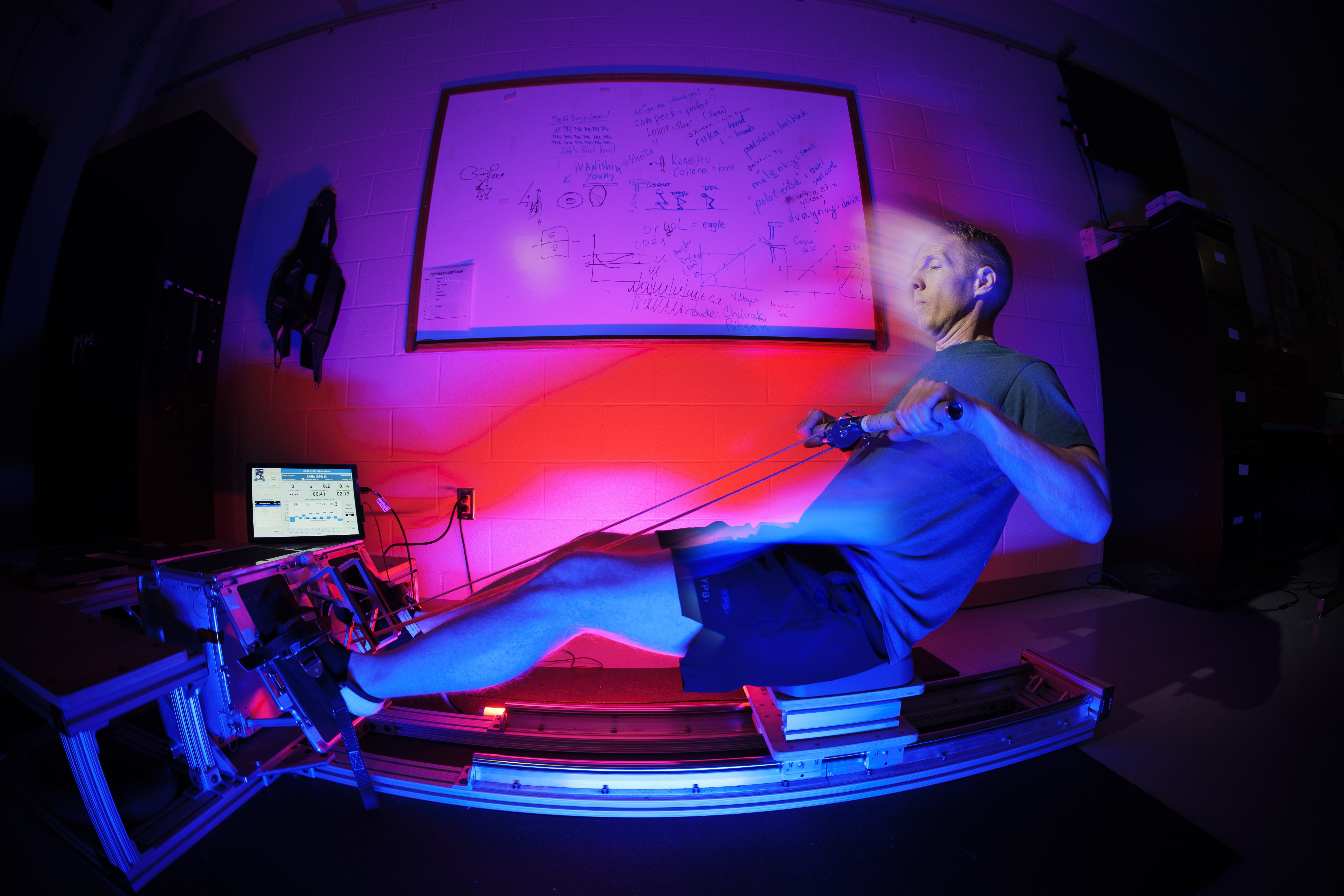
The hardware at the center of the story is called the flywheel. It is a compact, multi-functional exercise device about the size of a large shoebox. According to NASA, it allowed the crew to maintain physical and mental health during the mission while using no electrical power from the spacecraft.
A simple concept engineered for a difficult environment
The flywheel works through inertial resistance rather than through a powered mechanism. Schulte described it as functioning somewhat like an inertial yo-yo. Users can select different gear ratios for different resistance modes, and the system can provide up to 500 pounds of resistance depending on how much effort the user applies.
That capability allows a surprisingly broad workout range from a very small package. NASA says the crew can perform squats, deadlifts, bent rows, high-pulls, curls, heel raises, and aerobic rowing using the same device. In the constrained interior of a crew capsule, that kind of versatility is not a luxury. It is a requirement.
Exercise in microgravity is not just about general fitness. It is part of mission protection. NASA’s source text explicitly ties the device to crew safety, health, and mission success. That framing is important because it places the flywheel in the same operational category as other life-support essentials, even if it looks much less dramatic than a propulsion system or habitat interface.

Why the engineering challenge was harder than it sounds
Making exercise possible inside Orion meant solving multiple problems at once. The device had to fit inside a spacecraft where volume is limited, where crew mobility is constrained, and where noise matters because astronauts still need to communicate clearly during workouts.
Schulte said one of the biggest challenges was fitting everything into a compact box while still preserving enough cabin room for a crew member to stand fully and extend at high rates of speed and repetition. That is a useful illustration of spacecraft design logic: every new capability competes with mass, volume, clearance, and human factors.
The engineering burden was not only to build a resistive machine, but to build one that remained compact, quiet, and mechanically effective without pulling electrical power from the vehicle. Those tradeoffs are familiar in terrestrial product design, but the consequences are much sharper in a spacecraft, where every subsystem must justify its place.
How Artemis II used the system
During the approximately 10-day Artemis II mission, the crew members exercised for roughly 30 minutes per day with the flywheel. Those sessions were meant to counter both physical and mental effects induced by a microgravity environment.
That dual role matters. In spaceflight, exercise supports musculoskeletal and cardiovascular maintenance, but it also contributes to routine, morale, and psychological stability. NASA’s description makes clear that the flywheel was not treated as a marginal extra. It was part of the daily operating rhythm for the crew.
The mission also served as a live demonstration that the design choices made by Schulte’s team worked in practice. NASA says the team designed, built, tested, and flew the flywheel used on Artemis II, and is now developing a more reusable fleet of exercise devices for future Artemis missions. That points to the next step in the program: moving from a mission-specific implementation toward a repeatable capability for longer-duration exploration.

What this means for future Artemis flights
The source text suggests the importance of the flywheel grows as missions lengthen. Artemis II provided an approximately 10-day operating environment. Future missions, especially those involving longer stays or more complex operational phases, will place even greater emphasis on systems that can preserve crew condition without consuming scarce spacecraft resources.
A compact device that delivers multiple forms of exercise, requires no electrical power, and fits inside a constrained vehicle becomes more valuable in that context. It is not hard to see why NASA is working on a fleet of more reusable units for future flights.
The larger lesson is that human spaceflight advances through many small engineering victories, not just through large public milestones. An exercise device the size of a shoebox may not define the public image of Artemis, but it directly affects whether astronauts can stay healthy enough to perform their jobs.
That is the practical edge of exploration architecture. Long-distance crewed missions are built from systems that reduce avoidable strain on the crew while preserving vehicle resources. In NASA’s telling, the Artemis II flywheel did exactly that. It turned a severe set of spacecraft constraints into a workable daily tool, and in doing so highlighted the kind of hardware discipline deep-space operations require.
Key takeaways
- NASA says Artemis II astronauts used a compact flywheel device for daily exercise during their 694,481-mile trip around the Moon and back.
- The shoebox-sized system provides up to 500 pounds of resistance and supports both resistive and aerobic workouts.
- The device uses no electrical power from the spacecraft, a major advantage inside a constrained deep-space vehicle.
- NASA is developing a more reusable fleet of the exercise devices for future Artemis missions.
This article is based on reporting by NASA. Read the original article.
Originally published on nasa.gov