Another Starlink launch, another marker of scale
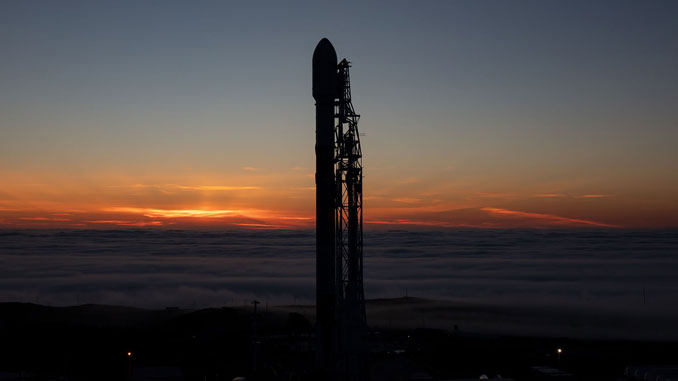
SpaceX launched 24 Starlink satellites aboard a Falcon 9 rocket from Vandenberg Space Force Base on April 29, adding one more mission to a cadence that has become difficult to separate from the broader commercial space story. According to the supplied candidate material, the mission was designated Starlink 17-36 and represented SpaceX’s 51st Falcon 9 launch of 2026. Liftoff from pad 4E occurred at 7:42:49 p.m. PDT, corresponding to 10:42:49 p.m. EDT and 0242:49 UTC.
Those facts alone explain why this launch matters. The payload itself fits a familiar pattern: another batch of Starlink satellites headed to orbit. But the number attached to the mission, 51 Falcon 9 launches by late April, is what turns a routine deployment into a meaningful industry signal. SpaceX’s operating tempo is no longer just an internal achievement. It is a structural fact shaping expectations across the launch market.
Why launch cadence now carries strategic weight
In earlier eras of commercial spaceflight, a successful orbital launch was notable chiefly because of the technical challenge involved. That challenge remains real, but for SpaceX the more striking feature is frequency. Reaching a 51st Falcon 9 launch of the year before May illustrates an industrial model defined not only by capability but by repetition.
That repetition has consequences. High launch frequency changes how satellite operators think about schedule risk, how competitors frame their own readiness, and how governments evaluate commercial capacity. It also changes the meaning of a Starlink mission itself. Each launch is both a service operation for SpaceX’s own satellite network and a demonstration of how routine the company has made orbital access appear.
The supplied mission details are sparse, but they are sufficient to support that broader reading. A named mission, a clear launch site, a payload count of 24 satellites, and a year-to-date launch total of 51 together present a picture of industrial regularity. In spaceflight, regularity is power.
Starlink remains central to the cadence story
The Starlink network is often discussed as a connectivity product, but it is also a logistical engine. Repeated launches of relatively standardized satellite batches help sustain the rhythm of the Falcon 9 program. The result is a feedback loop: launch capability supports network expansion, while network deployment helps keep launch operations active at a relentless pace.
That relationship is one reason Starlink missions deserve more attention than they sometimes receive. Because they recur so often, they can look interchangeable from the outside. But recurrence is the point. A company able to place dozens of satellites into orbit in a steady sequence is doing more than building a broadband constellation. It is proving an operational architecture in which manufacturing, launch scheduling, launch site operations, and orbital deployment are synchronized at a scale the rest of the market still struggles to match.
The supplied excerpt identifies the payload count and the timing of liftoff, and it places the mission cleanly inside that larger sequence. There is no need for dramatic framing. The number 51 does the work.
Vandenberg’s role in the commercial launch map
This mission also highlights the continuing importance of Vandenberg Space Force Base as a West Coast launch site for orbital operations. The supplied material specifies pad 4E as the launch location, reinforcing how launch infrastructure itself has become part of the scale equation. High-frequency operations require not only rockets and payloads, but sites capable of supporting repeated turnaround and dependable scheduling.
For the broader industry, that matters because launch competition is no longer evaluated only on a per-rocket basis. It is increasingly measured as a system: vehicle reliability, integration process, site availability, and the ability to maintain tempo over time. SpaceX’s recurring use of Vandenberg for Starlink missions shows how deeply that system has matured.
Even when a single mission does not break new technological ground, it can still reveal the strength of the underlying machine. This launch does exactly that.

What the 51-launch figure signals to rivals
The commercial launch market does not compete in a vacuum. Every new Falcon 9 mission implicitly raises the bar for other providers on cadence, confidence, and customer expectation. When one company reaches a 51st launch of the year in April, the comparison for competitors is no longer theoretical. It becomes a visible benchmark for operational maturity.
That does not mean every rival must copy SpaceX’s model or focus on identical payload classes. But it does mean the market now has a reference point for what sustained launch execution can look like. Customers notice that. Governments notice it too. Reliability is judged partly through consistency, and consistency becomes harder to dismiss when it is repeated dozens of times in a single year.
The mission’s exact liftoff timestamp, supplied down to the second, reinforces that sense of disciplined execution. Precision in reporting is not the same thing as technical superiority, but it reflects a launch culture in which missions are frequent enough to be treated as a practiced operational flow rather than a rare exception.
Why even routine launches remain newsworthy
There is a temptation to treat recurring Starlink launches as background noise, especially when they do not involve dramatic firsts. That would be a mistake. In maturing industries, repetition is often the clearest evidence of transformation. A transportation system is not revolutionary only when it debuts; it becomes revolutionary when it runs so often that people stop doubting it exists.
That is the stage SpaceX is steadily reinforcing with missions like Starlink 17-36. Launch by launch, the company is normalizing a frequency that still would have seemed extraordinary not long ago. The payload of 24 satellites matters. The site matters. The exact liftoff time matters. But the deepest story is the cadence itself.
By late April 2026, Falcon 9 had already reached launch number 51 for the year. Even without additional flourish, that is a headline about industrial capacity, market pressure, and the changing baseline of commercial spaceflight.
This article is based on reporting by Spaceflight Now. Read the original article.

Originally published on spaceflightnow.com