Mining the Final Frontier
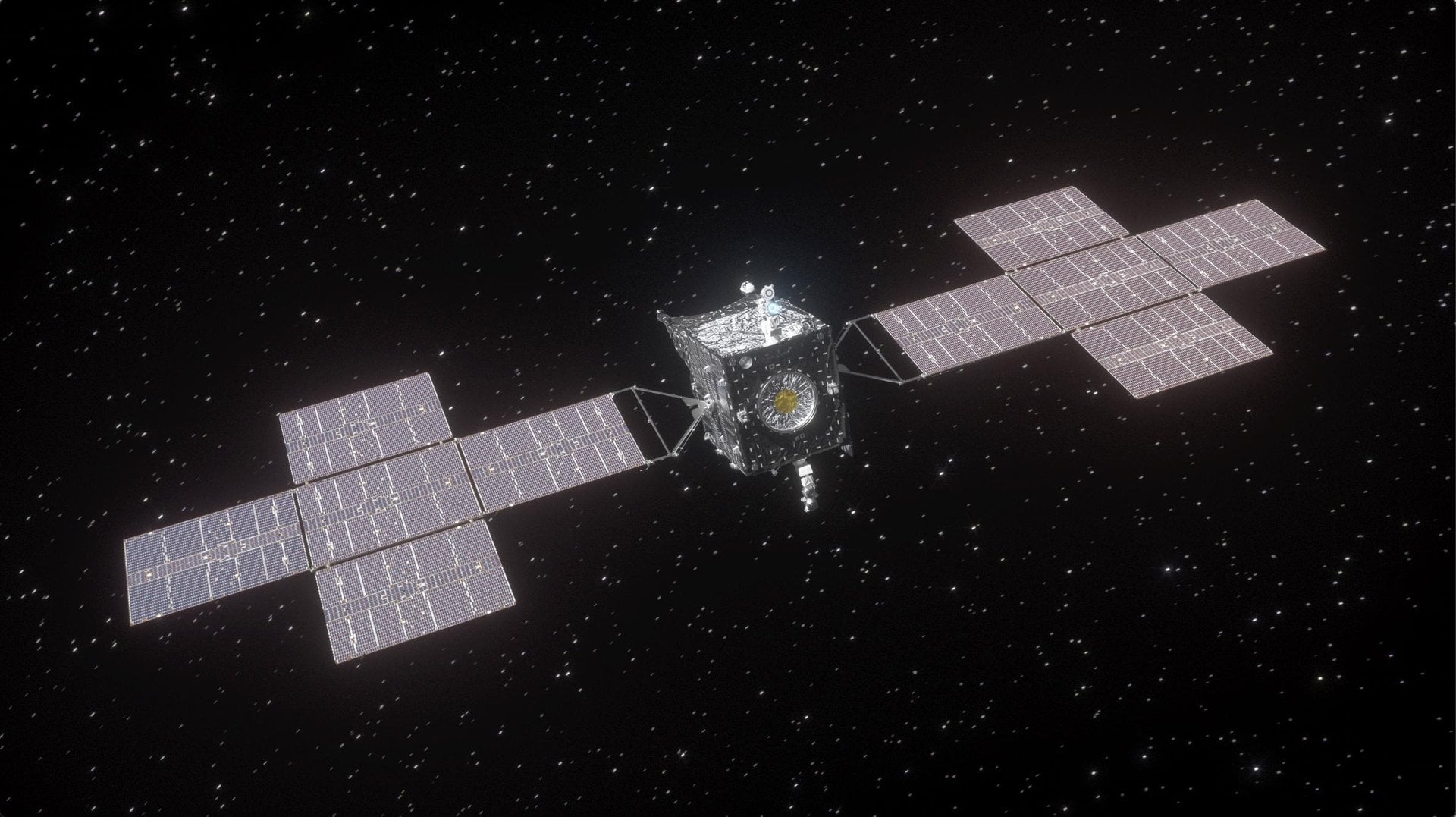
The asteroid mining industry is no longer science fiction. Multiple companies are developing technologies to extract water, metals, and rare minerals from near-Earth asteroids, and some are approaching the point where missions could move from demonstration to commercial operation. But as the technical barriers to space resource extraction begin to fall, a more fundamental obstacle looms: there is no coherent legal framework governing who can mine what in space, how competing claims would be resolved, or how the space environment itself should be protected.
A new paper published in Acta Astronautica by Anna Marie Brenna of the University of Waikato in New Zealand confronts this legal void directly. Brenna argues that the current patchwork of space law — rooted in treaties drafted decades before asteroid mining was technically feasible — is inadequate for the commercial era now arriving. Her paper proposes a framework designed to balance the interests of companies seeking to exploit asteroid resources with the need to protect the space environment as a shared commons.
The Current Legal Landscape
The foundation of space law is the 1967 Outer Space Treaty, which established that outer space is the "province of all mankind" and that no nation can claim sovereignty over celestial bodies. The treaty was a product of its time — designed to prevent the Cold War superpowers from planting flags on the Moon and claiming it as sovereign territory. It was not written with commercial mining operations in mind.
The United States took a significant step in 2015 with the Commercial Space Launch Competitiveness Act, which granted US citizens the right to own resources extracted from asteroids and other celestial bodies. Luxembourg followed with similar legislation in 2017. These laws assert that while no one can own an asteroid, anyone who mines it can own what they extract — a legal distinction analogous to fishing rights in international waters.
But this national legislation exists in tension with the Outer Space Treaty's collective ownership principles, and there is no international body with the authority to adjudicate disputes between companies from different nations operating on the same asteroid. The Moon Agreement of 1979 attempted to establish an international regime for resource exploitation, but it was never ratified by any major spacefaring nation and is widely considered a dead letter.
Brenna's Proposed Framework
Brenna's paper acknowledges the legitimate economic interests driving asteroid mining while arguing that an unregulated rush to extract resources could cause irreversible harm to the space environment. Her framework rests on several key principles.
First, she proposes a classification system for asteroids based on their scientific, environmental, and cultural value. Some asteroids may contain unique geological features or organic compounds that are scientifically irreplaceable, and mining them before they can be studied would constitute an irreversible loss. Others may have minimal scientific value and could be mined with fewer restrictions.
Second, the framework calls for mandatory environmental impact assessments before any extraction operation begins. Just as terrestrial mining companies must evaluate the environmental consequences of their activities, space mining operations would need to demonstrate that their methods will not create hazardous debris fields, destabilize asteroid orbits in ways that could threaten Earth, or contaminate scientifically valuable sites.
- No coherent international legal framework exists for asteroid mining claims or disputes
- US and Luxembourg laws allow owning extracted resources but don't address environmental protection
- Brenna proposes classifying asteroids by scientific and environmental value before permitting mining
- Mandatory environmental impact assessments would be required before extraction
- The framework attempts to balance commercial exploitation with protection of the space commons
The Practical Stakes
The resources at stake are staggering. A single metallic asteroid a few hundred meters across could contain more platinum-group metals than have ever been mined in Earth's history. Water extracted from asteroids could be converted into rocket fuel in orbit, potentially reducing the cost of deep-space missions by orders of magnitude. The economic potential has attracted serious investment from venture capital firms and sovereign wealth funds, and several companies — including AstroForge, TransAstra, and Karman+ — are actively developing extraction technologies.
But the history of resource extraction on Earth offers cautionary lessons. From the devastation of open-pit mining to the collapse of fisheries exploited beyond their capacity to recover, the pattern of extracting first and regulating later has repeatedly led to environmental and economic catastrophe. The unique challenge of space is that there is no existing regulatory infrastructure to fall back on — no space equivalent of the Environmental Protection Agency, no international court with jurisdiction over asteroid claims, no enforcement mechanism for whatever rules might be established.
The Path Forward
Brenna argues that the window for establishing a legal framework is closing. Once companies begin active extraction operations and establish de facto property rights through physical presence and investment, creating a regulatory regime after the fact will be far more politically difficult than building one in advance. The analogy she draws is to the law of the sea, where decades of overfishing and maritime disputes preceded the United Nations Convention on the Law of the Sea — a treaty that, while imperfect, established a framework for managing shared ocean resources.
Whether the international community has the political will to negotiate a similar framework for space resources remains an open question. The major spacefaring nations have divergent interests, and the companies developing asteroid mining technology are lobbying for regulatory environments that favor exploitation over conservation. The gold rush is beginning, and the law has not yet caught up.
This article is based on reporting by Universe Today. Read the original article.
Originally published on universetoday.com