Planetary defense has a speed problem
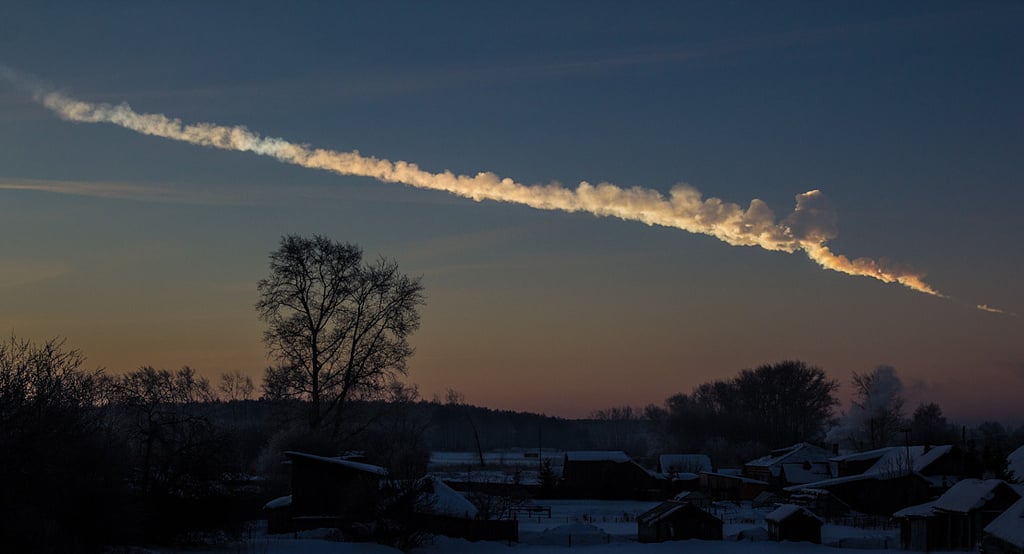
In February 2013, the Chelyabinsk asteroid exploded over Russia without warning, injuring more than 1,600 people after its shockwave shattered windows across a wide area. The object was only around 20 meters across, but it released energy equivalent to roughly 500 kilotons of TNT, according to the account summarized by Universe Today. What made the event especially unsettling was not just the blast. It was that no monitoring system on Earth had detected the asteroid in advance.
That near-field blind spot helped drive a new generation of planetary-defense tools designed not merely to catalogue near-Earth objects, but to rapidly judge whether a newly detected object is actually headed toward Earth. One of those tools is ESA’s MeerKAT Asteroid Guard, a continuously operating system run by the Near-Earth Object Coordination Centre in Frascati, Italy.
What MeerKAT is designed to do
The name is deliberately descriptive. Meerkats in the wild post sentinels to watch for danger from above, and ESA’s system is built around the same idea: constant vigilance, fast alerting, and immediate reaction when a threat appears. According to the source, MeerKAT runs around the clock, screening every newly discovered near-Earth object and asking one urgent question: is this one going to hit us?
That sounds simple until you consider how little information astronomers often have when an object is first discovered. Early observations may amount to only a short arc of motion, an approximate position, and a rough direction of travel. From that fragmentary data, the system has to generate thousands of possible orbital solutions and determine whether enough of them intersect Earth to justify an alert.
And it has to do that quickly. The source text makes a stark point: every asteroid discovered before impact was first spotted less than 24 hours before it struck. In planetary defense, that means there is rarely time for leisurely follow-up. The first assessment has to be both rapid and good enough to guide immediate next steps.
How the alert chain works
When MeerKAT calculates a significant impact probability, the process is automated. Alerts are sent by email to subscribers, messages go to NEOCC scientists, and follow-up telescopes are mobilized to refine the object’s path. That structure matters because the earliest orbit estimates are inherently uncertain. The point of the first alert is not to declare disaster. It is to trigger the observational response needed to reduce uncertainty while there is still time to act.
This is where automated systems become especially valuable. Human expertise remains central, but a 24/7 guard system can handle the immediate triage of fresh detections at a pace that manual screening alone would struggle to match. In effect, it is a force multiplier for the people responsible for deciding what deserves urgent attention.
The five-year result is notable
A newly published paper covering MeerKAT’s first five years of operation, as summarized by Universe Today, reports that the system successfully warned of all seven imminent impactors discovered in advance during that period. That is an important operational benchmark. It does not mean asteroid detection is solved, nor does it mean every incoming object will be found. Chelyabinsk remains proof that some can still arrive unseen. But it does show that once an imminent impactor is detected, automated impact-monitoring systems have become substantially better at recognizing the threat in time.
That distinction matters. Planetary defense is often discussed as if it were a single problem, but it is really several stacked problems. First you have to detect the object. Then you have to determine its orbit fast enough to know whether it matters. Then you have to communicate that assessment and organize follow-up observations. MeerKAT operates in the second and third layers, where speed and reliability can make the difference between a benign update and a missed warning.
The lesson of small asteroids
The Chelyabinsk object was modest by astronomical standards, yet it still injured large numbers of people. That is why systems like MeerKAT focus attention not only on civilization-ending scenarios but also on smaller impactors that can arrive with little notice and cause real regional harm. An asteroid does not have to be globally catastrophic to matter.
Smaller objects are also harder to catch early. They are dimmer, often only becoming visible when already close. That makes the backend warning architecture especially important. If the discovery window is measured in hours, then the computational and coordination systems behind the scenes have to compress a great deal of analysis into very little time.
A more mature phase of asteroid warning
There is something quietly encouraging in the MeerKAT story. It does not promise total safety, and it does not pretend the skies are fully mapped. Instead, it shows that planetary defense is becoming more operational. Rather than relying only on broad surveillance and hopeful follow-up, agencies are building dedicated systems that can treat each new detection as a live decision problem.
That is a sign of maturity in the field. The conversation is shifting from abstract awareness of asteroid risk toward infrastructure that can support real-time judgment. The existence of a 24/7 guard system that has already flagged every imminent impactor discovered in advance over a multi-year period is evidence of that shift.
Why it matters now
No one can guarantee that the next Chelyabinsk-scale object will be found early enough. But the point of systems like MeerKAT is to narrow the gap between discovery and warning whenever detection does happen. In that sense, the system’s value is not theoretical. It sits directly in the chain between a faint point of light and a decision to wake up the rest of the network.
Planetary defense will always begin with watching the sky. Increasingly, though, it also depends on the software that decides which new light deserves an alarm call. ESA’s MeerKAT appears to be proving that this part of the problem can be done better than it once was, and perhaps fast enough to matter.
This article is based on reporting by Universe Today. Read the original article.
Originally published on universetoday.com