What happens when life spends generations in stronger gravity?
Researchers at the University of California Riverside have pushed a longstanding science-fiction question into the laboratory: how does biology respond when gravity is far stronger than Earth’s for extended periods of time? Writing in the Journal of Experimental Biology, the team used fruit flies and centrifugal force to explore the effects of prolonged exposure to conditions ranging from 4G to 13G.
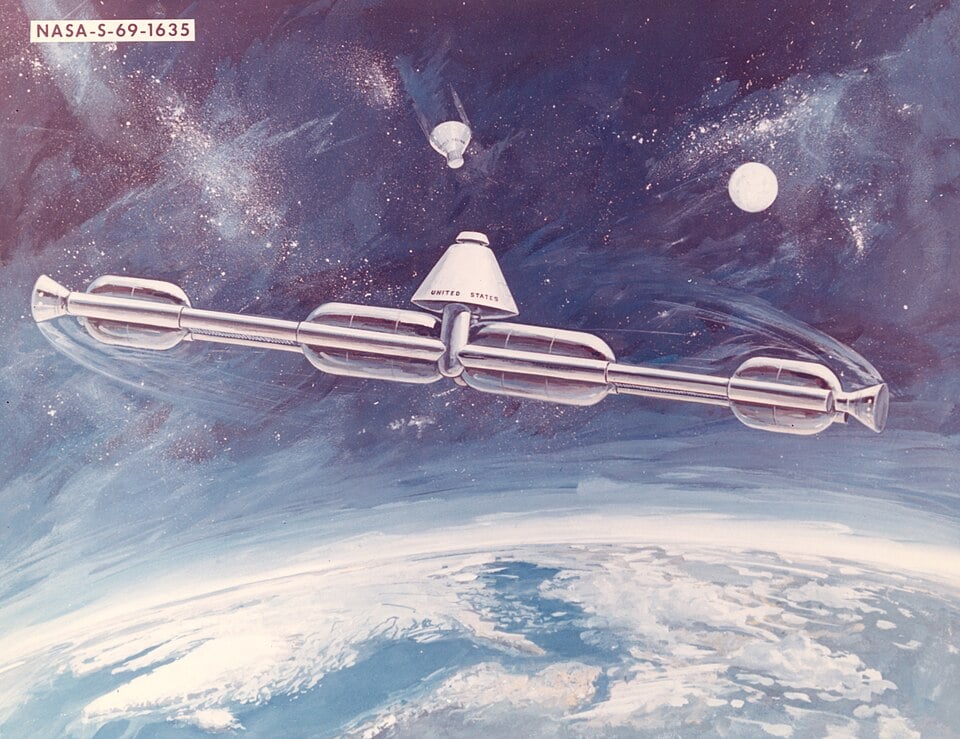
The question has clear relevance for spaceflight. True long-term hypergravity is difficult to produce naturally or experimentally, but centrifuges provide a workable stand-in, and rotating habitats remain one of the major ideas for producing artificial gravity in space. That makes even small-animal studies significant, because they begin to map the biological tradeoffs that could emerge in environments humans may one day choose to build.
The experiment tested both short and multigenerational exposure
The UCR team exposed flies to higher-gravity conditions in two ways. Some experienced an acute period of 24 hours, while others were raised under those conditions. The longer-running design went further still: the researchers followed 10 generations of fruit flies that all developed in the same hypergravity environment before being returned to normal 1G conditions for observation.
That multigenerational design is a major reason the study stands out. It shifts the question away from whether higher gravity simply overwhelms a body in the short term and toward whether organisms can reorganize behavior and physiology over time. The results suggest that adaptation does occur, but not in a simple story of becoming uniformly stronger or more capable.

Startle response stayed intact, but movement fell sharply
One of the main behaviors under observation was the flies’ so-called negative geotaxis response. When startled by a tap on their vials, flies typically climb upward. According to the report, that response remained largely intact even under elevated gravity. In practical terms, that suggests the flies’ legs and muscles were not merely rendered nonfunctional by the added force.
At the same time, their spontaneous movement dropped dramatically. That contrast is one of the most revealing outcomes in the article. A preserved reflex does not mean unchanged everyday function. The flies could still perform an emergency-type response, but their ordinary activity showed meaningful suppression. That difference hints at a deeper rewiring of how behavior is organized under persistent gravitational stress.
Why this matters for artificial gravity concepts
Artificial gravity is often discussed as a way to reduce the physiological damage associated with long-duration spaceflight. The logic is straightforward: if microgravity causes problems, restoring gravity should help. But the new report is a reminder that gravity is not a simple on-off switch. More gravity is not automatically better, and prolonged exposure to levels well above Earth normal may create its own biological costs.
That matters for future rotating habitats and spacecraft concepts. Engineers can calculate rotation rates and structural loads, but biological tolerances still need to be understood. Studies like this one do not tell us directly how humans would respond to 4G, 7G, or 10G over long periods. They do show that sustained higher-gravity environments can preserve some functions while substantially altering others, even across generations.
A more realistic way to read the result
The popular imagination often treats hypergravity as a training montage: endure more force, emerge stronger. The Universe Today report explicitly begins from that cultural image before moving into a more careful scientific reading. The fruit flies did not simply become enhanced versions of themselves. Instead, the evidence points to adaptation that is selective, constrained, and behaviorally uneven.
That is a more useful framework for the next phase of gravity research. Space biology needs to understand not only whether organisms survive altered environments, but which functions are preserved, which are degraded, and how those effects change over time and across generations.
Key findings highlighted in the report
- Fruit flies were exposed to 4G, 7G, 10G, and 13G conditions using centrifugal force.
- The study included both 24-hour exposure and chronic, multigenerational exposure over 10 generations.
- The flies kept a largely intact startle climbing response, but spontaneous movement declined sharply.
For space settlement concepts that depend on artificial gravity, that is a meaningful result. It suggests that living systems may adapt to stronger gravitational environments, but not without significant change. The future of habitat design will depend not only on creating gravity, but on choosing the right amount of it.
This article is based on reporting by Universe Today. Read the original article.
Originally published on universetoday.com