Spacecraft computing is finally getting a generational upgrade
For decades, space missions have relied on radiation-hardened processors that prioritize resilience over raw performance. That tradeoff made sense when spacecraft mainly needed to survive hostile environments and execute tightly scripted tasks. It is becoming less sufficient as missions grow more autonomous, data-intensive, and operationally complex.
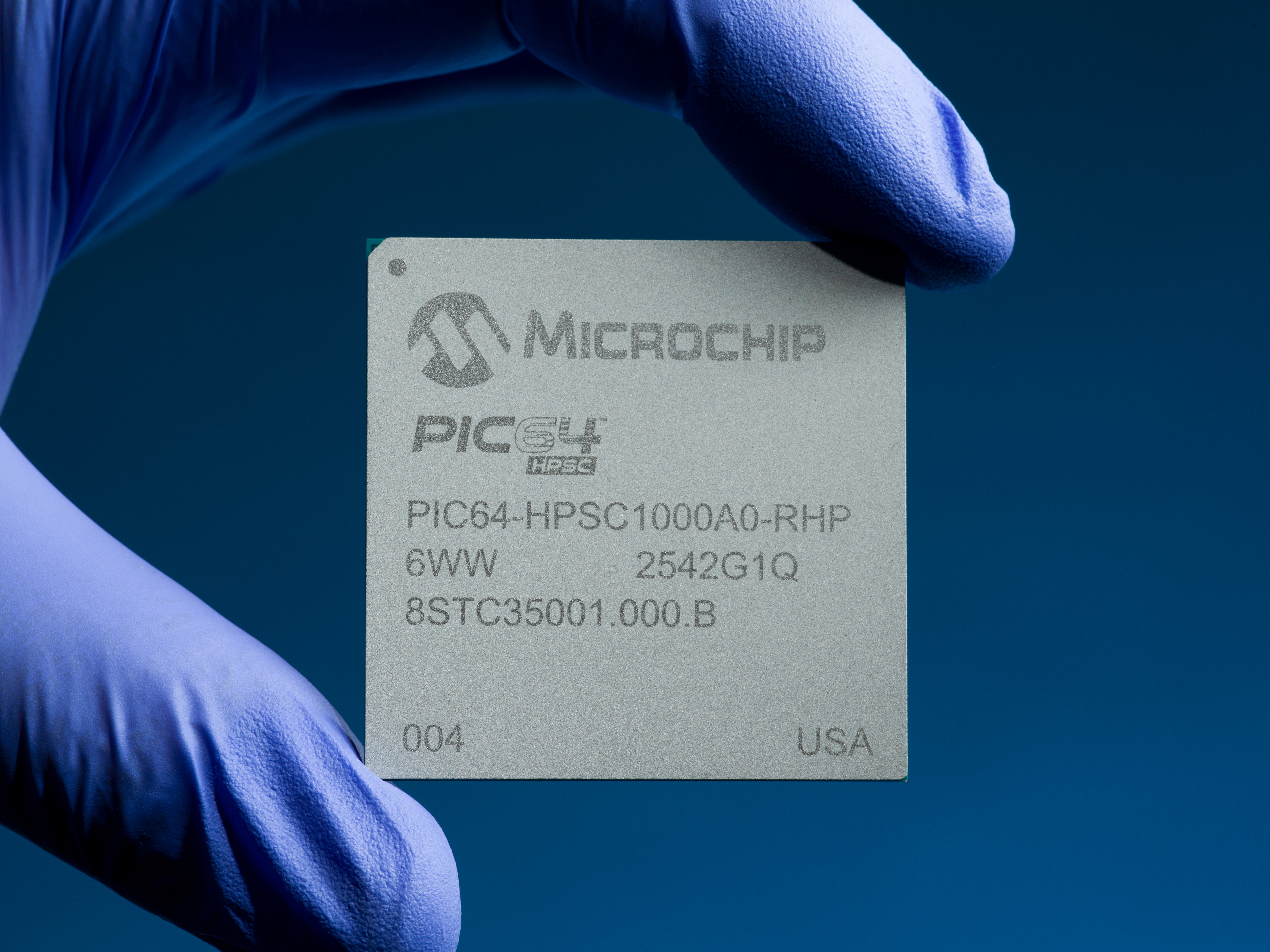
NASA now says it is working with Microchip Technology on a next-generation answer: a High-Performance Spaceflight Computing system-on-chip designed to deliver more than 100 times the computing capability of current space processors. If the project performs as intended, it could reshape how future spacecraft handle sensing, navigation, decision-making, and onboard data processing.
Why legacy architectures are reaching their limits
Traditional space processors have a strong track record. They powered missions from orbiters to capsules to Mars rovers and helped define the engineering culture of robust, fault-tolerant design. But modern exploration goals are changing the job description for onboard computing.
Future spacecraft are expected to manage larger sensor loads, more sophisticated autonomy, stronger cybersecurity requirements, and longer mission durations in harsher environments. Whether the mission is a deep-space probe, a lunar system, or a commercial low Earth orbit platform, the amount of data that must be processed onboard is growing quickly. Sending everything back to Earth for interpretation is often too slow, too costly, or simply impossible.
That pressure is pushing space systems toward a model where more intelligence has to live on the vehicle itself.

What the new platform is supposed to deliver
NASA describes the new effort as a family of compatible processors with scalable mission options. The radiation-hardened version is intended for geosynchronous, deep-space, and long-duration missions to the Moon, Mars, and beyond. A radiation-tolerant version is aimed at the commercial space sector, particularly low Earth orbit satellites that need fault tolerance and cybersecurity without the same deep-space hardening requirements.
The system integrates computing and networking into a single device, a design NASA says can reduce both cost and power consumption. It also uses a scalable architecture that allows unused functions to power down, which is especially important in missions where energy budgets are tightly constrained.
That architecture suggests NASA is trying to improve not just peak performance but overall mission efficiency. In space systems, computing power is useful only if it can be delivered within strict limits on mass, heat, and electricity.
Autonomy is the real prize
The most consequential feature may be what the platform enables rather than its raw benchmark. NASA says the technology could allow spacecraft to process massive amounts of data onboard and make real-time decisions autonomously. The examples offered are telling: driving rovers at higher speeds and filtering scientific images before transmission.
Both point to the same shift. Instead of acting as remote terminals waiting for Earth-based instructions, future spacecraft could increasingly triage data, manage local conditions, and act on short timelines without human intervention. That kind of autonomy becomes more valuable as missions move farther from Earth, where communication delays make continuous supervision impractical.
The use of advanced Ethernet to connect multiple sensors or cluster several chips also hints at more modular and distributed spacecraft computing designs. Rather than a single processor acting as a bottleneck, future systems could behave more like networked computing environments.

A public-private model for space electronics
The project is also notable as a public-private partnership combining NASA and Microchip investment. That approach reflects a broader trend in space technology, where agencies increasingly try to shape commercially relevant platforms instead of building purely bespoke government hardware.
If successful, the split between radiation-hardened and radiation-tolerant variants could create a bridge between civil deep-space exploration and commercial orbital markets. That matters because stronger commercial uptake can help drive scale, ecosystem support, and longer-term sustainability for specialized hardware platforms.
Why this matters now
Space missions are entering a period where onboard computing could become a bigger strategic differentiator than it has been in years. High-resolution sensors, autonomous operations, spacecraft cybersecurity, and robotic mobility all depend on better processing capability. In that context, a claimed 100-times improvement is not just a technical increment. It points to a change in what missions can plausibly attempt.
NASA’s announcement does not mean the new chips are instantly ready to displace legacy systems across the board. Space-qualified electronics take time to validate, and reliability remains non-negotiable. But the direction is clear. The era of making do with processors that are robust yet comparatively limited is starting to give way to one where resilience and real computational power are expected together.
That is likely to shape not just future Moon and Mars missions, but the design assumptions of the wider space industry.
This article is based on reporting by NASA. Read the original article.
Originally published on nasa.gov