Starfighters is adding launch operations experience
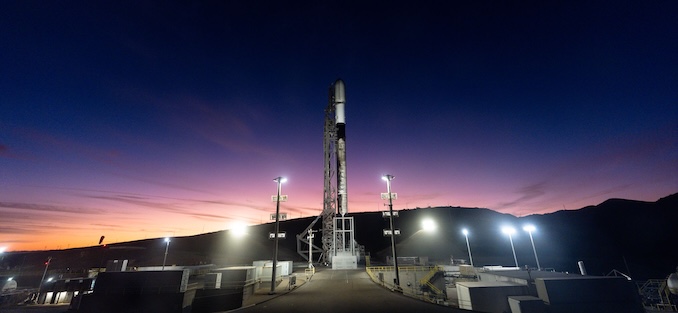
Starfighters Space has recruited two former Blue Origin managers as it works to move its air-launch platform closer to flight demonstrations and sustained operations. SpaceNews reported that Jose Arias joined as vice president of space operations and Catrina Medeiros became director of operations for Starlaunch, the company’s planned launch service that would use supersonic F-104 jets as a first-stage lifting platform.
The hires are significant because Starfighters is trying to move from technical development into a more execution-focused phase. CEO Tim Franta told SpaceNews that the two executives were brought in for experience scaling complex aerospace and launch operations from development into production and sustained execution. That description places the staffing move in a broader context: the company is not only building hardware, but also trying to establish the operational discipline needed to turn a concept into repeatable missions.
Air-launch has long been presented as a way to add flexibility to launch operations by releasing payloads from aircraft at altitude rather than sending rockets from the ground alone. Starfighters’ version would rely on a fleet of supersonic F-104 aircraft. The company is still awaiting regulatory approval for its first suborbital mission, which had previously been slated for the end of 2025, according to SpaceNews. The latest report says the company is not providing updated public timing guidance or customer mission details.
The new executives bring production-focused backgrounds
Arias previously worked at Blue Origin as a senior manufacturing engineer and integration and production lead across propulsion system hardware. Starfighters said he led process improvements there that reduced integration cycle time from 76 days to 13 days. Medeiros, meanwhile, was operations manager for Blue Origin’s New Glenn Stage 2 and Precision Cleaning Facility programs, where she led cross-functional teams and helped transition work from development into production operations.
Before Blue Origin, Medeiros spent more than a decade at Lockheed Martin Space Systems as a senior manufacturing planner on NASA’s Orion crew module program. Together, those backgrounds suggest Starfighters is targeting a very specific capability set: not just aerospace engineering, but program execution under conditions that require coordination across manufacturing, integration, and operational readiness.
For an emerging launch company, those skills can be decisive. Demonstration flights matter, but so do the procedures and throughput needed to support recurring missions. Franta said the pair’s focus includes operational integration, process discipline, mission readiness, and throughput optimization across Starlaunch-related programs. Those are the kinds of functions that become increasingly important when a company is trying to prove it can move beyond a one-off test campaign.
Progress is tied to both testing and regulation
SpaceNews reported that Starfighters says it is making progress after recently listing shares on the NYSE American stock exchange to help raise capital for the program. Early missions are expected to be suborbital and aimed at demonstrating operational capability and validating the platform architecture. That suggests the company’s immediate goal is not full-scale commercial deployment, but proof that the system can execute missions in a controlled and repeatable way.
Franta said the next major test milestone would follow wind-tunnel work that showed the payload could cleanly separate from the aircraft. Separation is one of the defining technical moments in an air-launch architecture, so a positive wind-tunnel result is an important development. Still, technical progress is only part of the picture. SpaceNews noted that increasing launch cadence would also require progress on regulatory hurdles, including Federal Aviation Administration financial responsibility requirements.
That is a familiar pattern in commercial space: operational maturity depends on a blend of engineering validation, financing, and regulatory clearance. Starfighters appears to be navigating all three at once. Hiring managers with production and integration experience can help with the first category, and potentially with the second by strengthening investor confidence in execution. But the report makes clear that regulatory requirements remain part of the path to flight.
A staffing move that signals intent
This announcement is not a launch success, a contract award, or a completed orbital mission. It is, however, a useful indicator of where Starfighters believes its next constraints lie. The company is choosing to reinforce operations leadership at a point when it is preparing for demonstrations and trying to lay the groundwork for future low Earth orbit deployments. That implies the bottleneck is no longer only technical invention. It is also organizational readiness.
The emphasis on cadence and sustained execution is especially notable. Many aerospace concepts can reach a test milestone; fewer can develop the manufacturing rhythm, mission assurance processes, and operational discipline required to scale. By hiring executives from Blue Origin’s New Glenn programs and from Orion-related work at Lockheed Martin, Starfighters is drawing on people whose careers have centered on precisely those transitions.
Whether that will be enough to accelerate Starlaunch depends on factors the company has not yet publicly resolved, including updated mission timing and regulatory clearance. But the move does clarify the company’s current posture. Starfighters is positioning itself for an operational proving phase, with suborbital demonstrations first and the longer-term goal of deploying satellites into low Earth orbit after that.
What the report establishes
- Starfighters hired Jose Arias as vice president of space operations and Catrina Medeiros as director of operations for Starlaunch.
- The company wants to use supersonic F-104 jets as the first-stage lifting platform for payloads released at altitude.
- Early missions are planned to be suborbital demonstrations of operational capability and platform architecture.
- Further progress depends on both technical milestones and regulatory approvals, including FAA-related requirements.
This article is based on reporting by SpaceNews. Read the original article.
Originally published on spacenews.com