A fast orbital rescue effort moves closer to launch
A spacecraft built to save one of NASA’s aging science assets has passed a major prelaunch milestone. NASA and Katalyst Space said Katalyst’s Link spacecraft successfully completed environmental testing at NASA’s Goddard Space Flight Center, keeping the company on track for a launch that could happen as soon as June.
The mission’s goal is unusual and urgent: Link is intended to rendezvous with the Neil Gehrels Swift Observatory, grapple it, and raise its orbit before atmospheric drag pulls the satellite too low for rescue. Swift, a gamma-ray observatory in low Earth orbit, is facing a steadily decaying orbit, with reentry expected as soon as late 2026 if no intervention succeeds.
Testing suggests the spacecraft is ready for final preparations
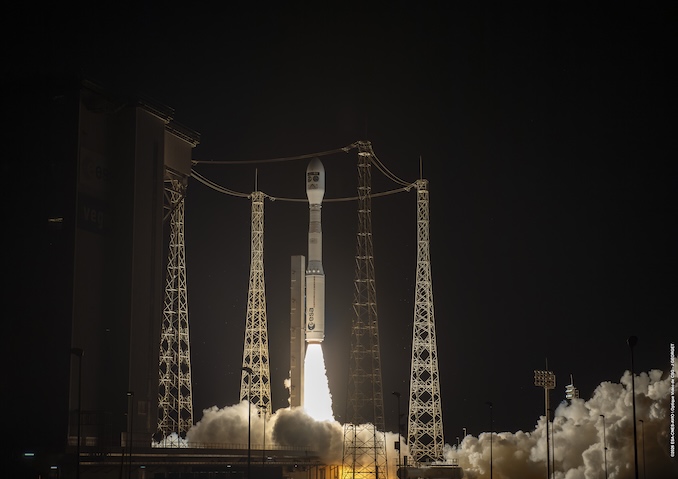
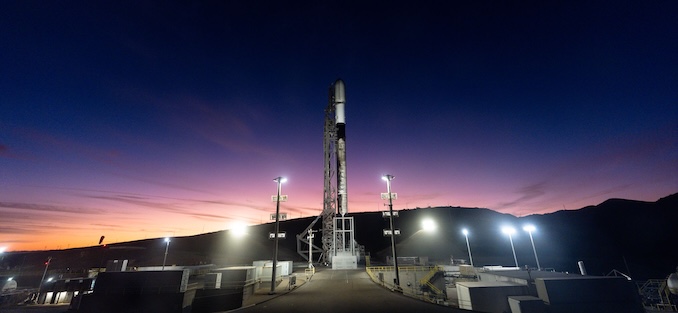
The environmental campaign included vibration testing to simulate launch conditions aboard a Northrop Grumman Pegasus XL rocket. The spacecraft also underwent thermal vacuum testing, including deployment of a robotic arm and firings of its electric thrusters. Those are not generic box-checking exercises in this case. The mission depends on a combination of precise spacecraft operations, mechanical interaction with an existing satellite, and enough propulsion capability to execute the reboost once contact is made.
With testing complete, Link has returned to a Katalyst facility in Colorado for final prelaunch work. It is expected to ship to NASA’s Wallops Flight Facility in early June for integration with the Pegasus rocket, with launch projected later in the month.
A mission driven by schedule more than comfort
NASA awarded Katalyst a $30 million contract in September 2025 for the mission, with the company repurposing a spacecraft originally intended for a demonstration mission. That compressed timeline is central to the story. Katalyst had only months to redirect the spacecraft, complete development, and work through qualification for a real orbital servicing attempt.
Katalyst principal investigator Kieran Wilson described the tradeoff plainly in NASA’s statement: the schedule is dictating how much risk the team is willing to accept. That is a revealing formulation. Space missions usually try to retire risk through time and testing. Here, time itself is the main constraint. Swift’s descent is forcing a balance between additional verification and the need to launch while the target remains reachable.
The orbital clock is tightening
The mission has become even more time-sensitive because Swift’s orbit is reportedly decaying faster than expected. Earlier project assessments indicated the spacecraft could drop below 300 kilometers sometime between mid-October 2026 and January 2027, which would make the reboost mission no longer feasible. That threshold turns Link’s June launch target into more than a preference. It is part of a shrinking operational corridor.
John Van Eepoel, mission director for Swift at NASA Goddard, characterized the effort as a fast, high-risk, high-reward mission. That description fits both the technical design and the policy significance. If successful, the operation would extend the life of an active science mission using a commercially provided servicing spacecraft developed on an accelerated schedule.
Why the mission matters beyond Swift
On one level, this is a practical attempt to preserve the scientific output of a valuable observatory. On another, it is a test of whether responsive, relatively low-cost orbital servicing can become a more normal tool in civil space operations. Satellites in low Earth orbit usually face a binary future: continue operating until drag or failures end the mission, or receive life extension only if they were designed for complex servicing from the start. Link sits between those models.
The mission’s success would not erase the risks of rendezvous, grappling, and propulsion in a constrained timeline. But it could help demonstrate that smaller commercial players can respond quickly to preserve government assets when conditions demand it. Failure, by contrast, would underscore how hard real-world satellite rescue remains, especially when schedules are compressed by orbital decay.
Either way, the next steps are clear. Environmental testing is over. Integration is next. And for Swift, the remaining margin is not measured in years, but in months.
This article is based on reporting by SpaceNews. Read the original article.
Originally published on spacenews.com