A famous molecule gets a clearer origin story
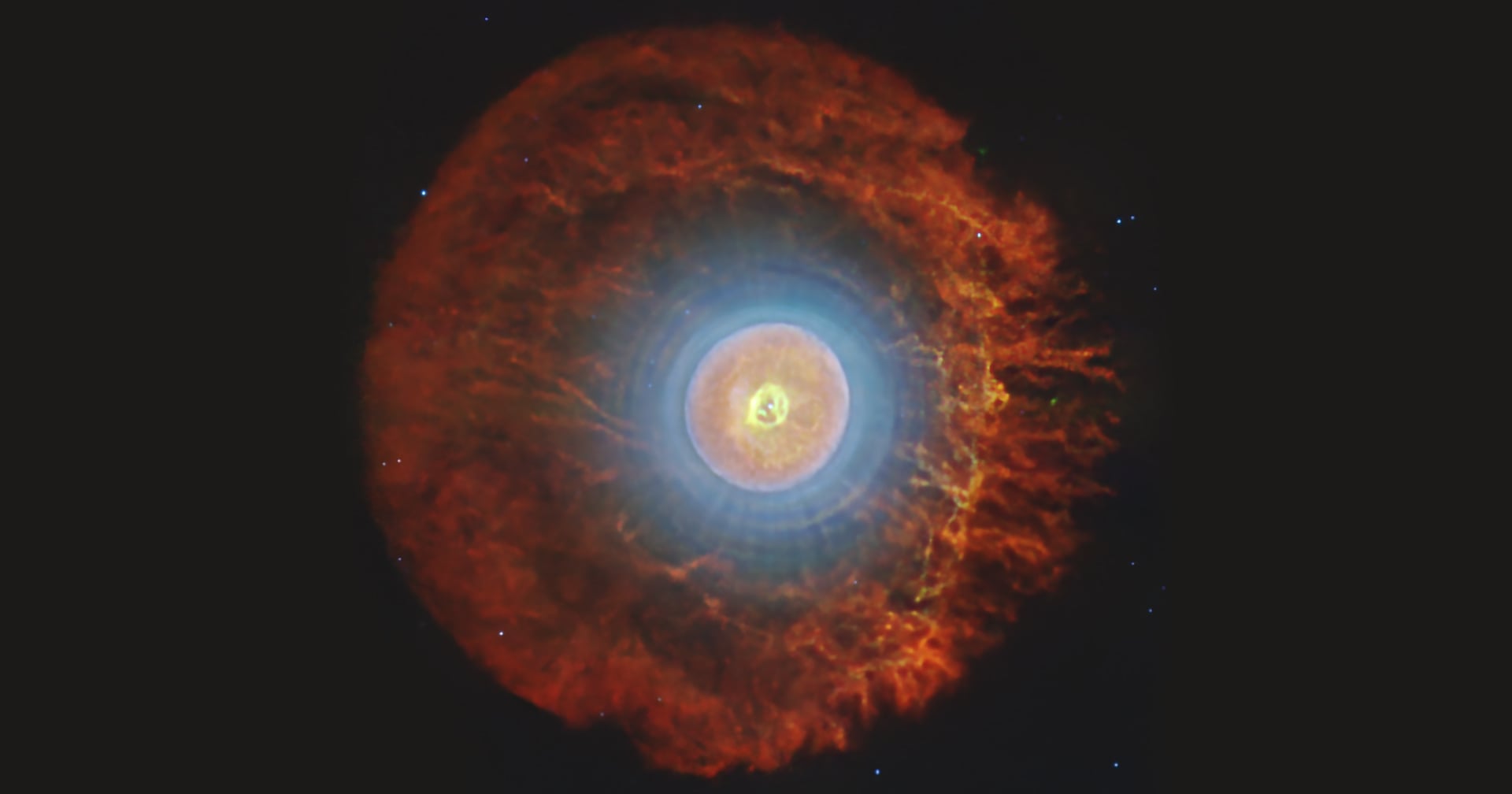
Astronomers using the James Webb Space Telescope have taken a major step toward understanding where one of space chemistry’s most recognizable molecules forms. The target is Tc 1, a planetary nebula about 12,400 light-years from Earth in the constellation Ara, and the molecule is buckminsterfullerene, better known as the “buckyball.”
The new observations come from Professor Jan Cami and colleagues at Western University, who were also part of the team that first identified buckyballs in space in 2010 using the Spitzer Space Telescope. With Webb’s Mid-Infrared Instrument, or MIRI, the team has now returned to the same object and produced what the source describes as the first detailed view of the nebula. That richer dataset, in turn, points to the birthplace of these unusual carbon structures.
That matters because buckyballs are not just a scientific curiosity. They are a benchmark for how complex molecules can assemble in harsh astrophysical environments. If researchers can identify where and under what conditions they form, they gain a stronger handle on the broader pathways by which carbon-based chemistry spreads through the cosmos.
What buckyballs are and why scientists care
Buckyballs are spherical molecules made from 60 carbon atoms arranged in a pattern of hexagons and pentagons. Their formal chemical name is C60, and their architecture resembles both a soccer ball and a geodesic dome. The molecule was first synthesized in 1985 by Sir Harry Kroto and colleagues at the University of Sussex, work that later contributed to the 1996 Nobel Prize in Chemistry. Kroto named the structure buckminsterfullerene after architect Buckminster Fuller, whose domes echoed the same geometry.
Long before astronomers could confirm them in space, scientists suspected such molecules might be widespread in the universe. Carbon is abundant, and astrophysical environments are capable of producing unexpectedly elaborate chemistry. Still, prediction is not detection. It was not until 2010 that Cami and collaborators reported evidence of buckyballs in space, using observations of Tc 1 from Spitzer.
That discovery immediately raised a more difficult question: exactly how do these molecules arise in nature? Finding a molecule in a nebula does not by itself reveal where within that environment it formed, what radiation field shaped it, or what stage of stellar evolution created the necessary conditions. Those are the kinds of questions Webb is built to sharpen.
Why Tc 1 is such a revealing laboratory
Tc 1 is a planetary nebula, which means it is the glowing aftermath of a dying star that was once broadly similar to the Sun. After exhausting its nuclear fuel, the star collapsed inward and shed its outer layers. Those expelled gases now form an illuminated shell around the stellar remnant, a white dwarf. The source notes that this transformation unfolds over tens of thousands of years, giving astronomers an extended window into a chemically rich and dynamically changing environment.
That makes Tc 1 more than a scenic object. It is a natural laboratory for studying how molecules respond to intense radiation and changing physical conditions after a star dies. The research program cited in the source was explicitly framed as a quantitative study of how large molecules interact with their radiative environment. In other words, the team was not only trying to confirm that fullerenes exist there. It was trying to map their relationship to the nebula that surrounds them.
Webb’s advantage lies in sensitivity and detail, especially in the infrared. The Mid-Infrared Instrument can trace emissions tied to dust, gas, and complex molecules that are difficult to characterize from less capable observatories. By revisiting the nebula with a better instrument, the team was able to move from detection toward context. The result, according to the source, is evidence pointing to the origin of the buckyballs in Tc 1.
What this says about space chemistry in the Webb era
The broader significance of the result extends beyond a single molecule. Astronomy is increasingly about chemistry as much as it is about stars and galaxies. Researchers want to know how simple atoms become complex compounds, how those compounds survive, and how matter processed by one generation of stars seeds the next. Carbon-based molecules are especially important because carbon is central to the chemistry associated with planets, atmospheres, and life-related precursors.
By clarifying where fullerenes form around a dead star, the Tc 1 observations help constrain one piece of that larger puzzle. They suggest that planetary nebulae are not just debris fields but active chemical environments where structured carbon molecules can emerge and persist. That is an important refinement in the story of how matter is recycled through the galaxy.
The result also illustrates the scientific value of Webb as a follow-up machine, not only a discovery machine. Some of its most important work will come from revisiting objects first studied by earlier observatories and resolving long-standing ambiguities. Spitzer showed that buckyballs existed in space. Webb is beginning to show where, within a specific stellar environment, they likely come from.
The project was carried out under a Cycle 3 JWST General Observer program and supported by the Canadian Space Agency, the Natural Sciences and Engineering Research Council of Canada, and a Western University Accelerator Award. The institutional backing is a reminder that these high-profile cosmic discoveries often depend on long arcs of investment: laboratory chemistry in the 1980s, infrared astronomy in 2010, and next-generation space observatories in the 2020s.
That continuity is part of what makes the new Tc 1 result compelling. A molecule once known mainly as an elegant laboratory structure and later as an astronomical surprise is now becoming part of a more complete narrative about stellar death, molecular assembly, and the carbon economy of the universe. Webb is not just taking prettier pictures of that story. It is helping explain how the story works.
Why this story matters
- The findings connect a well-known carbon molecule to a more specific astrophysical formation environment.
- They show how Webb can deepen earlier Spitzer-era discoveries by adding spatial and chemical detail.
- The work strengthens planetary nebulae as key sites for studying complex molecular chemistry in space.
This article is based on reporting by Universe Today. Read the original article.
Originally published on universetoday.com