A routine drilling job turned into an unusual engineering problem
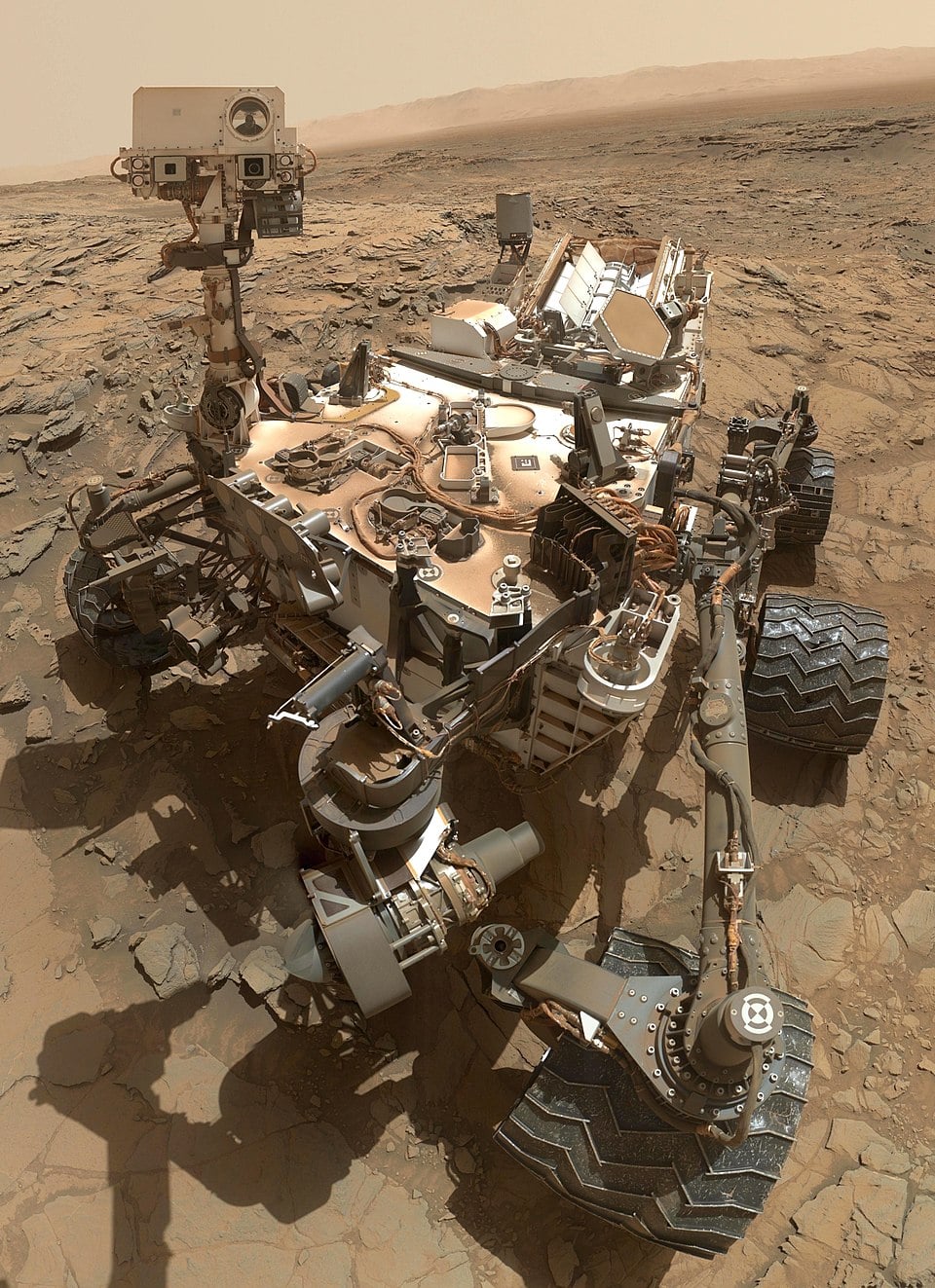
NASA’s Curiosity rover encountered an unexpected challenge on Mars when a rock it had drilled into became stuck to the rover’s drill assembly. The target, a flat rock nicknamed “Atacama,” ended up wedged against the fixed sleeve surrounding the drill bit and dangled from the robotic arm after Curiosity tried to retract it.
On Earth, the scene might sound manageable. On Mars, it becomes a slow-motion engineering puzzle carried out across enormous distance, communication delay, and complete physical inaccessibility. Curiosity’s team could not simply inspect the jam in person or make quick manual adjustments. Every response had to be planned, sent, and trusted to execute correctly on another planet.
The stuck rock was something new
According to the source material, Curiosity has previously caused cracking or shifting in the upper layers of Martian rocks during drilling. But an entire rock getting stuck to the drill was unprecedented. That novelty is what makes the episode worth more than a rover anecdote. Long-running missions often depend on the ability of engineering teams to solve problems they did not specifically design for years earlier.
Atacama itself was not especially large. It was described as a flat disc of rock around 45 centimeters across, 15 centimeters thick, and weighing roughly 13 kilograms. Yet size was not the real issue. The challenge was geometry, uncertainty, and the inability to intervene directly.
Three attempts to solve the problem
The team’s first response was straightforward: vibrate the drill and try to shake the rock loose. It did not work. Four days later, engineers tried again after reorienting the arm and running vibrations once more. Cameras captured sand trickling from the rock, showing that the effort was doing something, but the rock still held on.
The solution finally came on May 1. Engineers tilted the drill further and combined rotation, vibration, and spinning of the drill bit in a carefully planned sequence. They had prepared for the possibility that multiple rounds would be necessary. Instead, one round was enough. Atacama dropped back to the Martian surface and broke apart on impact.
Why the fix matters beyond the incident itself
The technical recovery is impressive not because the rover resumed ordinary work, but because it highlights the level of forethought required in planetary operations. Every command sent to Curiosity takes minutes to arrive. There is no live joystick control, no instant correction, and no quick external inspection. Engineers must model a situation, simulate a response, and accept that the real result will play out later and far away.
That makes even small-seeming anomalies operationally serious. A jammed drill on Earth can be an inconvenience. A jammed drill on Mars can threaten a mission’s scientific productivity if not resolved. Curiosity has been operating since 2012, and each additional year increases both its scientific value and the wear-related unpredictability of continued surface work.

Durability remains one of Curiosity’s greatest achievements
Curiosity’s longevity is part of what gives this incident its significance. More than a decade into its mission, the rover is still carrying out complex tasks in Gale Crater and on the slopes associated with Mount Sharp, or Aeolis Mons. That alone reflects a remarkable level of engineering endurance. Problems are inevitable at that timescale; the mission’s success depends on how well teams respond when something goes wrong.
- Curiosity drilled into a rock nicknamed Atacama on April 25.
- The rock became stuck to the rover’s drill assembly, something the team had not seen before.
- NASA engineers freed the drill on May 1 using a sequence of tilting, rotation, vibration, and spinning.
The episode is a reminder that Mars exploration is not defined only by grand discoveries or dramatic landings. It is also defined by patient, highly disciplined troubleshooting. Curiosity’s team did not just rescue a tool from an awkward jam. They demonstrated the quiet, essential skill that keeps planetary science alive long after the headlines of arrival have faded.
This article is based on reporting by Universe Today. Read the original article.
Originally published on universetoday.com