A closer look at the Sun’s dark regions
Space weather forecasting depends on understanding when the Sun will send fast streams of charged particles toward Earth. A new study highlighted in the supplied source text focuses on one of the most important sources of those streams: coronal holes, the temporary dark regions in the Sun’s corona associated with open magnetic field lines.
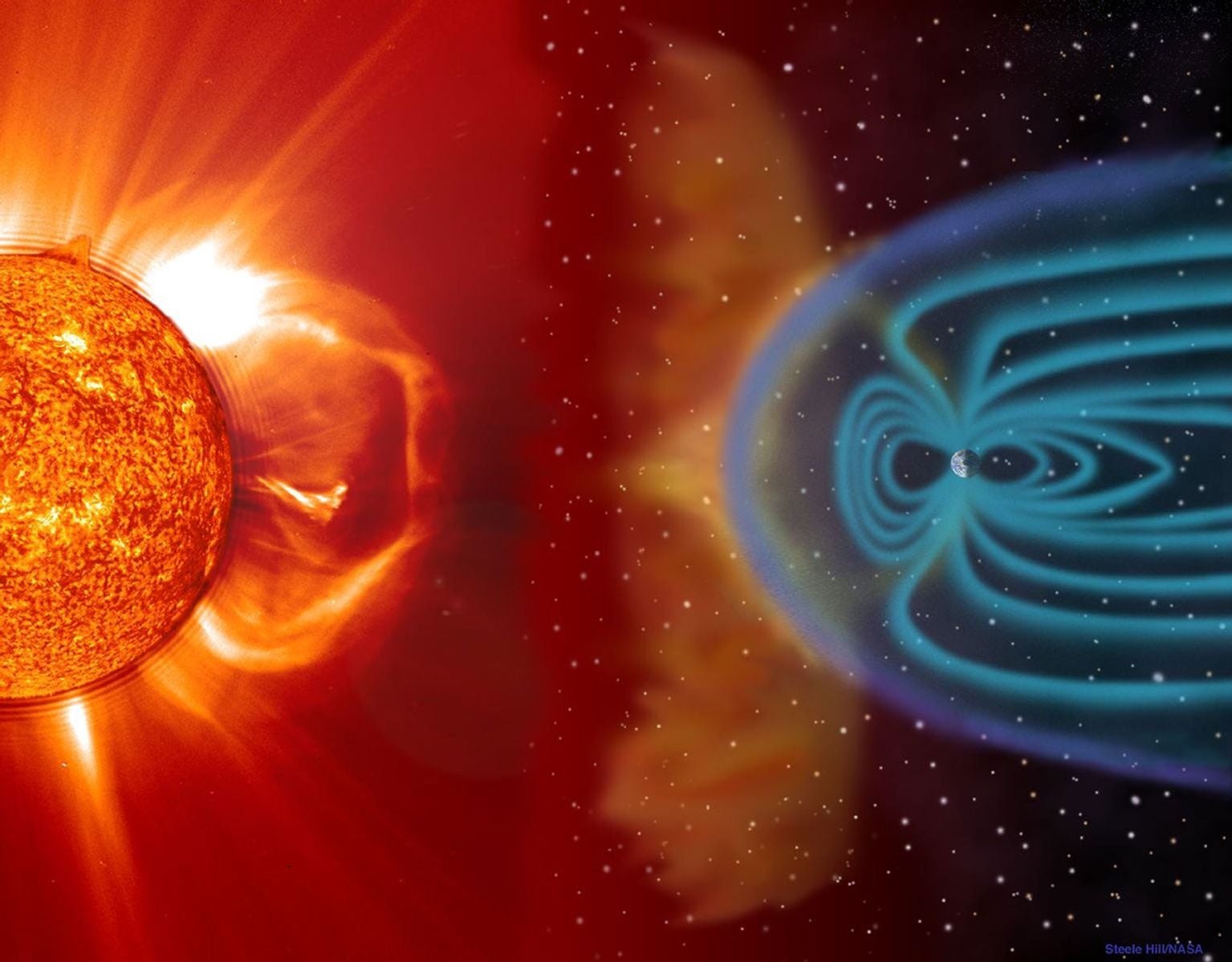
These regions matter because they can act as channels for high-speed solar wind. When that wind reaches Earth, it can interfere with systems that modern economies rely on, including GPS, aviation, electrical grids, and satellite and radio communications. Better prediction of those events is therefore not just a scientific goal, but an infrastructure and resilience problem.
The new paper examines how the magnetic structure of equatorial coronal holes relates to solar wind streams. By studying that connection in more detail, the researchers aim to improve the models used to anticipate space weather impacts near Earth.
What the study analyzed
According to the supplied source text, the work was led by New Mexico State University astronomy graduate student Khagendra Katuwal with co-author R.T. James McAteer. The researchers analyzed 70 coronal holes using data from NASA’s Solar Dynamics Observatory, which has observed the Sun since 2010 as part of the Living With a Star program.
The study, published in The Astrophysical Journal, focused on the “unipolarity” of the solar magnetic field in equatorial coronal holes. In simpler terms, it examined how magnetically imbalanced these regions are and how that magnetic structure may influence the high-speed wind streams later measured in space.
The underlying question is basic but important: when scientists observe solar wind near Earth, can they confidently trace it back to specific coronal holes on the Sun, and can magnetic features within those holes help predict the strength or behavior of the outflow?

Why forecasting space weather is difficult
Coronal holes have long been associated with fast solar wind, but turning that association into reliable forecasting is not straightforward. The Sun is magnetically complex, its outer atmosphere is dynamic, and several interacting processes can shape what eventually reaches Earth.
That complexity is why even apparently simple questions remain scientifically valuable. The supplied source text quotes Katuwal describing his interest in whether the solar wind measured near Earth is really coming from coronal holes and how their magnetic structure produces that fast wind. Those questions go to the heart of operational forecasting.
If the magnetic conditions inside coronal holes can be characterized in a way that improves predictions, scientists may be able to strengthen warning models for infrastructure operators. Even modest forecasting improvements can matter when the affected systems include power grids, aviation routes, and communication networks.
From heliophysics to practical risk reduction
The study sits at the intersection of fundamental solar physics and practical forecasting. On one level, it is about the Sun’s magnetic architecture and the behavior of plasma in the corona. On another, it is about reducing risk to Earth-based systems exposed to solar variability.
That dual value helps explain why space weather research is drawing broader attention. As societies become more reliant on satellites, precision navigation, and tightly managed power networks, disturbances from the Sun move from specialist concern to operational planning issue.
The source text frames the research as a potential way to identify changes in magnetic conditions that could strengthen forecasting models. That does not mean the problem is solved. Rather, it means the work adds evidence on which observable solar features may be most useful for anticipating downstream effects.

A step toward better early warning
Studies like this rarely produce instant operational breakthroughs. More often, they improve the underlying map that forecasters use to interpret solar observations. In this case, the contribution appears to be a more detailed understanding of how magnetic imbalance in equatorial coronal holes relates to the production of fast solar wind.
That matters because coronal holes are recurring features in solar monitoring. If their internal magnetic structure can provide a better signal about what kind of wind stream will follow, forecasting models may gain more predictive power and confidence.
The broader lesson is that space weather readiness depends on incremental gains in physical understanding. There is no single variable that makes the Sun easy to predict. Progress comes from connecting specific solar features to specific space weather outcomes with increasing precision.
This study adds to that effort. By analyzing dozens of coronal holes and tying their magnetic character to solar wind behavior, it pushes forecasting one step closer to the kind of reliability that modern infrastructure increasingly demands.
This article is based on reporting by Universe Today. Read the original article.
Originally published on universetoday.com