Black holes may be stranger than their gravity alone suggests
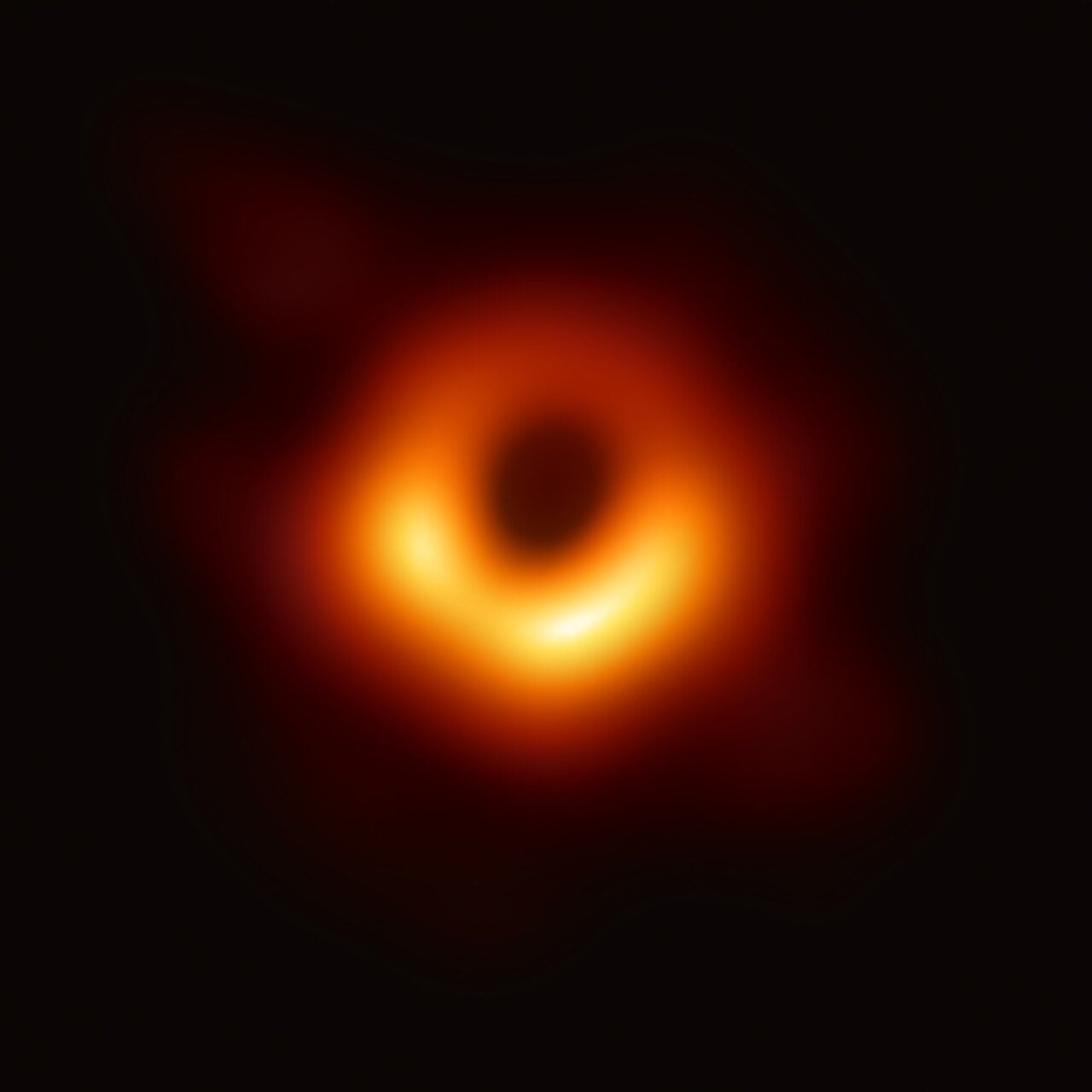
Black holes are usually introduced as the most extreme objects in the universe: places where gravity becomes so strong that not even light can escape. But modern physics has made them stranger than that familiar picture. As the source material notes, black holes are not defined only by gravity and accretion disks. They also have temperature and entropy. That idea, associated with Stephen Hawking’s work on black hole radiation, opened a field that treats black holes not just as astrophysical traps, but as thermodynamic systems.
Once that door is open, an unexpected question follows. If black holes have temperature and entropy, can they behave like ordinary matter in one important respect? Can they undergo phase transitions, in the way water can change from liquid to vapor? According to the source, the answer is yes. And researchers are increasingly using topology, a branch of mathematics concerned with deep structural properties of shapes, to understand why different black holes behave differently.
Why topology enters the picture
Topology is often explained through a famous analogy: a coffee mug and a doughnut can be considered equivalent at a topological level because each has one hole. The point is not exact geometry. It is the underlying structure that survives stretching or deformation. The source applies that logic to black holes by describing how physicists build mathematical landscapes from thermodynamic properties such as temperature, entropy, and pressure.
Within those landscapes, researchers look for special points where the mathematics effectively vanishes or “zeros out.” These points act like defects in the thermodynamic description. By studying how the relevant mathematical field wraps around those defects, physicists assign each point a topological charge, a number that captures a fundamental aspect of its character. Add those charges together, and the result is a global topological number: a kind of fingerprint for the black hole under study.
That may sound abstract, but it serves a concrete purpose. Different black holes fall into different topological classes. In the source, a simple non-rotating, uncharged Schwarzschild black hole is contrasted with a charged Reissner-Nordstrom black hole. They do not merely differ in mass, charge, or spin. They occupy different thermodynamic topological categories.

A new classification scheme for black holes
The importance of that classification is that it appears to say something about phase behavior rather than just appearance. Topological classes are not cosmetic labels. They are tied to the way the thermodynamic system is organized and how it can transition between states. In other words, researchers are not simply inventing a new vocabulary for familiar black holes. They are looking for a structural framework that can explain why certain thermodynamic transitions are possible for some black hole families and not others.
That makes topology attractive as a unifying tool. Black hole physics often sits at the intersection of gravity, quantum theory, and statistical mechanics. Those fields do not always fit together comfortably. A topological description can sometimes bypass messy details and focus on invariants: properties that remain stable even when the system is described in different ways. If those invariants map onto thermodynamic behavior, physicists gain a more robust way to compare seemingly different black hole solutions.
What temperature changes about the story
The source emphasizes a fact that still feels counterintuitive to many non-specialists: the black hole itself radiates heat. This is not the temperature of the glowing gas in an accretion disk. It is a property of the black hole as a region of distorted spacetime. That distinction is essential because it is what allows physicists to speak meaningfully about entropy, thermodynamic states, and phase transitions.
Without black hole temperature, topology would have much less to work on in this context. With temperature and entropy in place, however, black holes can be analyzed using many of the same conceptual tools that help describe more ordinary physical systems. The result is a picture in which the most exotic objects in the universe are also, in a narrow but important sense, matter-like. They can be sorted, compared, and studied through the mathematics of state changes.

The appeal of topological fingerprints
One reason this approach is compelling is that topology is designed to identify what is fundamental and ignore what is superficial. Black holes are already hard to observe directly, and much of their theoretical description depends on idealized solutions to Einstein’s equations. A method that extracts global structure from thermodynamic behavior could therefore be especially valuable. Instead of tracking every detail, physicists can focus on the properties that define a class.
The source describes these class-defining values as topological numbers or fingerprints. That language matters because it implies stability. A fingerprint is not every feature of a hand; it is the pattern that distinguishes one identity from another. Likewise, a black hole’s topological number is meant to capture something durable about its thermodynamic nature.
If that program continues to develop, it could help organize a growing zoo of theoretical black holes, especially once charge, rotation, and more exotic settings are included. A consistent classification system is not a finished explanation of black hole physics, but it can make the field more legible by showing which solutions belong together and which are separated by deeper structural differences.
Why this matters beyond mathematical elegance
Black hole research often advances through ideas that begin as abstract mathematics and later clarify bigger physical questions. Thermodynamics itself once provided powerful clues about the microscopic structure of matter long before atoms could be understood in modern detail. Something similar may be true here. If topological charges reliably mark black hole phase structure, they may help physicists understand where gravity, thermodynamics, and quantum behavior intersect most sharply.
The source stops short of making grand claims about a final theory, and that restraint is appropriate. But even at this stage, the work points to a useful shift in perspective. Black holes are no longer only singular monsters defined by escape velocity and collapsed stars. They are becoming systems whose thermodynamic landscapes can be mapped and whose deep mathematical structure can be compared across types.

A more ordered view of the universe’s extremes
There is a certain intellectual satisfaction in the idea that black holes, despite all their extremity, may obey a hidden order visible through topology. The same mathematics that helps distinguish abstract shapes can also help reveal why one black hole belongs to a different thermodynamic family than another. That is a reminder of how theoretical physics often progresses: not by making the universe less strange, but by showing that its strangeness has structure.
For now, the major takeaway is clear. Black holes can be treated as thermodynamic objects, they can undergo phase transitions, and topology offers a promising way to classify their behavior. That is a substantial shift from the older image of black holes as simple endpoints of gravitational collapse. The more physicists probe them, the more they look like a rich testing ground for some of the deepest questions in modern science.
This article is based on reporting by Universe Today. Read the original article.
Originally published on universetoday.com