A binary star system that should not exist, at least on paper
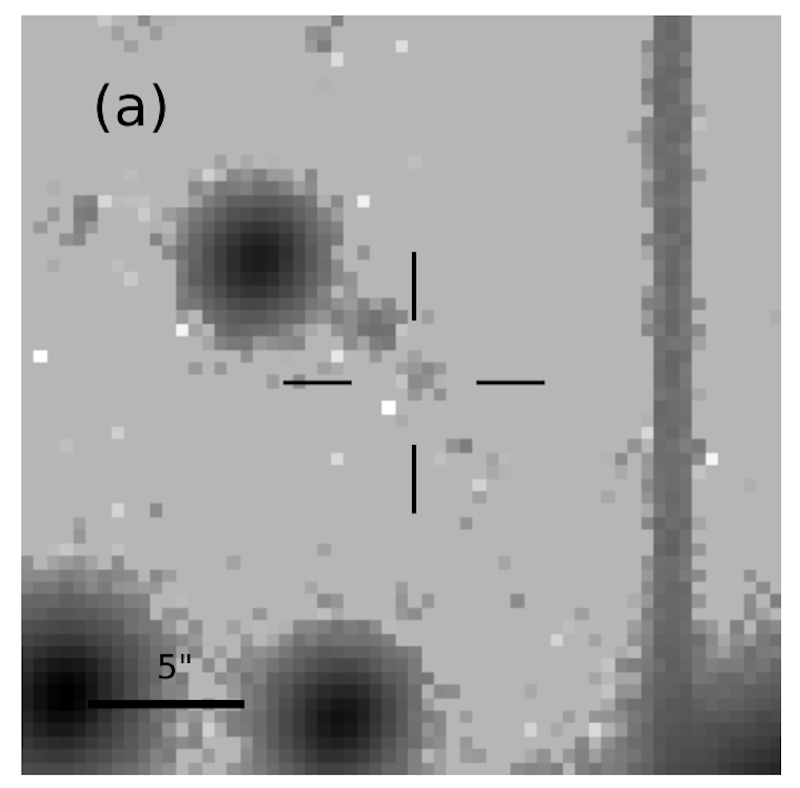
Astronomers studying the way stars die have found a compact binary system that appears to break one of the field’s long-standing rules. The object, known as KSP-OT-202104a, is a dwarf nova whose two stars complete an orbit in just 72 minutes. That figure places it below the widely cited period minimum of roughly 76 minutes for this class of system, making it one of only a handful of such outliers known so far.
The discovery matters because dwarf novae are not obscure curiosities. They are one of the clearest laboratories for observing how close binary stars exchange matter, flare, and evolve toward their final states. When a system lands outside the expected range, it can reveal where prevailing models are incomplete. In this case, the new object suggests that at least some interacting binaries may take evolutionary routes that astronomers have not fully mapped.
The reported system was identified by a team at the Korea Astronomy and Space Science Institute led by Sang Chul Kim. According to the source material, this is now the tenth known system found below the period minimum. Two of those ten were discovered by the same Korean team, including an earlier case identified in 2022. That alone makes the result more than a one-off anomaly. It hints at a pattern that improved observing strategies are beginning to uncover.
Why the 76-minute threshold matters
In a dwarf nova, one star is a white dwarf, the dense remnant left behind after a Sun-like star exhausts its fuel. The white dwarf draws gas away from its still-living companion. That gas forms an accretion disk as it spirals inward, and the system periodically brightens in dramatic outbursts visible from Earth.
For decades, astronomers have treated about 76 minutes as a practical lower bound on how short the orbital period of such systems can become. The logic is tied to stellar evolution and orbital dynamics. As the companion star loses mass and the two objects spiral ever closer, models predict that the system reaches a minimum period before the trend reverses. Below that point, standard assumptions begin to fail.
That is why KSP-OT-202104a stands out. At 72 minutes, it is not just slightly unusual. It sits in a part of parameter space where existing textbook expectations become hard to reconcile with observation. The question is not merely how this particular pair became so compact, but what hidden variables or alternate histories allowed it to do so.

Several explanations are possible, and all are scientifically useful
The source text outlines several possibilities for the companion star in this system. It may be much older than it appears and already close to its own late-stage evolution. It may be unusually rich in helium. It may be poor in heavier elements. Or it may contain a denser, more resilient core than standard scenarios assume.
Each explanation would point to a different gap in current understanding. A helium-rich donor, for example, would imply a different chemical and structural history than a more conventional low-mass companion. A metal-poor star could evolve differently enough to alter how its radius changes as it loses mass. A denser core could allow the star to remain compact while continuing to transfer material to the white dwarf, enabling a shorter orbital period than normally expected.
What makes these possibilities important is that none are mere bookkeeping details. In compact binaries, composition and internal structure can decisively shape how matter flows, how angular momentum is lost, and how the orbit responds over time. A system below the period minimum therefore acts as a stress test for the models astronomers rely on to connect theory with observation.
Why it took global observing power to catch it
Objects like this are difficult to find because they are faint, fast, and not always active. Catching one requires both persistence and timing. The Korean team relied on KMTNet, a network of three identical telescopes located in Chile, South Africa, and Australia. Spread across longitudes, the facilities can effectively hand off the night sky from one site to the next as Earth rotates, allowing sustained monitoring of the same target with minimal interruption.
That continuous coverage is especially valuable for short-period systems. When the clock for a full orbit is measured in little more than an hour, missing part of the cycle can blur the interpretation. A globally distributed network reduces those blind spots and improves the odds of catching transient brightening events.
After the initial detection, follow-up observations came from the Gemini Observatory, whose 8-meter mirrors provided the detailed measurements needed to characterize the system more securely. The source material emphasizes that the Korean team helps operate both KMTNet and Gemini-related work, giving it access to the combination of wide monitoring and deep follow-up that this kind of discovery demands.
The result is a reminder that modern astronomy increasingly depends on coordinated infrastructure rather than isolated instruments. Rare systems often emerge only when surveys, timing, and high-sensitivity confirmation work together. KSP-OT-202104a is a case study in that approach paying off.
A small sample with outsized implications
Ten known systems below the period minimum is still a tiny sample, but it is no longer negligible. Once the count rises beyond a single exceptional object, astronomers must ask whether the outliers are exposing a broader population that older surveys missed. If so, the issue is not that one star pair broke the rules. It is that the rules were written around incomplete evidence.
That possibility has broader implications for how researchers interpret the endpoints of stellar evolution in close binaries. Dwarf novae are tied to questions about mass transfer, accretion physics, and the life cycles of compact systems. Better understanding the unusual examples can improve the reliability of the larger framework.
KSP-OT-202104a does not overturn stellar evolution theory on its own. But it sharpens a real tension between expectation and observation, and it does so with a system measured precisely enough to demand attention. The discovery expands a rare class of objects and strengthens the case that some stars die along routes the standard picture does not yet capture very well.
For astronomy, that is exactly the kind of anomaly worth keeping. The most valuable outliers are not the ones that vanish under better data. They are the ones that survive scrutiny and force theory to become more complete. This newly identified dwarf nova appears to belong in that category.
This article is based on reporting by Universe Today. Read the original article.
Originally published on universetoday.com